Landscape View of a Ruined Castle with River, Wooden Bridge and a Figure, Fishing — History & Facts
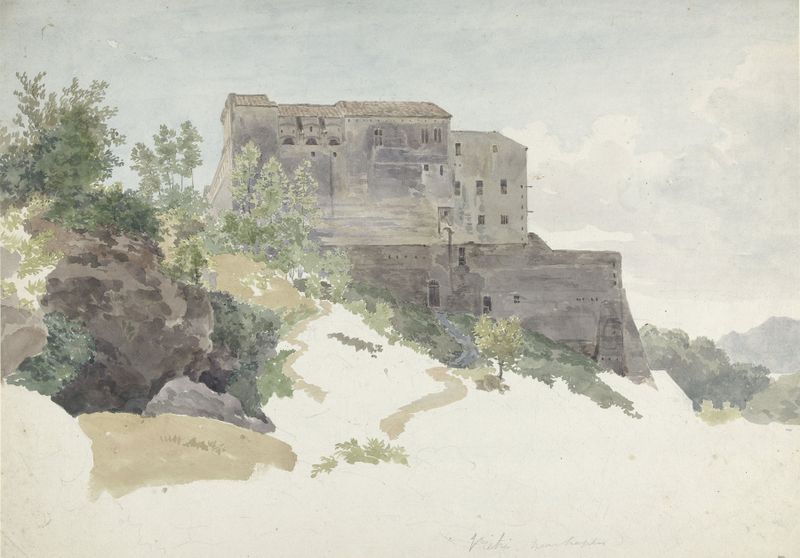
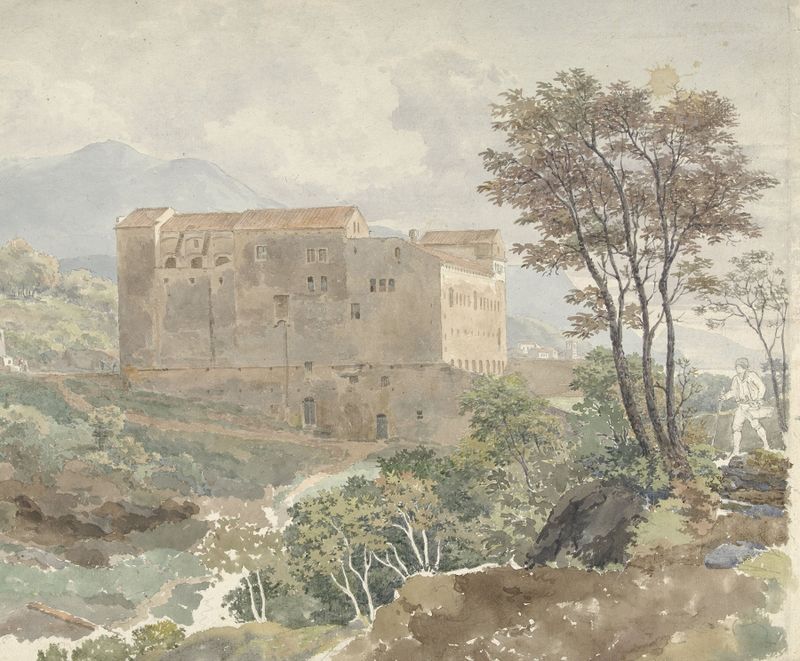
In a world where innocence often meets the inevitable passage of time, landscapes can whisper tales of forgotten moments. Look to the left where a ruined castle, its crumbling facade softened by the embrace of nature, holds the eye captive. The contrast between the fortress and the gentle flow of the river evokes a sense of tranquility disrupted only by the solitary figure on the wooden bridge, casting a line into the water below. Notice how the light dances upon the river’s surface, reflecting hues of blue and green, while the surrounding foliage glows with an ethereal warmth, encapsulating the essence of peace intertwined with loss. The juxtaposition of the sturdy castle ruins and the delicate figure fishing reveals emotional tensions—the persistence of existence amid decay, the fragility of life against the backdrop of history.
The figure’s calm presence suggests a connection to simpler joys, drawing the viewer into a moment of serene solitude, while the castle looms in the distance, a reminder of what once was and the waves of time that gradually erode not just stone, but memory itself. Henry Swinburne painted this landscape during a time when Romanticism was on the rise, celebrating the beauty of nature and the passage of time. The exact date remains unknown, but it reflects an artist deeply engaged with the textures of life and the emotions evoked by a landscape steeped in history. In an era craving tranquility amid industrial change, this work embodies a longing for connection with both nature and the innocence of past experiences.