
Landscape with a Plowed Field and a Village — History & Facts
In this tranquil landscape, the tension between chaos and order permeates the air, whispering stories of labor and life. Focus on the foreground, where the plowed field stretches out in rhythmic furrows, the earth’s raw texture captured with a deliberate hand. Notice how the muted palette of browns and greens conveys both the fatigue of toil and the promise of growth. The village in the background, bathed in a gentle light, stands serene yet distant, suggesting both community and isolation in its composition. Hidden within this pastoral scene are contrasts that invite contemplation.
The furrows, though meticulously crafted, speak of the chaos beneath—the untamed nature of the land shaped by human effort. The interplay of light and shadow casts an almost contemplative silence over the village, urging one to consider the unseen lives within those walls. This stillness serves as a poignant counterpoint to the labor evident in the foreground, encapsulating the struggle between man and nature. Georges Michel painted this work after 1827, a period marked by shifts in artistic trends and personal reflection.
Living in France, he was part of a movement that sought to capture the essence of everyday life through a Romantic lens. The socio-economic changes of the time, alongside his own artistic evolution, influenced his depiction of rural landscapes, blending realism with a profound emotional resonance.
More Artworks by Georges Michel
Browse all →
The Approaching Storm
Georges Michel

Landschap met zandweg
Georges Michel

Landschaft bei Paris
Georges Michel
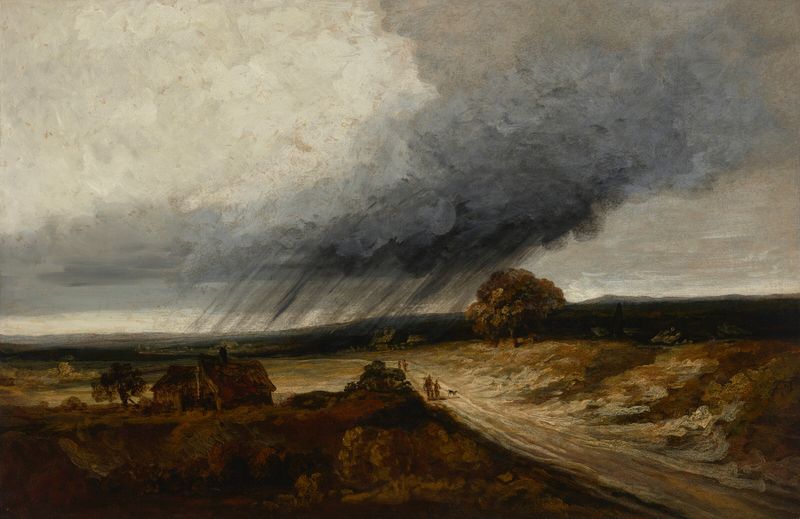
The Approaching Storm
Georges Michel

Landschap met overtrekkende bui
Georges Michel
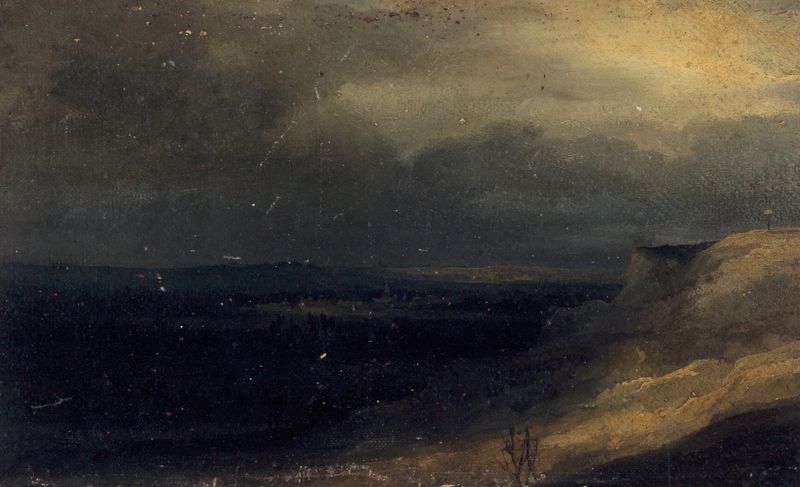
Vue présumée de Montmartre.
Georges Michel

Landschap met figuren en vee
Georges Michel

Approaching Storm
Georges Michel
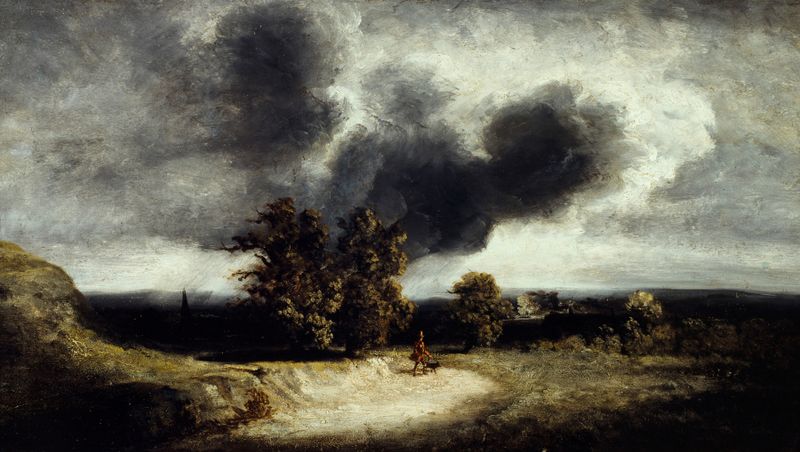
Paysage des environs de Paris.
Georges Michel

Gezicht op de Dome des Invalides uit de Champ de Mars
Georges Michel





