Landscape with a Shepherdess of Geese — History & Facts
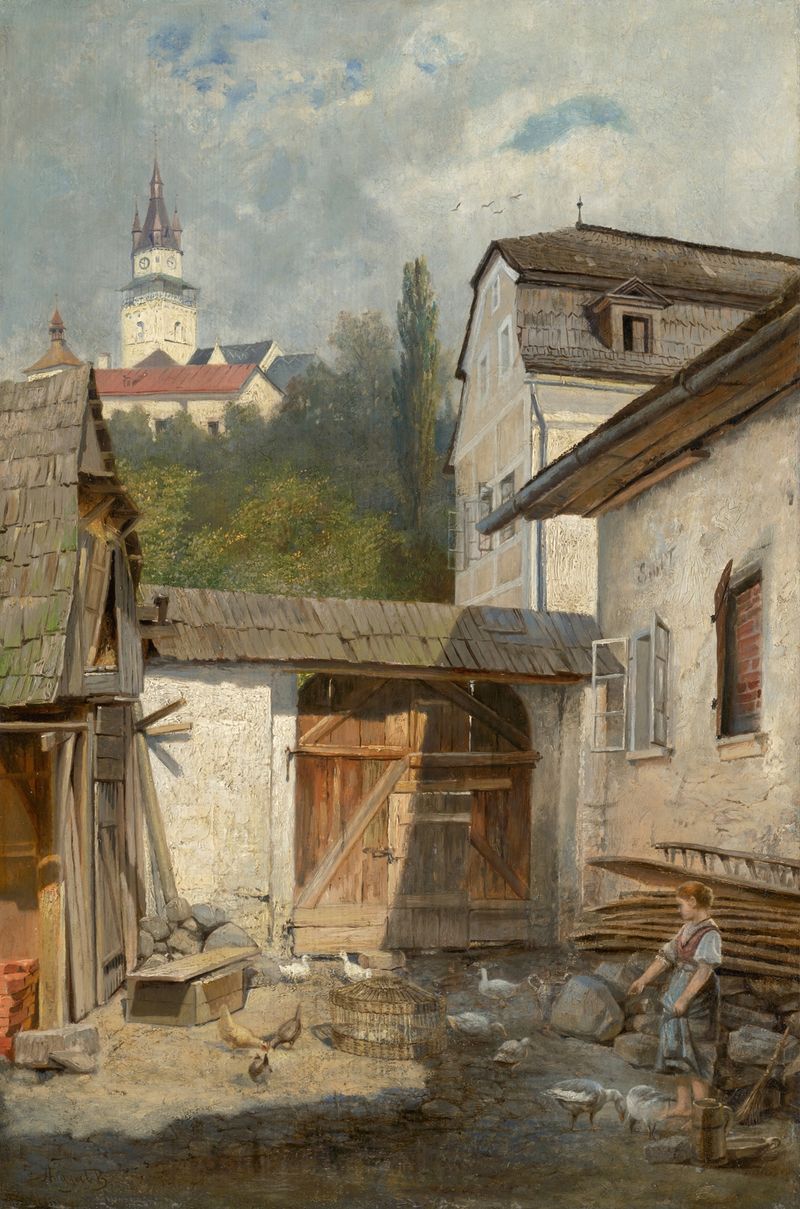
Who listens when art speaks of silence? In Landscape with a Shepherdess of Geese, the stillness of the scene reveals a profound connection between nature and the human spirit, inviting contemplation of life's simplest truths. Look to the left at the shepherdess, her gentle posture embodying a serene grace as she tends to her flock. The soft, muted greens of the landscape stretch behind her, blending harmoniously with the sandy browns of the earth, while dappled sunlight filters through wispy clouds, casting irregular patterns on the ground. Notice the delicate strokes that define the geese, their white and gray feathers contrasting vividly against the rich hues of the foliage, creating a sense of movement frozen in time.
This careful composition evokes a feeling of peace, drawing the viewer into a world where nature and human presence coexist effortlessly. As you observe the painting, consider the emotional tension between solitude and companionship. The shepherdess symbolizes both the isolation of rural life and the comfort of her flock, suggesting a deeper relationship between the shepherd and her geese—each dependent on the other for existence. Additionally, the expansive sky serves as a backdrop, hinting at the vastness of the world outside this tranquil moment, emphasizing a poignant contrast between the intimate scene and the unknown beyond. In the late 19th century, Vojtech Angyal, inspired by the pastoral beauty of Central Europe, captured this piece during his artistic journey in what is now the Czech Republic.
This period marked a shift towards Impressionism in Europe, with artists seeking to portray not only landscapes but also the fleeting impressions of light and atmosphere. Angyal's work reflects this movement, blending realism with a tender embrace of serene rural life amidst the broader changes in society at that time.