
Landscape with a Wanderer — History & Facts
What secret hides in the quiet of the canvas? A solitary figure stands at the edge of the world, poised between the call of nature and the allure of the unknown. In this stillness, the landscape breathes — a dialogue between the wanderer and the vastness that surrounds him. Look to the center of the painting, where the wanderer is enveloped in the gentle glow of a fading sun. The warm hues of orange and gold cascade over the rolling hills, creating an ethereal background that contrasts starkly with the cool blues of the sky.
Notice how the artist masterfully captures the delicate play of light, illuminating the figure’s contemplative stance and the path that leads into the horizon. Each brushstroke feels intentional, inviting viewers to not only see but also feel the quiet resolve of exploration. Beneath the tranquility lies a profound tension between solitude and connection. The wanderer, with his back turned, represents the universal journey of self-discovery, while the expansive landscape hints at both freedom and isolation.
The subtle contrast between the vibrant foreground and the distant, muted mountains evokes a sense of longing; the wanderer is both part of the scenery and separate from it, embodying the tension between the familiar and the unknown. Created in 1830, the artwork reflects Thomas Fearnley’s deep engagement with Romantic ideals during a time of rapid change in Europe. While he painted in Norway, the movement was marked by a focus on nature, emotion, and the sublime. Fearnley’s own exploration of the Norwegian landscape not only captured its beauty but also resonated with the existential inquiries of his era, making this piece a poignant reflection of both the artist's journey and the broader artistic landscape of his time.
More Artworks by Thomas Fearnley
Browse all →
Norwegian Landscape, Marumfoss
Thomas Fearnley

View of the Oslofjord
Thomas Fearnley

Gudvangen
Thomas Fearnley

Stormy Landscape with a Rider
Thomas Fearnley
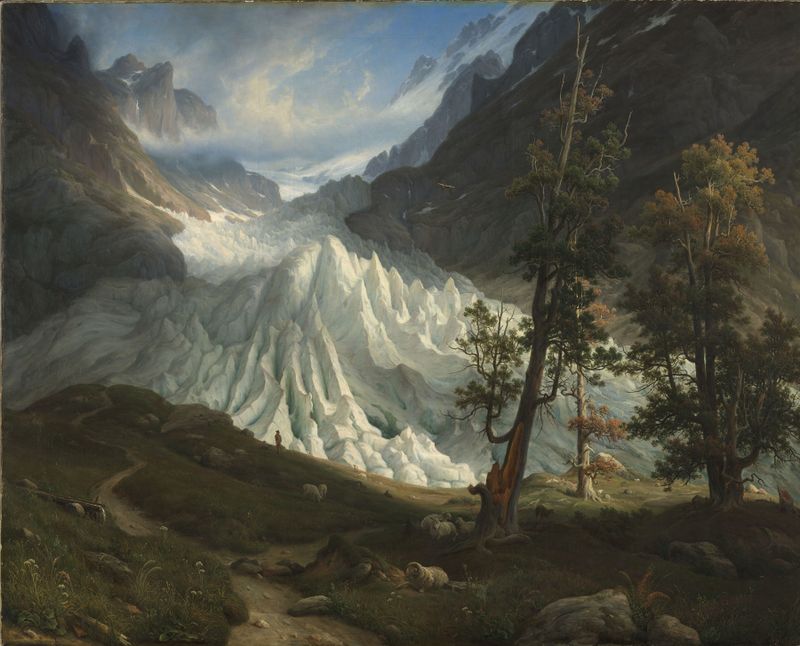
The Grindelwaldgletscher
Thomas Fearnley

Clouds over the Fjord
Thomas Fearnley
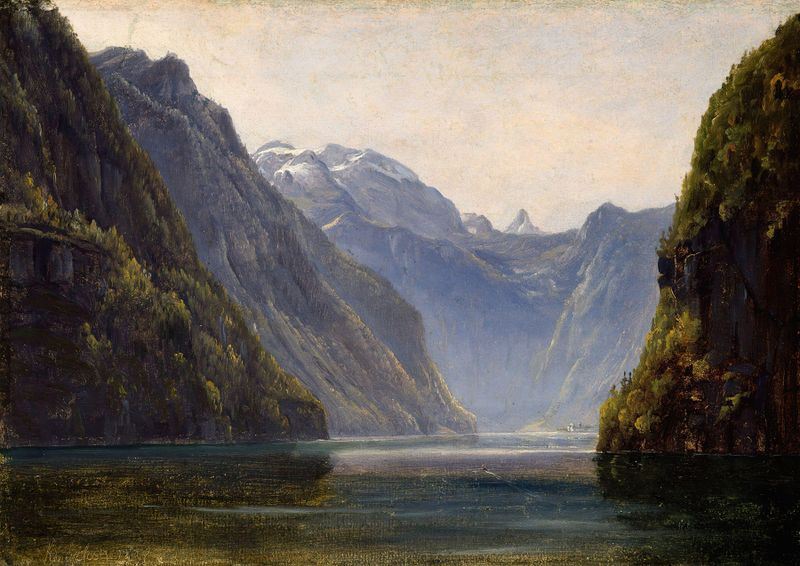
From Königssee
Thomas Fearnley

The Bridge of Hauge outside Arendal
Thomas Fearnley

King Vilhelm II’s ceremonial Processsion in Amsterdam in 1840
Thomas Fearnley

Duck-shooting an Autum Morning by Königssee
Thomas Fearnley





