
The Bridge of Hauge outside Arendal — History & Facts
Could a single brushstroke hold eternity? In The Bridge of Hauge outside Arendal, this question lingers, inviting viewers to contemplate the delicate interplay between nature and manmade structures. As the viewer gazes upon the composition, they are drawn into an awakening of serene beauty, where every color and form seems to pulse with life. Look to the left at the softly arching bridge, its warm hues of ochre and brown merging effortlessly with the cool blues of the surrounding water. Notice how the light dances upon the surface, creating a shimmering path leading into the horizon.
The composition is balanced and harmonious, with the gentle curves of the bridge echoing the undulating hills in the background, drawing the eye across the canvas. The artist’s technique, blending soft brushwork with precise detail, invites contemplation and connection with the landscape. The painting captures a moment of tranquility juxtaposed with the industrious nature of the bridge itself. The stillness of the water hints at a deeper emotional resonance, perhaps symbolizing the passage of time or the fleeting nature of human accomplishments in the face of nature's eternal beauty.
The small figures traversing the bridge add scale and humanity, grounding the viewer in this peaceful intersection of life and landscape. In 1829, during a time of romanticism in Norway, the artist painted this piece while living in a rapidly changing world. Fearnley was deeply influenced by the Norwegian scenery that surrounded him, as well as by the rising appreciation for natural landscapes in the art community. His works from this period reflect a shift towards capturing the emotional essence of the landscape, bridging nature with human experience in a profound dialogue.
More Artworks by Thomas Fearnley
Browse all →
Norwegian Landscape, Marumfoss
Thomas Fearnley

View of the Oslofjord
Thomas Fearnley

Gudvangen
Thomas Fearnley

Stormy Landscape with a Rider
Thomas Fearnley
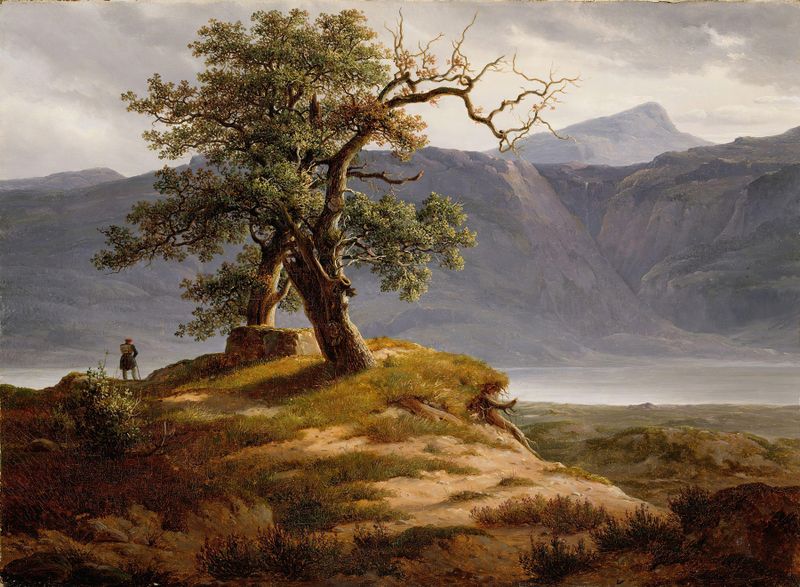
Landscape with a Wanderer
Thomas Fearnley
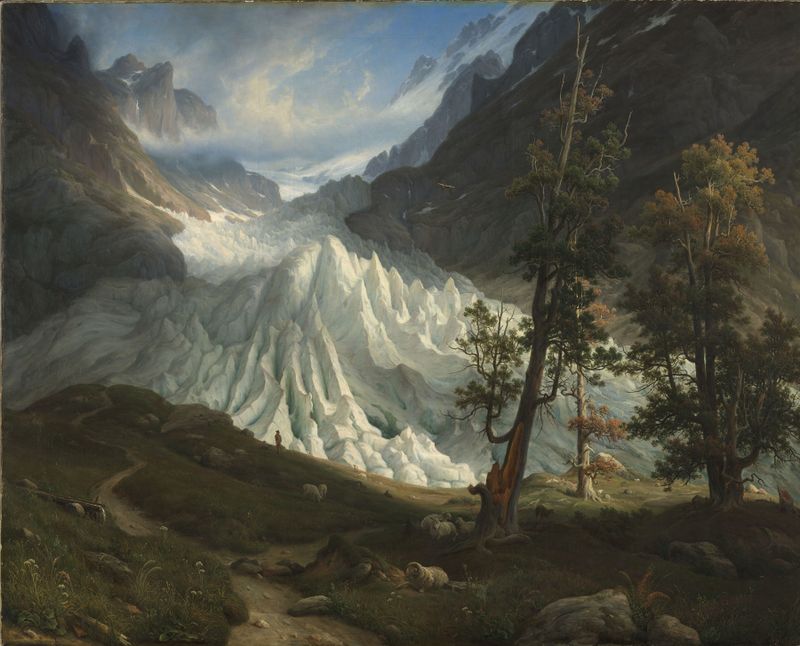
The Grindelwaldgletscher
Thomas Fearnley

Clouds over the Fjord
Thomas Fearnley
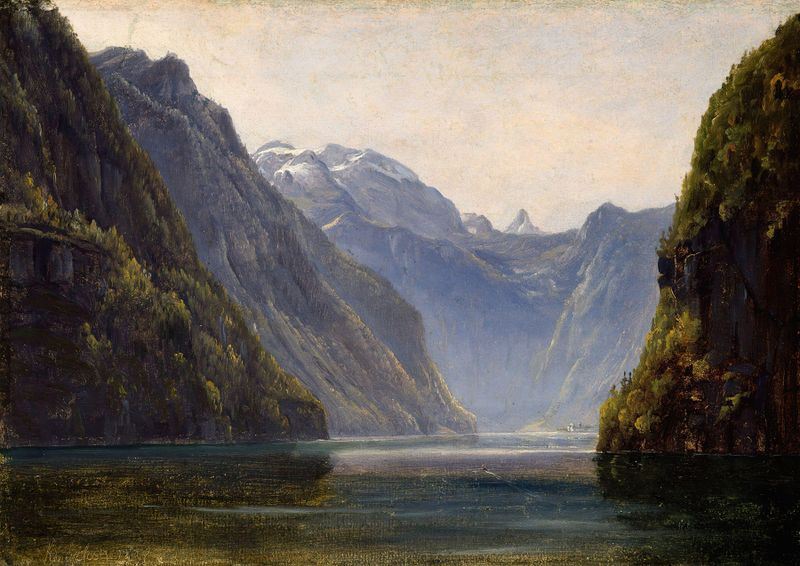
From Königssee
Thomas Fearnley

King Vilhelm II’s ceremonial Processsion in Amsterdam in 1840
Thomas Fearnley

Duck-shooting an Autum Morning by Königssee
Thomas Fearnley





