
Landscape with Cottagers — History & Facts
When did color learn to lie? In the world of Landscape with Cottagers, vibrant hues dance over the canvas, crafting a euphoric vision of nature that teeters on the edge of truth and enchantment. Look to the left at the sun-drenched cottages, their warm rooftops glowing against the verdant landscape. The painter's deft brushwork captures the gentle undulation of the hills, while soft strokes of green and gold bend light into a celebration of pastoral beauty. Notice how the sky transitions from a luminous azure at the horizon to softer pastels, creating a serene backdrop that envelops the scene in a tranquil embrace.
Every color, every texture, invites the viewer to breathe deeply, as if inhaling the very essence of this idyllic setting. Yet, beneath the surface lies an emotional tension; the cottages, while charming, seem isolated amidst the grandeur of nature. The towering trees and expansive sky might evoke a sense of freedom and possibility, but they also highlight the fragility of human existence within the vastness of the world. The light flickering across the landscape speaks to transient moments of joy—ecstasy in connection with nature—as well as the inevitable solitude that can accompany such beauty. In 1775, George Barret painted this work during a time when pastoral landscapes were gaining popularity in England, reflecting the Romantic movement's appreciation for nature and its emotional resonance.
Barret, inspired by both his contemporaries and the sublime vastness of his surroundings, sought to capture not just a scene, but a sensation—an ineffable feeling that would linger in the minds of those who beheld his art.
More Artworks by George Barret
Browse all →
A wooded landscape with a lake, anglers in the foreground
George Barret
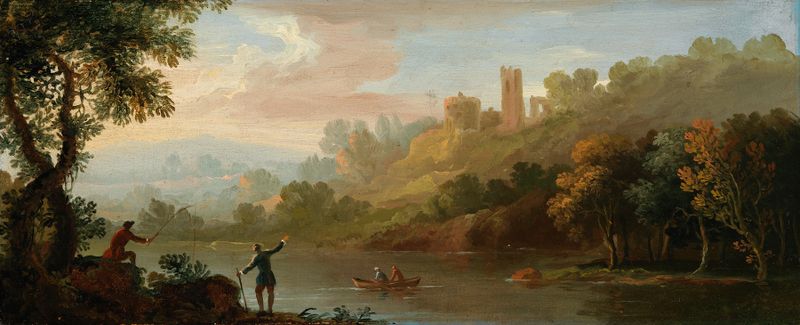
A River Scene
George Barret

Landscape with Figures in the Background
George Barret

Morning: Landscape with Mares and Sheep
George Barret

View in a Park
George Barret
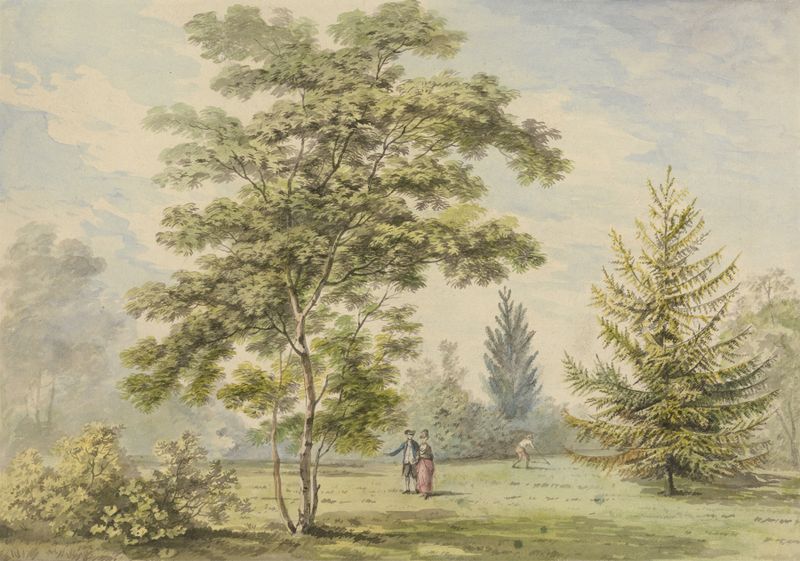
The Acacia Tree, Figures in a Park
George Barret

Timber Wain on a Rough Road
George Barret

Wooded Landscape with a Boy and his Dog
George Barret
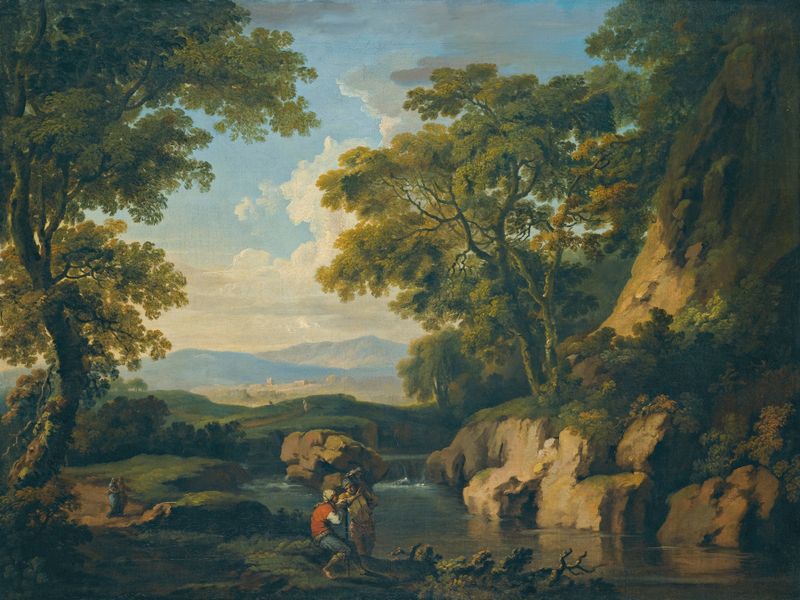
A Mountainous Wooded Landscape With Figures By A River In The Foreground
George Barret
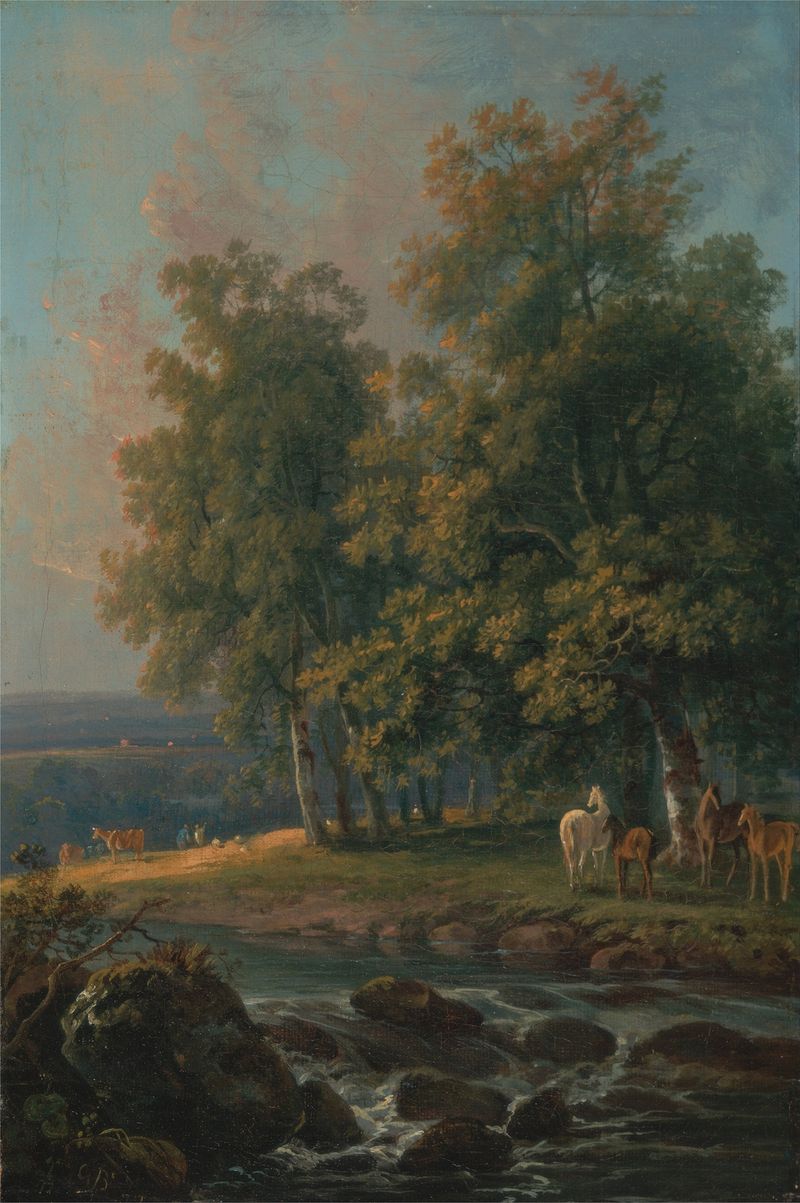
Horses and Cattle by a River
George Barret





