
The Acacia Tree, Figures in a Park — History & Facts
The delicate interplay of light and shadow in The Acacia Tree, Figures in a Park evokes a haunting sense of solitude beneath its vibrant exterior. Here, the viewer is drawn into a moment where the figures appear entangled in their own isolation, surrounded by the lush greenery that paradoxically emphasizes their detachment. Look to the center of the canvas, where the acacia tree stands tall, its branches reaching out like desperate arms. The sunlight filters through the leaves, casting dappled patterns on the ground and illuminating the figures who walk beneath it.
Notice the subtle contrasts in color—the gentle greens of the foliage against the muted earth tones of the figures’ attire. This careful use of light not only enhances the natural beauty but also underscores the emotional depth of the scene, where vibrant life coexists with underlying sorrow. As you explore the edges of the park, you might find the figures’ expressions tell a deeper story. One person gazes intently at the ground, lost in thought, while another seems to drift in a reverie, disconnected from those around them.
The juxtaposition of the lively setting against these moments of introspection creates a poignant contrast, inviting reflection on the loneliness that can exist even in the company of others. The acacia, a symbol of resilience, stands as a silent witness to the unspoken narratives unfolding within its shade. George Barret painted this work during a time when the art world was evolving, likely in the late 18th century, amidst the shift towards Romanticism. Active in England, Barret was known for capturing landscapes and scenes imbued with emotion.
This period saw the burgeoning of personal expression in art, a context that may have influenced his portrayal of the juxtaposition between beauty and loneliness within the natural world.
More Artworks by George Barret
Browse all →
A wooded landscape with a lake, anglers in the foreground
George Barret
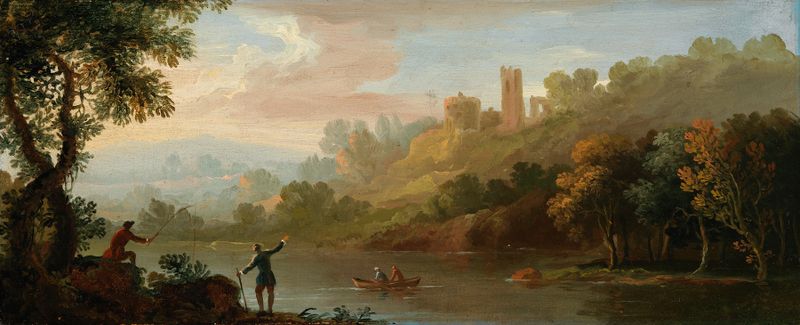
A River Scene
George Barret
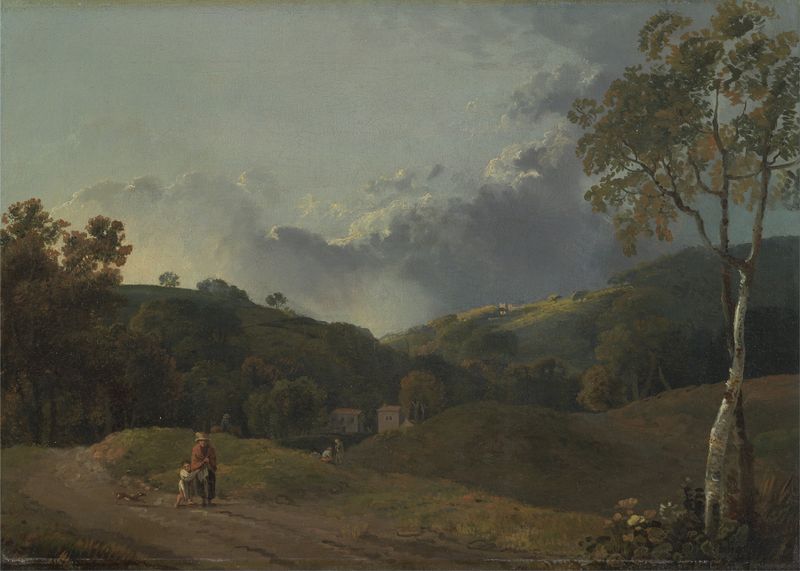
Landscape with Cottagers
George Barret

Landscape with Figures in the Background
George Barret

Morning: Landscape with Mares and Sheep
George Barret

View in a Park
George Barret

Timber Wain on a Rough Road
George Barret

Wooded Landscape with a Boy and his Dog
George Barret
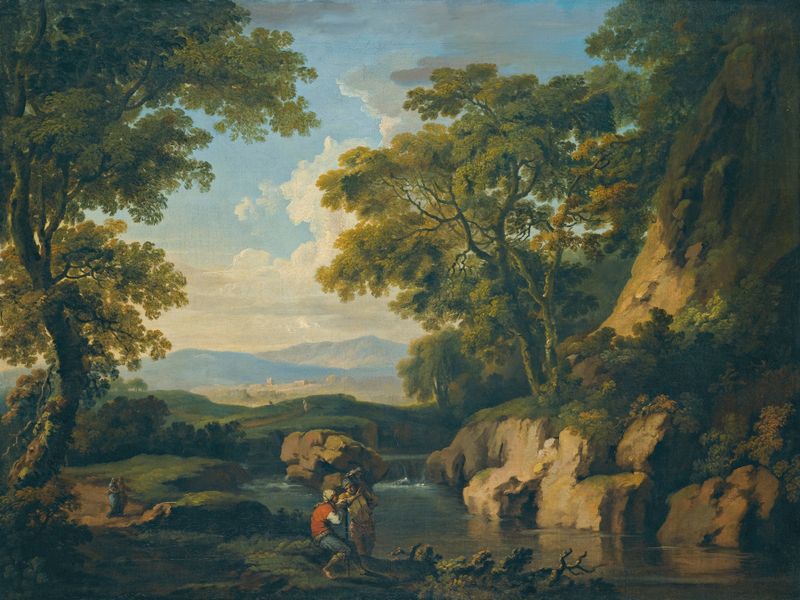
A Mountainous Wooded Landscape With Figures By A River In The Foreground
George Barret
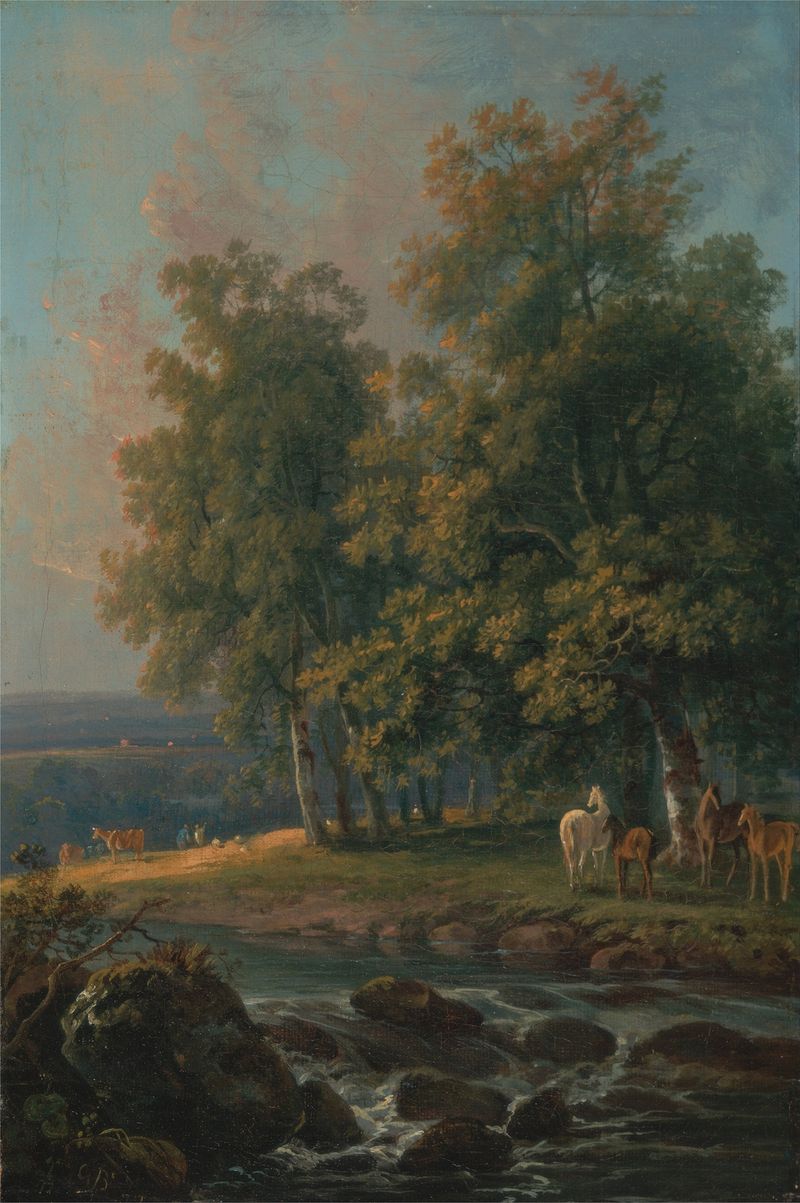
Horses and Cattle by a River
George Barret





