
View in a Park — History & Facts
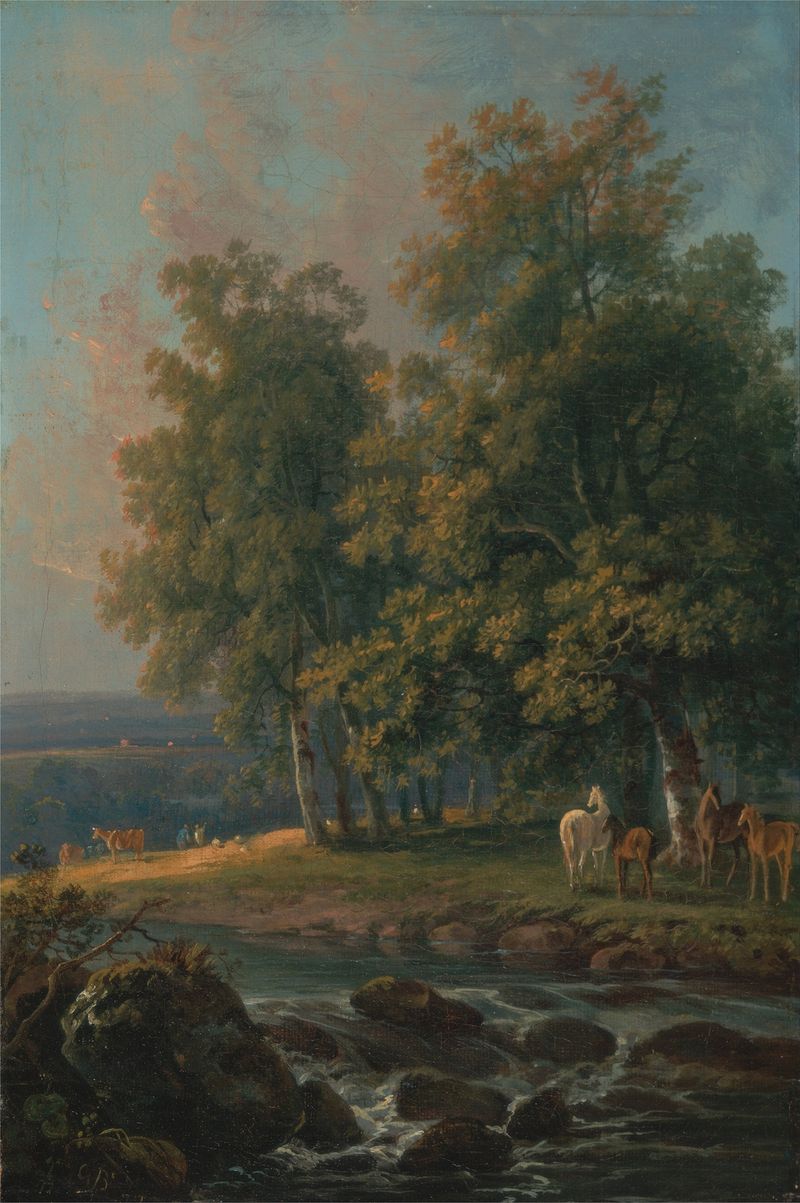
In the delicate interplay of light and shadow, the essence of nature seems to whisper secrets, inviting contemplation and reflection. Look to the foreground where the vibrant greens of the foliage burst forth, evoking a sense of life and vitality. Notice how the dappled sunlight filters through the branches, casting intricate patterns upon the ground, leading your gaze deeper into the tranquil scene. The soft brushwork suggests an ethereal quality, as if the trees themselves are breathing, while the serene pond in the background mirrors the serenity of the sky, creating a harmonious blend of colors. Yet beneath this idyllic surface lies a subtle tension.
The juxtaposition of the lively park with the stillness of the water evokes a contemplative mood, suggesting the duality of life and stillness. The scattered figures, seemingly distant and absorbed in their own worlds, remind us of the isolation we often feel even in a crowd. Their absence of interaction speaks volumes, revealing a deeper truth about human connection and solitude amidst nature’s embrace. During the late 18th century, Barret painted this work amidst a burgeoning fascination with landscape art in England.
His focus on capturing the nuances of natural light marked a significant transition in his career, reflecting the Romantic ideals that were gaining traction in the art world. As he explored the balance between grandeur and intimacy in landscapes, Barret contributed to a broader movement that celebrated the beauty and complexity of the natural world.
More Artworks by George Barret
Browse all →
A wooded landscape with a lake, anglers in the foreground
George Barret
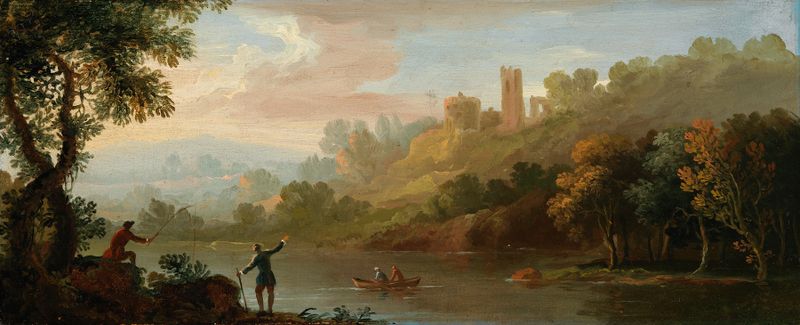
A River Scene
George Barret
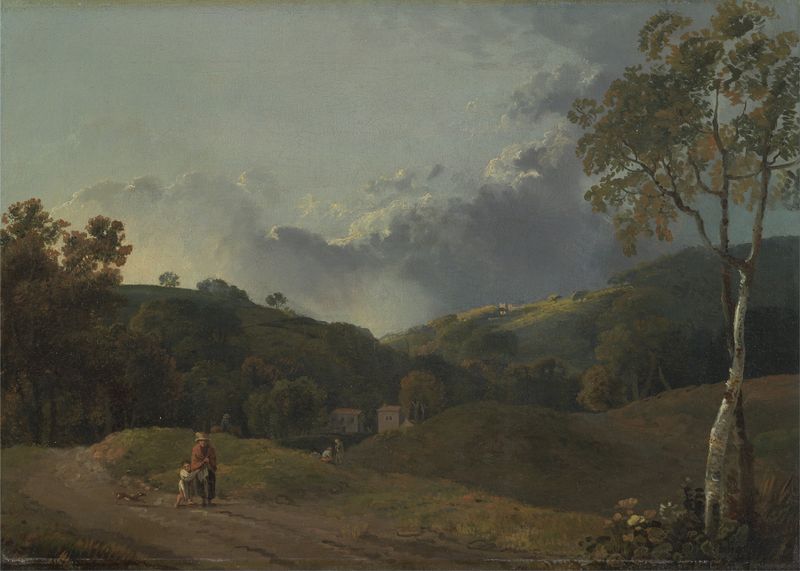
Landscape with Cottagers
George Barret

Landscape with Figures in the Background
George Barret

Morning: Landscape with Mares and Sheep
George Barret
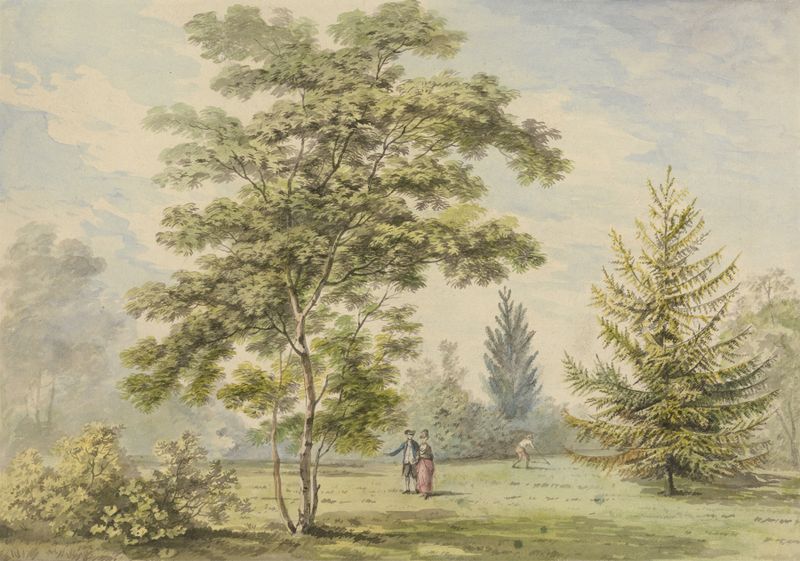
The Acacia Tree, Figures in a Park
George Barret

Timber Wain on a Rough Road
George Barret

Wooded Landscape with a Boy and his Dog
George Barret
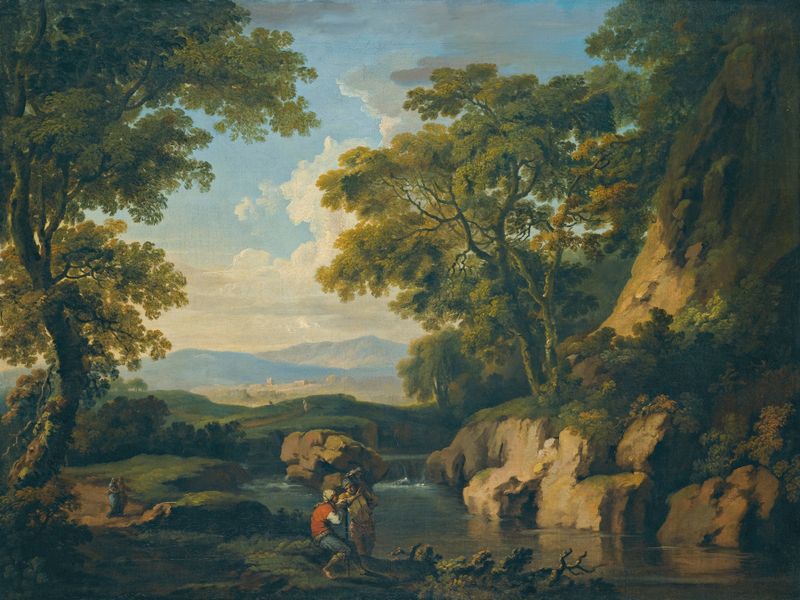
A Mountainous Wooded Landscape With Figures By A River In The Foreground
George Barret
Horses and Cattle by a River
George Barret





