
Timber Wain on a Rough Road — History & Facts
When did color learn to lie? In Timber Wain on a Rough Road, the very essence of hue dances between truth and illusion, urging the viewer to question the authenticity of what they perceive. Look to the left at the earthy tones of the road, where ochre and umber mingle in a texture that seems almost palpable. The timber wain, a sturdy representation of human endeavor, stands resolute against a backdrop of swirling greens and muted sky, drawing your eye toward the tension between manmade and nature. Notice how strands of light peek through the clouds, illuminating the scene with a soft, diffused glow that highlights the cart's weathered wood, invoking a sense of nostalgia for livelihoods intertwined with the land. Beneath the surface of this pastoral depiction lies a deeper commentary on labor and resilience.
The roughness of the road symbolizes the hardships faced by those who navigate it, each bump a metaphor for the struggles of life. The contrast between the vibrant greens of the surrounding trees and the muted tones of the wain suggests a friction between the vitality of nature and the weariness of human toil. This juxtaposition whispers of untold stories, speaking to the endurance required to traverse life’s uneven paths. George Barret created this work during a time when the Romantic movement was gaining traction, embracing the emotional depth of landscape painting.
He worked in England, inspired by the natural beauty of his surroundings while facing the socio-political changes of his era. The piece reflects not only his artistic exploration of nature's majesty but also an evolving relationship between humanity and the wild, laden with the complexities of the time.
More Artworks by George Barret
Browse all →
A wooded landscape with a lake, anglers in the foreground
George Barret
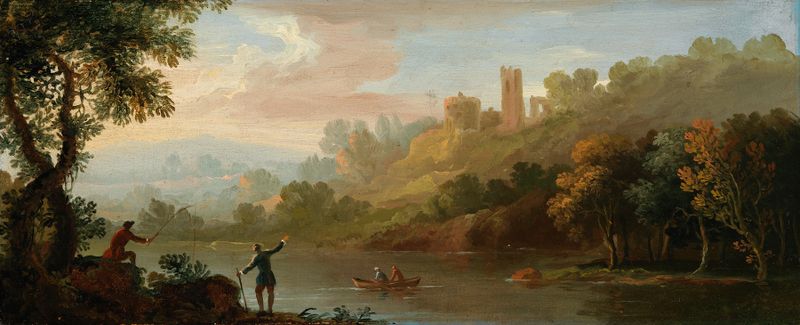
A River Scene
George Barret
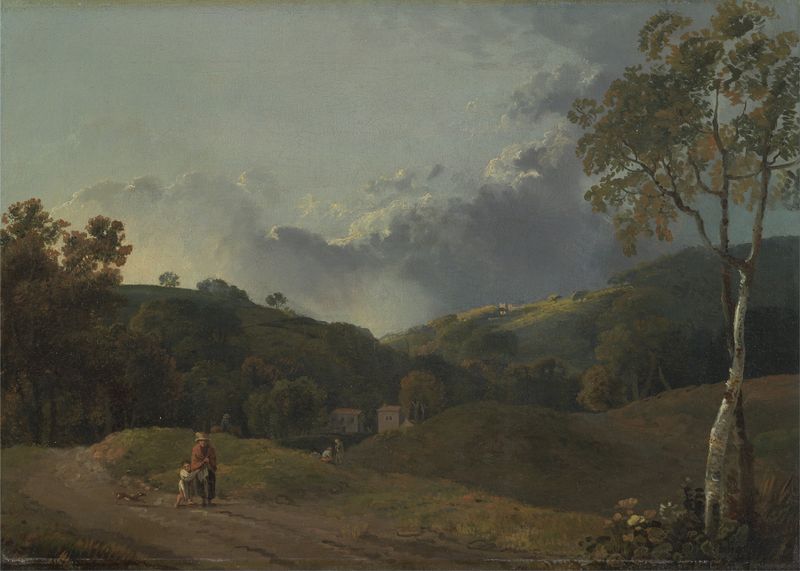
Landscape with Cottagers
George Barret

Landscape with Figures in the Background
George Barret

Morning: Landscape with Mares and Sheep
George Barret

View in a Park
George Barret
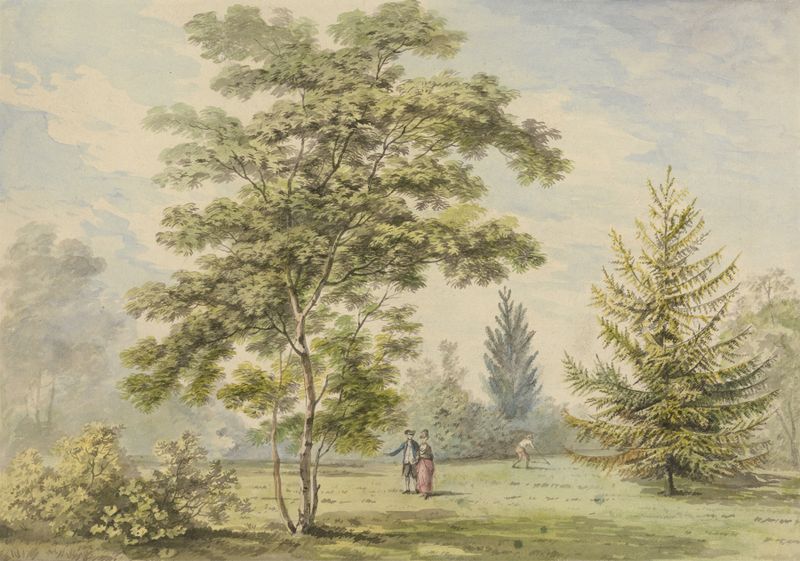
The Acacia Tree, Figures in a Park
George Barret

Wooded Landscape with a Boy and his Dog
George Barret
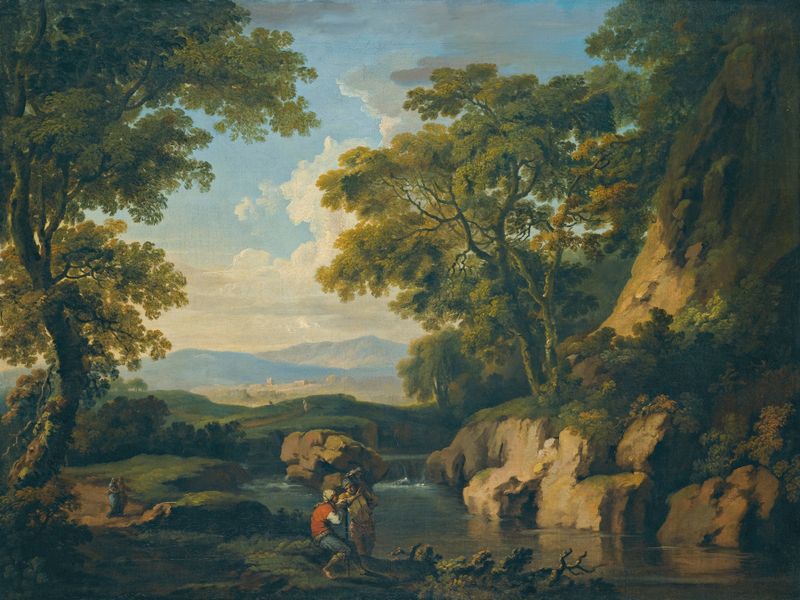
A Mountainous Wooded Landscape With Figures By A River In The Foreground
George Barret
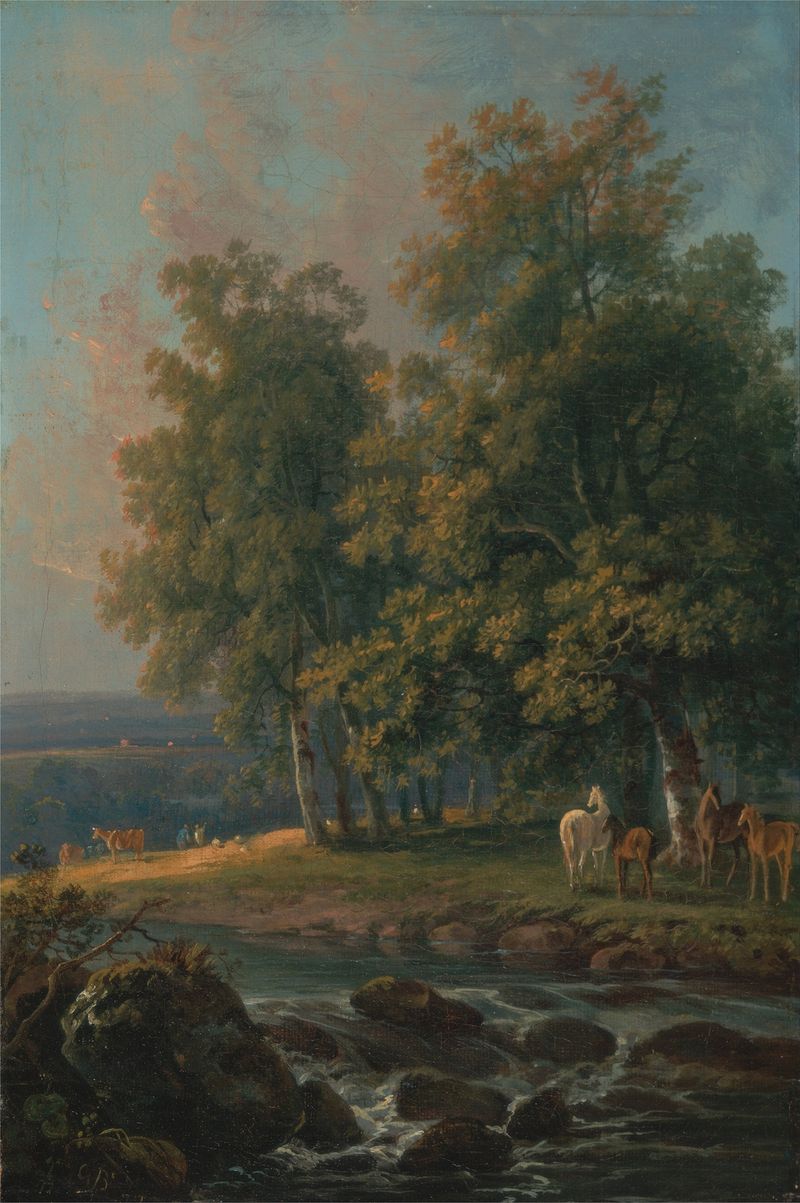
Horses and Cattle by a River
George Barret





