Landscape with Huis Kluys, near Brussels — History & Facts
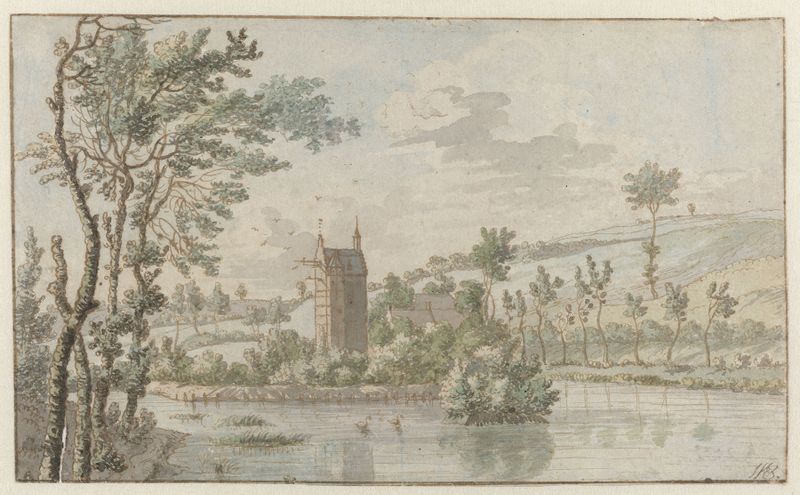
Who listens when art speaks of silence? In the stillness of Josua de Grave's Landscape with Huis Kluys, near Brussels, the echoes of nature whisper secrets, inviting introspection and quiet obsession. Look to the left at the sprawling expanse of lush greenery, where the vibrant hues of the fields meld seamlessly with the soft, muted tones of the distant sky. The composition draws your gaze toward the serene structure of Huis Kluys, set against the backdrop of a gently undulating landscape. Notice how the artist skillfully employs light, allowing it to filter through the sparse clouds, casting a tranquil glow that bathes the scene in a sense of calm and reverence. Delve deeper into the brushstrokes that articulate the interplay between man and nature.
The juxtaposition of the meticulously rendered house against the wild, untamed foliage suggests a relationship of harmony and tension, as if the human presence is both a protector and an intruder. The still waters in the foreground reflect not just the scenery but the weight of contemplation, hinting at the obsession for both solitude and connection woven throughout the canvas. In 1674, de Grave painted this work during a period marked by a rising interest in landscape art in the Netherlands. Influenced by the Baroque style, he sought to capture the sublime beauty of the natural world while reflecting the societal shifts surrounding him.
This era, increasingly fascinated by the interplay between nature and architecture, allowed him to explore his own artistic voice, crafting a moment that resonates with both peace and introspection.