
Landscape with Packhorses — History & Facts
Who listens when art speaks of silence? In Landscape with Packhorses, the intricate layering of nature and human endeavor whispers tales of both camaraderie and betrayal, reminding us that even the quietest moments can echo with unspoken tension. Look to the mid-ground, where two packhorses carry their burdens against a backdrop of verdant hills. Their gentle forms, cast in warm shades of brown and gold, draw the eye amidst the cooler greens and blues of the landscape. Notice how the light peeks through the overhanging trees, illuminating the horses’ glossy coats, a technique that reflects the artist’s mastery of chiaroscuro.
The composition, with its balance of movement and serenity, encapsulates an almost pastoral tranquility, yet an undercurrent of unseen struggles runs through the scene. Upon closer inspection, the juxtaposition between the horses and their surroundings reveals more than mere beauty. The heavy loads they bear symbolize the weight of expectation, while the distant figures, possibly foreboding or watchful, serve as a reminder of betrayal lurking beneath the calm surface of this idyllic setting. The soft, blurred contours of the landscape further evoke a sense of longing or loss, suggesting that what was once a harmonious existence may now be fraught with unseen discord. In 1660, Philips Wouwerman was immersed in the vibrant artistic life of the Dutch Golden Age, surrounded by a flourishing market for landscapes and genre scenes.
Having established a reputation for his skillful depictions of horses, this work reflects his keen observation of rural life and the interplay between nature and humanity. At this time, Wouwerman navigated both personal and professional success, yet the themes of labor and betrayal would resonate deeply, echoing the complexities of life during an era of rapid change.
More Artworks by Philips Wouwerman
Browse all →
Halt of Cavaliers at an Inn
Philips Wouwerman

Halt of Travellers
Philips Wouwerman

Travelers Awaiting a Ferry
Philips Wouwerman
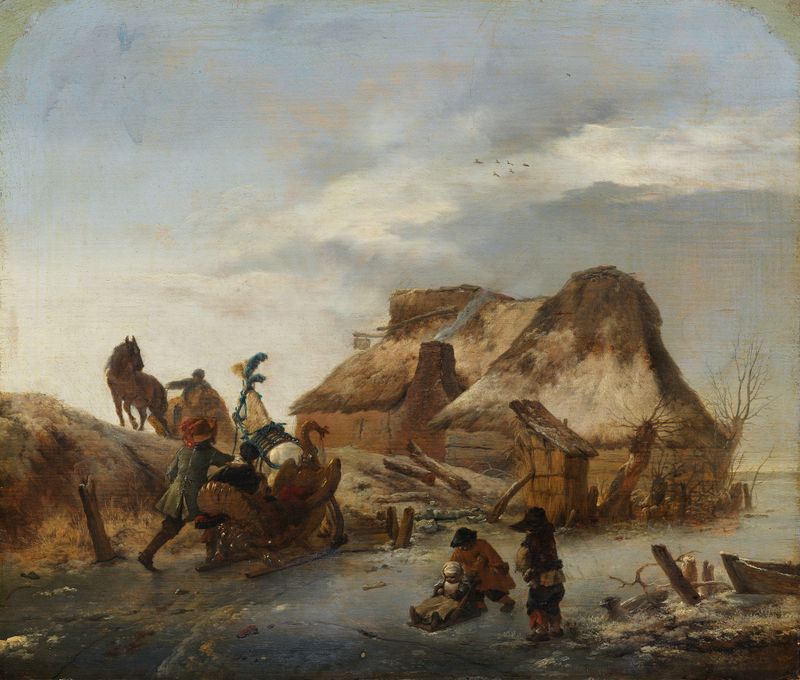
A Nobleman’s Sleigh on the Ice
Philips Wouwerman
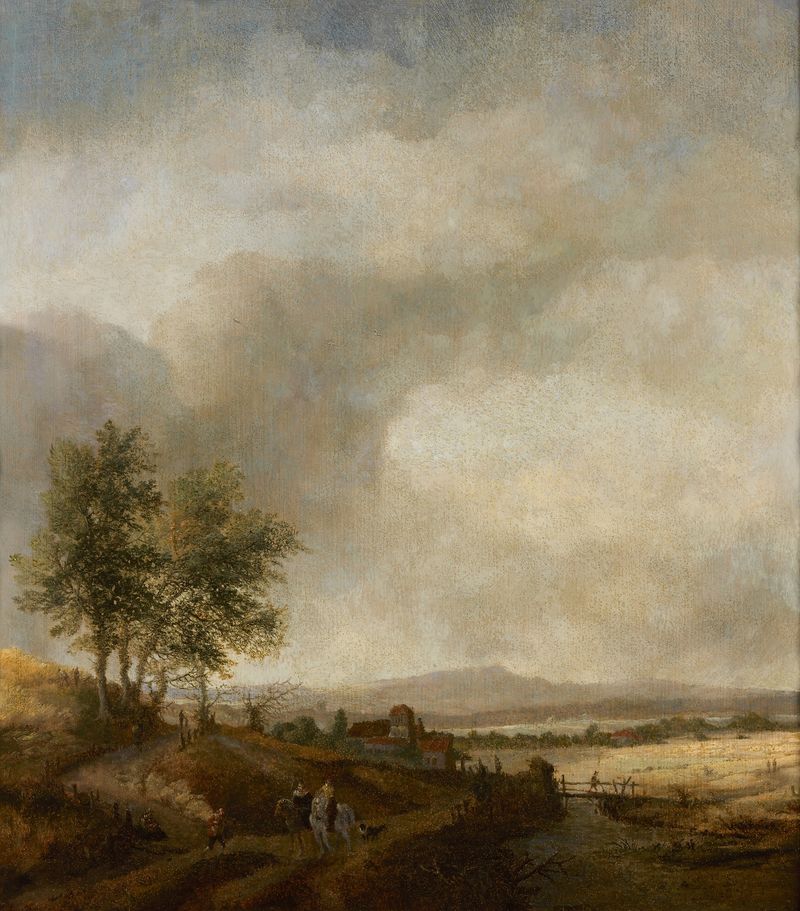
Landschap met ruiters
Philips Wouwerman
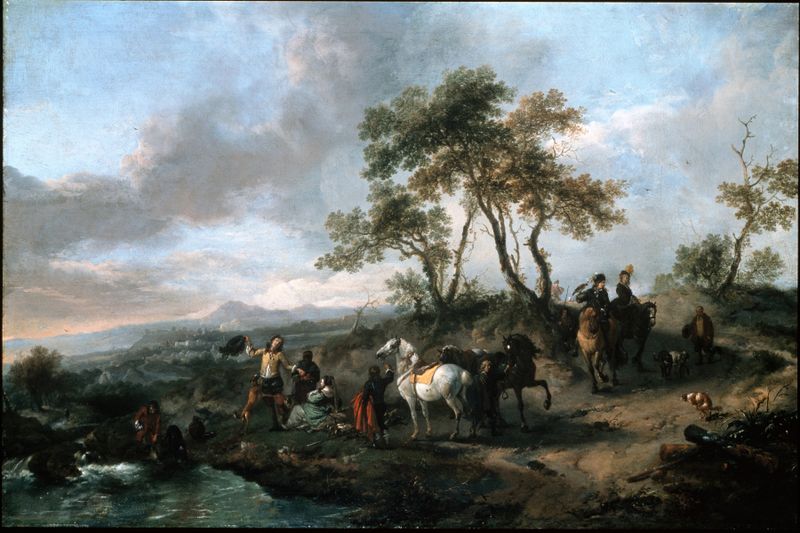
Halt of a Hunting Party
Philips Wouwerman
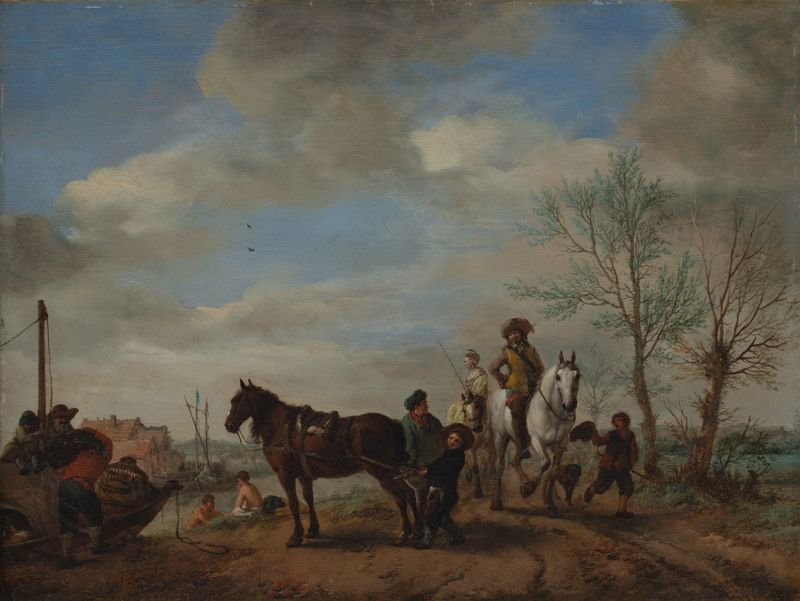
A Man and a Woman on Horseback
Philips Wouwerman
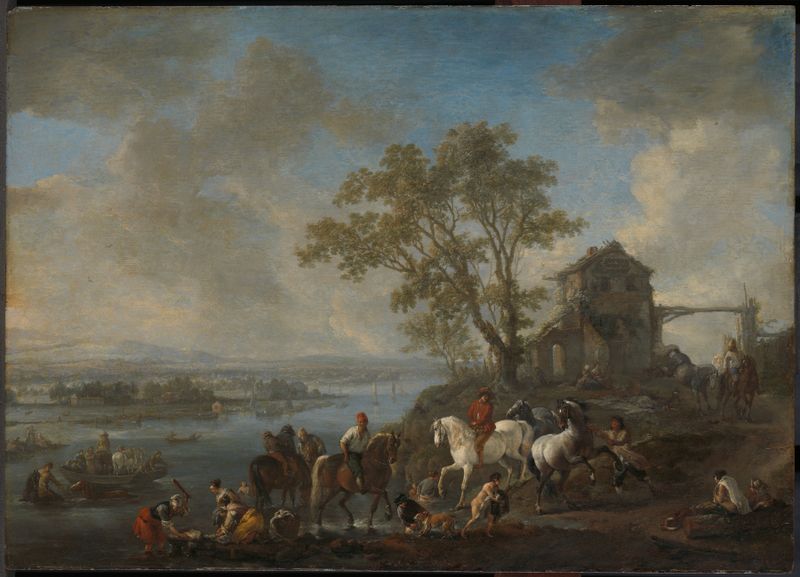
Horsepond on a River
Philips Wouwerman
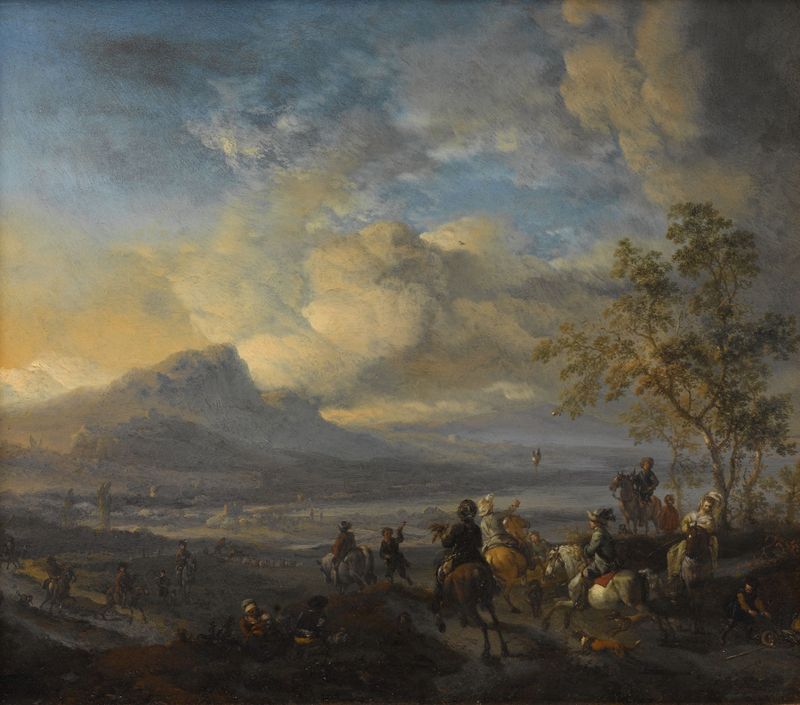
The Falcon Hunt
Philips Wouwerman

Riders at a Blacksmith’s
Philips Wouwerman





