Landscape with Thatched Buildings — History & Facts
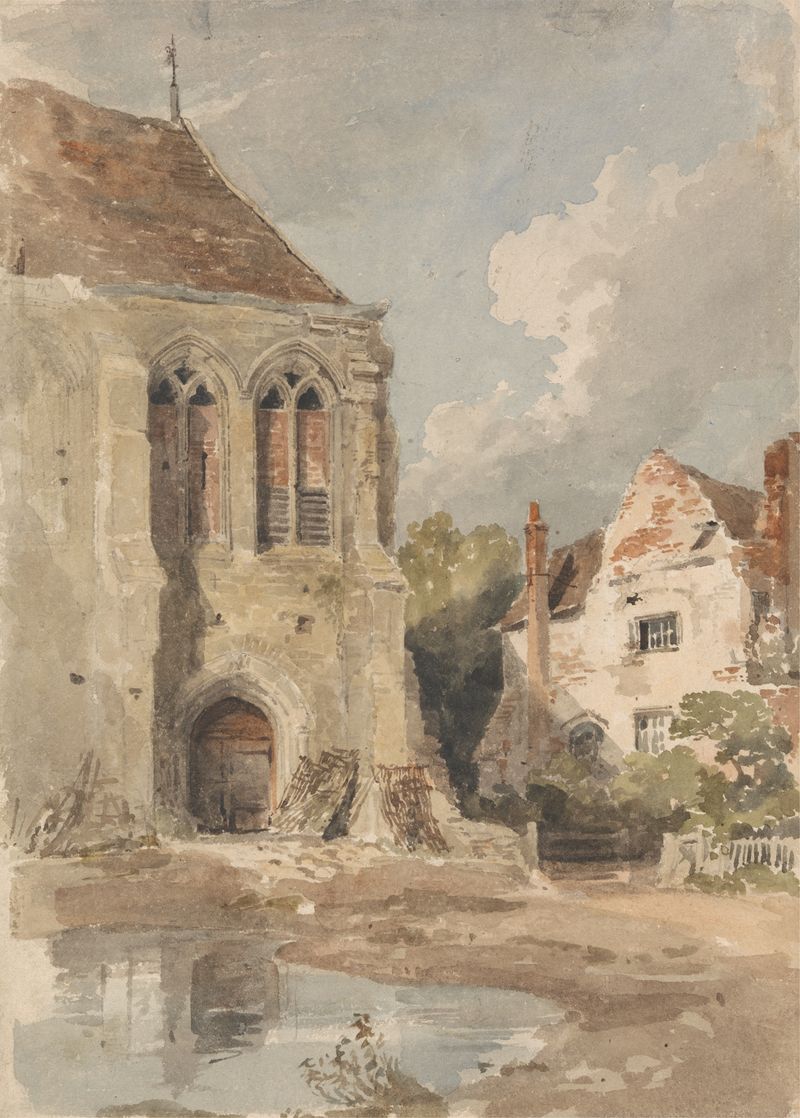
In the delicate balance of nature and architecture, a moment of betrayal lies hidden beneath the serene surface of this landscape. Look to the left at the thatched roofs nestled among the gentle hills, their earthy tones harmonizing with the vibrant greens of the surrounding foliage. The brushwork, with its soft strokes, guides the viewer’s eye across the canvas, creating a sense of depth that draws you into the scene. Notice how the light dances on the roofs, casting soft shadows that evoke a feeling of warmth and shelter, yet simultaneously hint at an unsettling tranquility. The presence of the thatched buildings reflects human resilience, while the surrounding landscape, teeming with vitality, whispers of abandonment and neglect.
The juxtaposition of rustic charm and the encroaching wildness creates an emotional tension, suggesting that what we cherish may also be fleeting. Every detail—the fluttering leaves, the distant horizon—carries a duality, revealing both the beauty of existence and the inevitability of change. In 1809, Amelia Long painted this evocative landscape during a transformative period in her life, marked by her increasing recognition as a landscape artist in England. It was a time when romantic aesthetics were shaping public perception of nature, intertwining emotions with the sublime.
Long's work emerged amidst a broader cultural fascination with the natural world, yet her distinctive voice captured the bittersweet essence of impermanence, weaving personal experiences into the fabric of her art.