
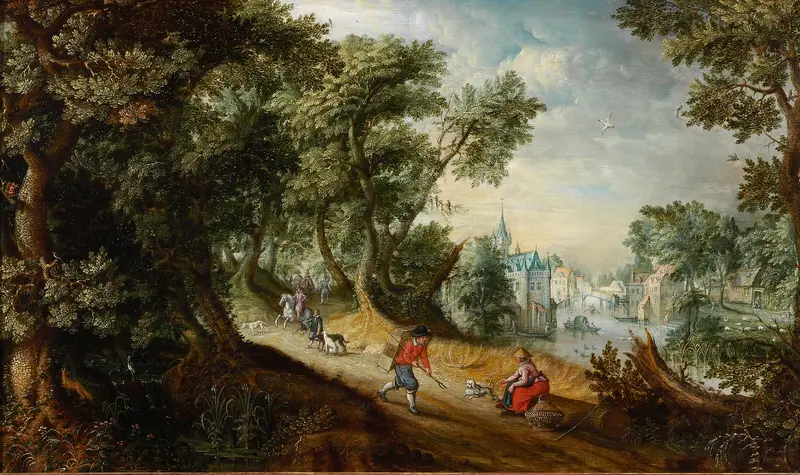
Landscape with the angel Raphael and Tobais who is cutting open the fish (Tobit 6,1-5) — History & Facts
A shaft of golden light breaks through the dense canopy, drawing your gaze to a quiet drama unfolding at the water’s edge. Two small figures, nearly lost in the vastness of the wooded landscape, are absorbed in their task: one bends over a silvery fish, blade in hand, while the other stands watchful, staff in arm. The painter’s eye lingers on the play of sunlight in the foliage and the gentle swirl of the river, making the landscape itself the true protagonist, while the biblical story—Tobias and the angel Raphael—unfolds almost as a secret for the attentive viewer.
The birds circling above and the fallen log in the foreground deepen the sense of nature’s quiet abundance, while the figures’ placement at the threshold between light and shadow hints at the miraculous guidance said to be at work. Painted in 1628, Landscape with the angel Raphael and Tobais who is cutting open the fish (Tobit 6,1-5) by Adriaen van Stalbemt belongs to a moment when Flemish artists delighted in weaving sacred tales into the fabric of everyday nature. Such landscapes were prized by collectors eager to display both piety and taste, their walls alive with wooded vistas and biblical wanderers. In this era, the landscape was no longer mere backdrop: it became a stage for human vulnerability and divine intervention, rendered with a loving attention to mossy trunks and shifting skies.
Though history has kept few traces of this particular painting’s early journey, its survival in a modern collection invites us to lose ourselves in its layered world—where a miracle might be glimpsed in the quiet bend of a river.
More Artworks by Adriaen van Stalbemt

Countryside landscape with staffage
Adriaen van Stalbemt
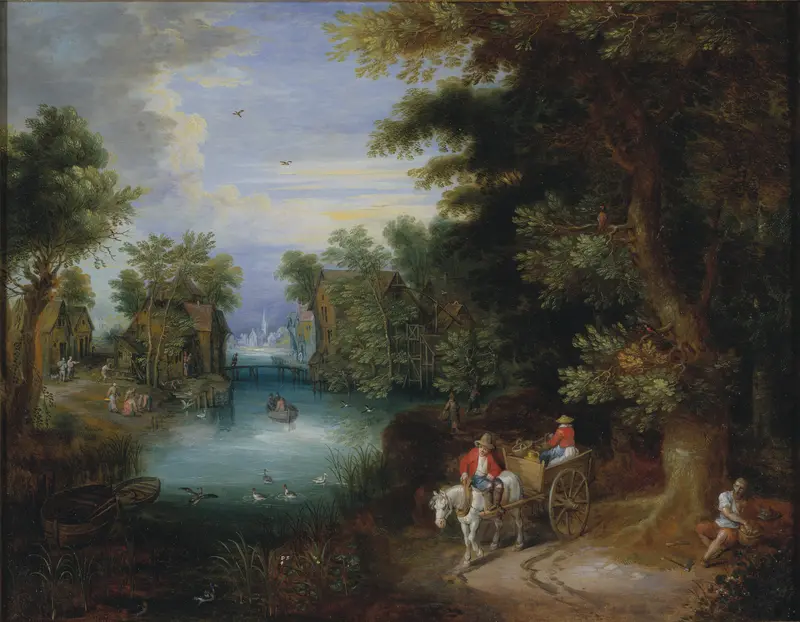
River Landscape with Peasants
Adriaen van Stalbemt
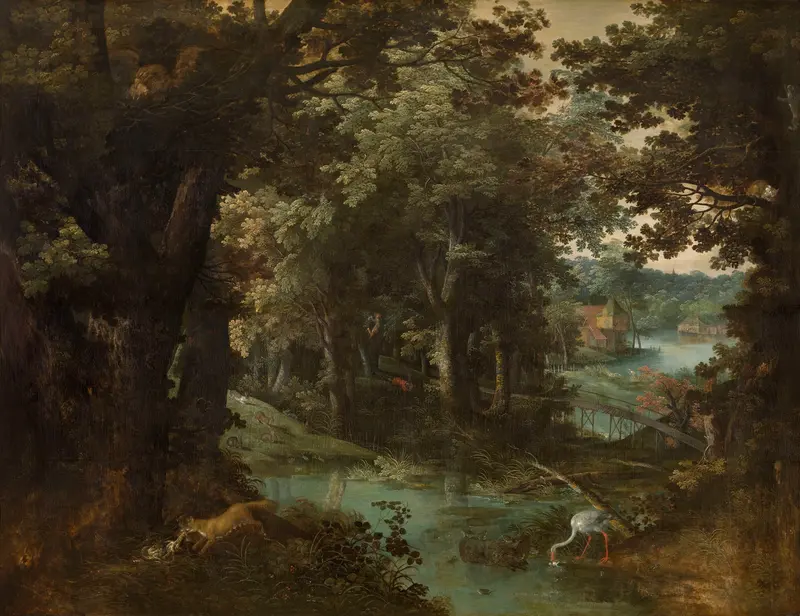
Landscape with Beast Fables
Adriaen van Stalbemt
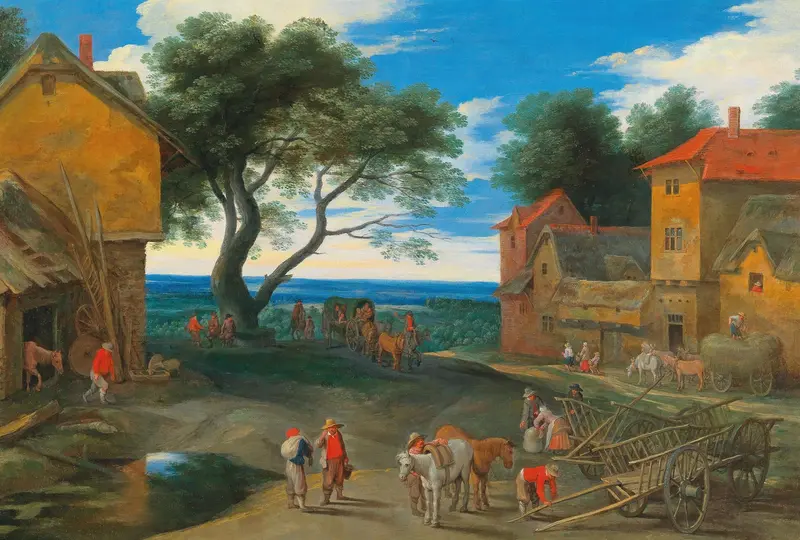
Travellers in a landscape with buildings
Adriaen van Stalbemt
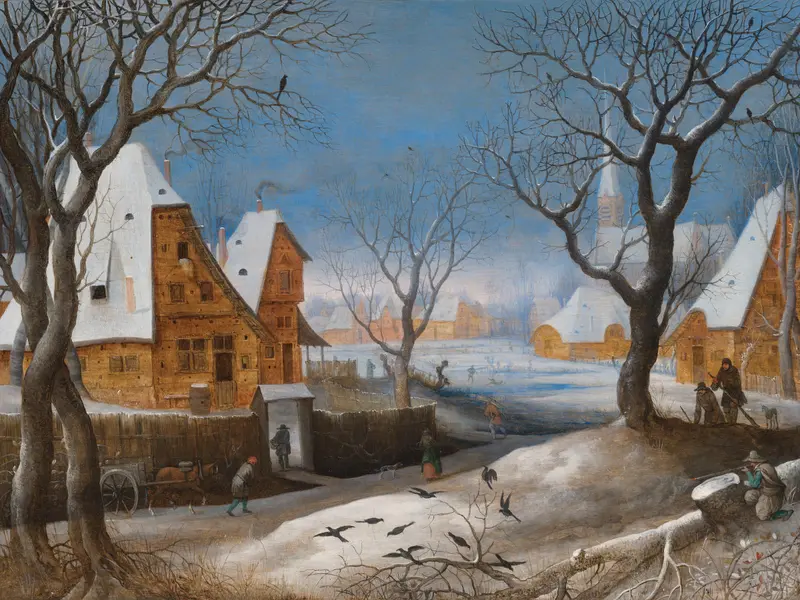
A winter landscape, with figures in a village
Adriaen van Stalbemt
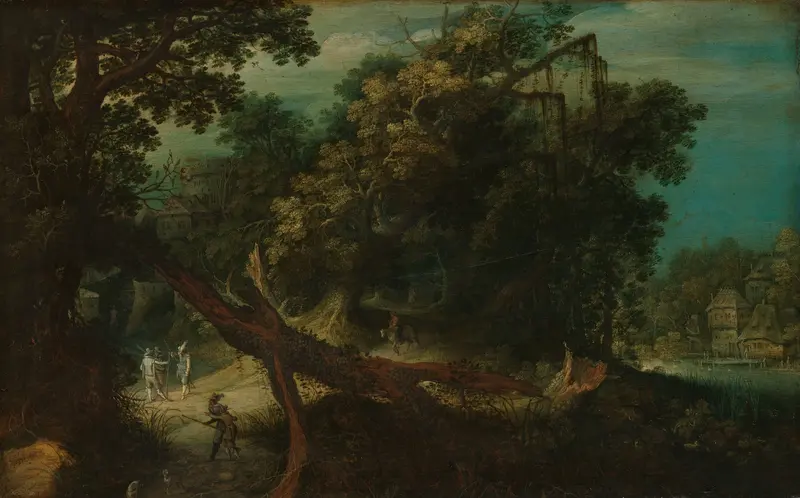
Shooters in a Forest Glade
Adriaen van Stalbemt
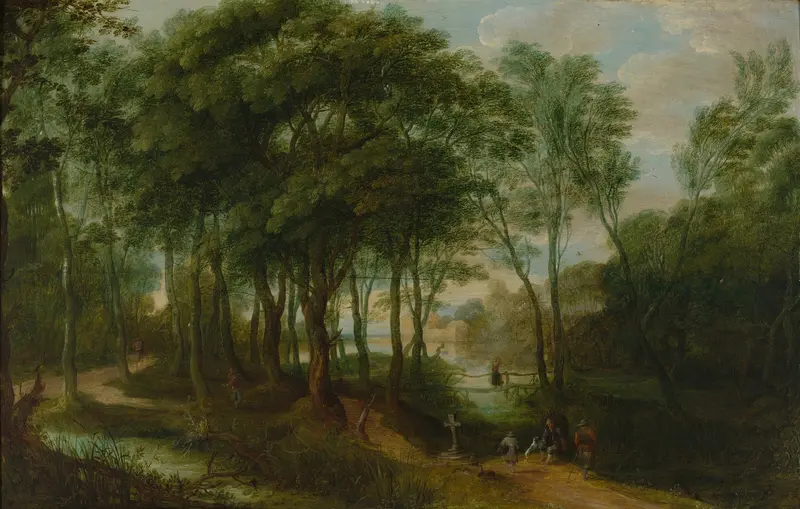
Figures On A Wooded Path, With A Building Behind
Adriaen van Stalbemt
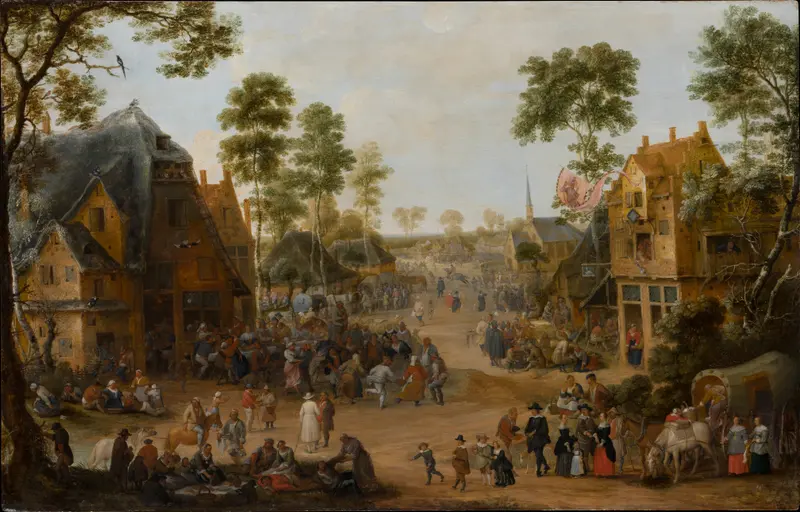
Village Church Festival
Adriaen van Stalbemt
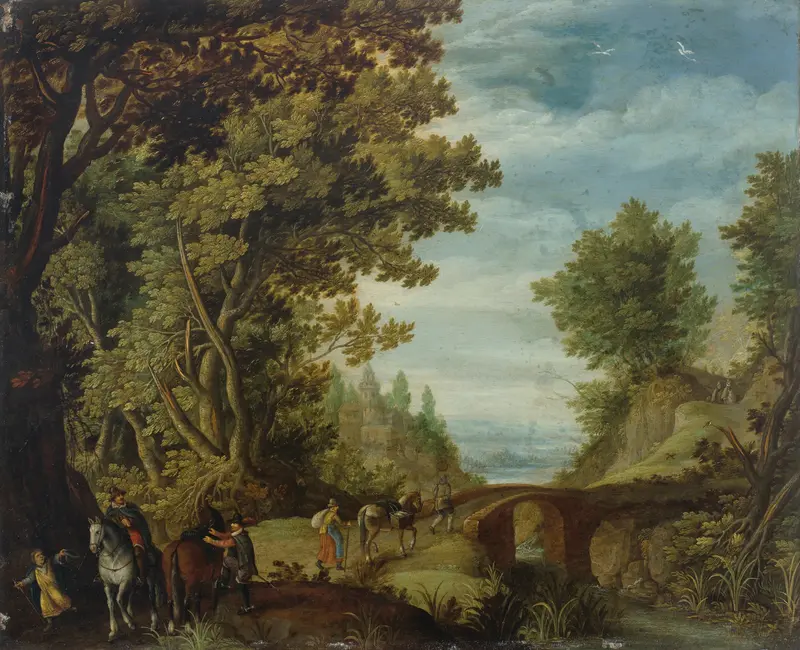
A wooded landscape with travelers crossing a bridge
Adriaen van Stalbemt
Landschap met rivier
Adriaen van Stalbemt
More Landscape Art

The Starry Night
Vincent van Gogh

View of Delft
Johannes Vermeer

Water Lilies
Claude Monet

The Grand Canal, Venice, looking north-west from the Ca' Corner to the Ca' Contarini degli Scrigni, with the campanile of Santa Maria della Carità
Canaletto

Windsor Castle
Canaletto

The Grand Canal looking North-East from the Palazzo Dolfin-Manin to the Rialto Bridge
Canaletto