
Landscape with Waterfall — History & Facts
Where does light end, and longing begin? In the heart of Landscape with Waterfall, motion dances between the gentle flow of water and the whispering breeze across the hills, a symphony of nature's restless spirit. Look to the left at the cascading waterfall, its silvery tendrils tumbling down the rocks, casting a kaleidoscope of shimmering reflections across the pool below. Notice how the vibrant greens and earthy browns of the landscape pulse with life, while wisps of clouds capture the sunlight, creating an ethereal glow that bathes the scene in warmth. Each brushstroke brings forth the movement of water and air, inviting the viewer to feel the rush of the moment. Yet within this serene portrayal lies an undercurrent of tension.
The juxtaposition of the calm surface of the water and the chaotic fall reveals a struggle between tranquility and turbulence. The trees, swaying gently in the wind, symbolize nature's resilience against the inevitable flow of time, while the distant mountains stand stoic, hinting at life's unyielding challenges. Here, every element conveys a narrative of persistence amid the relentless passage of moments. In 1850, Hans Gude painted this masterpiece in Norway, a period marked by romantic exploration of landscapes.
Emerging as a prominent figure in the Norwegian school of painting, he sought to capture the raw beauty of the natural world, reflecting both personal and national pride. During this time, the art world was increasingly focused on realism and emotional expression, setting the stage for Gude's emotive landscapes that resonated with a longing for nature's sublime simplicity.
More Artworks by Hans Gude
Browse all →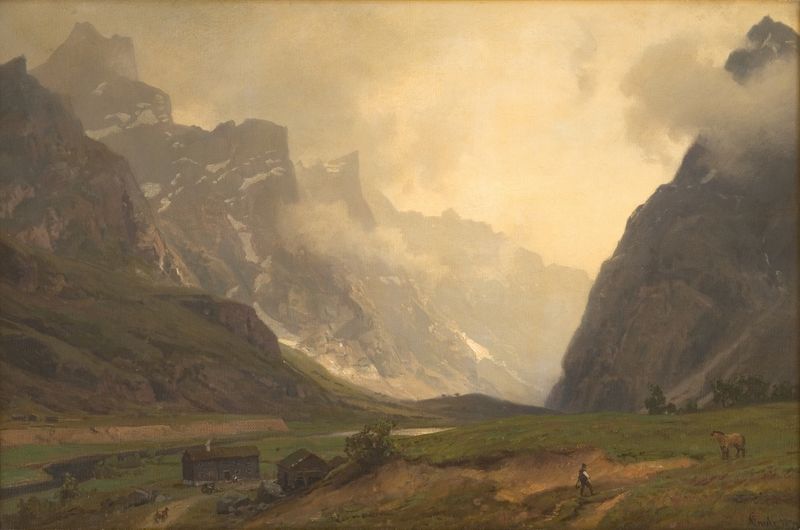
The Troll Peaks in Romsdalen, The Foot of Romsdalshorn to the Right
Hans Gude
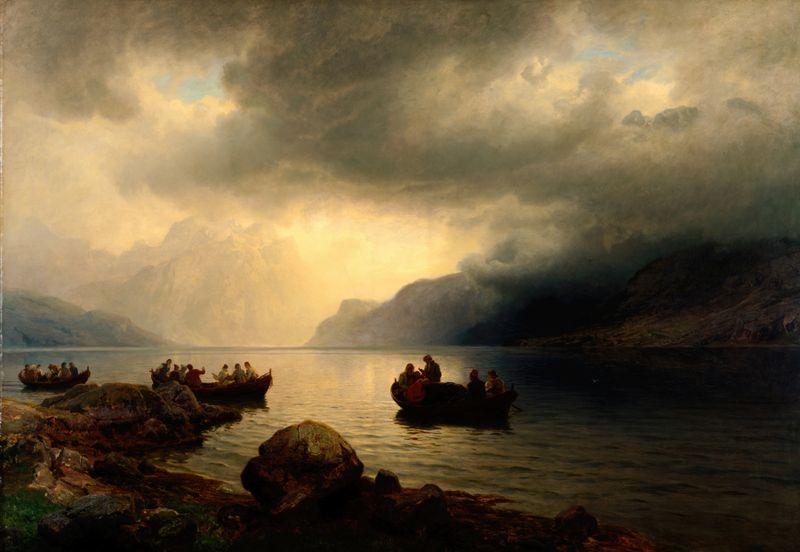
Funeral Procession on the Sogne Fjord
Hans Gude
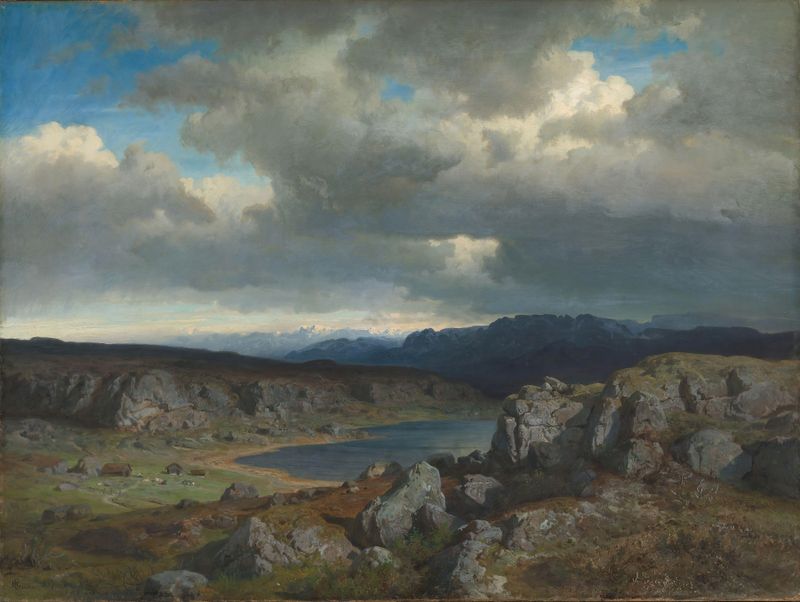
Norwegian Highlands
Hans Gude
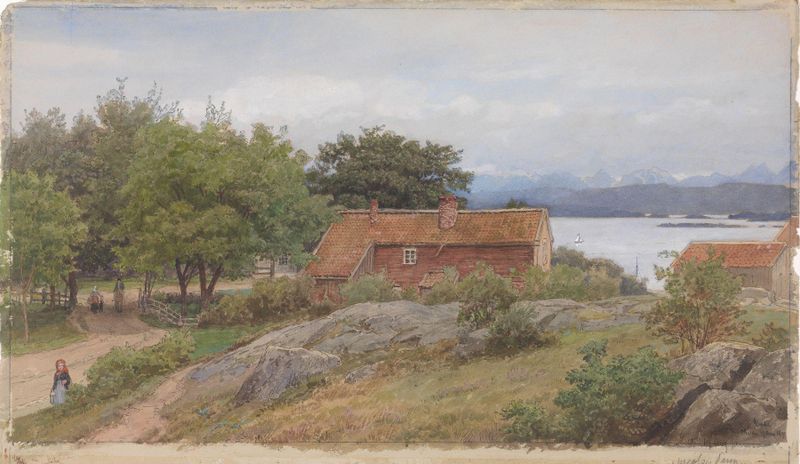
Landskap med bondegård ved Molde
Hans Gude
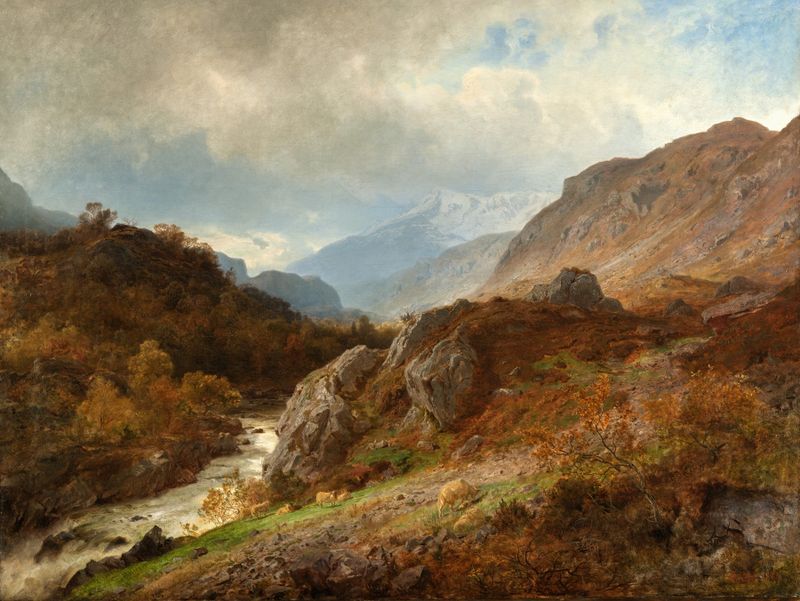
Mountain Landscape
Hans Gude
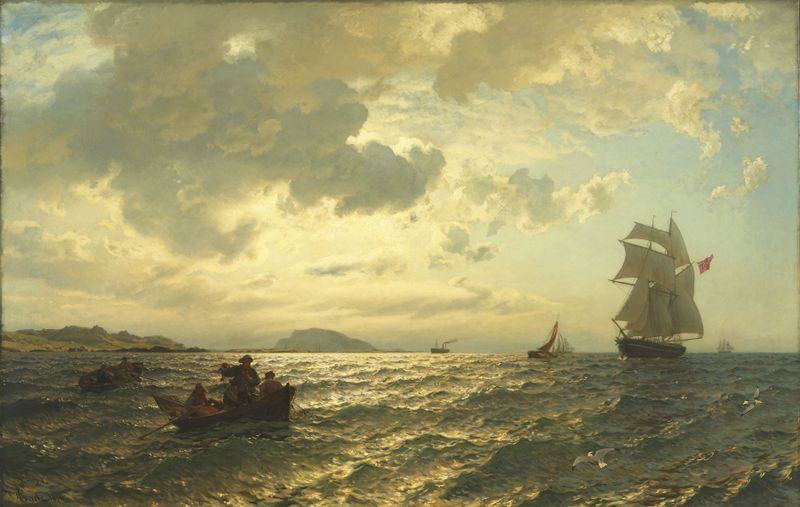
Fresh Breeze on the Norwegian Coast
Hans Gude
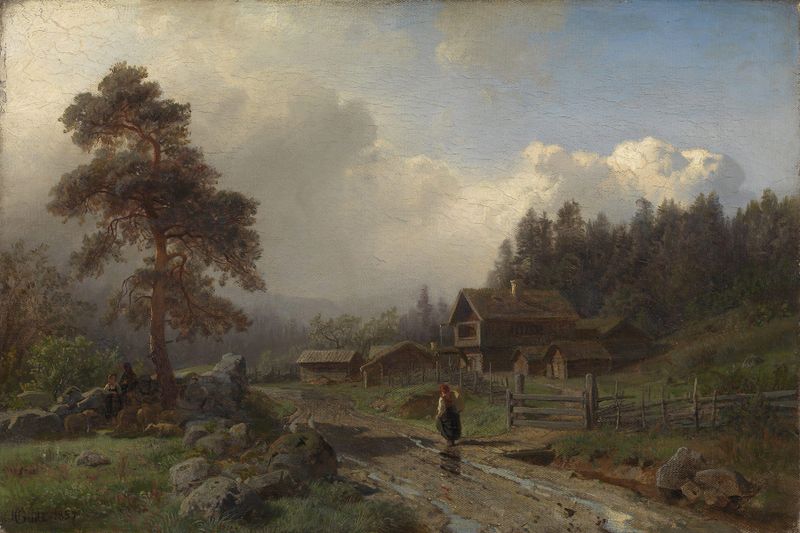
Norwegian Landscape in Rain
Hans Gude
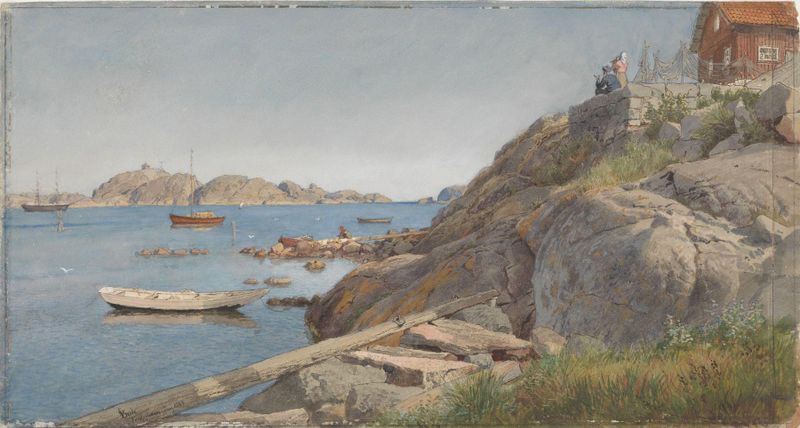
Landscape by Stavern
Hans Gude
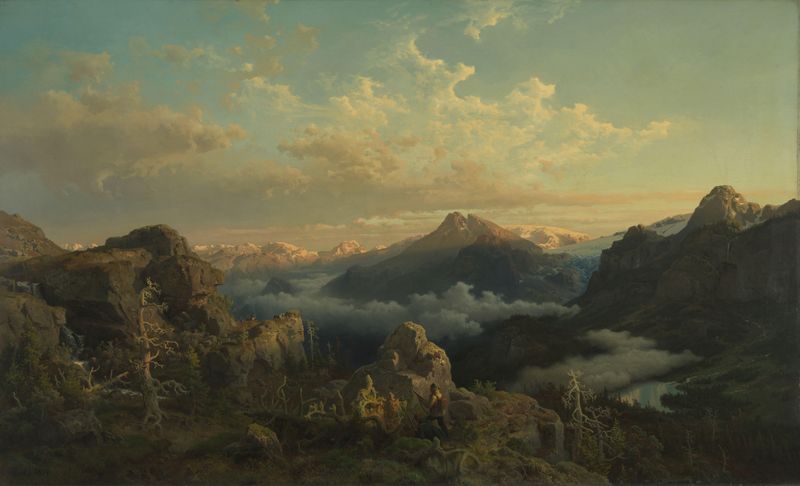
Norwegian Highlands in Sunrise
Hans Gude
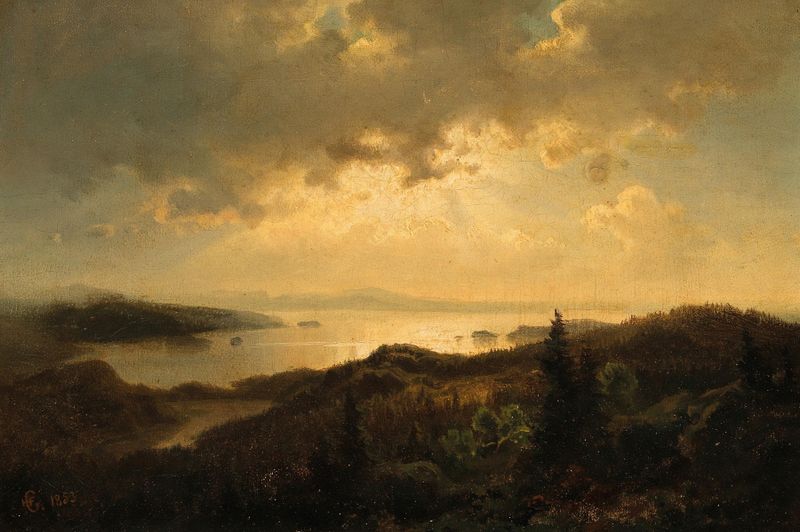
A Scene at Dusk in Norway
Hans Gude





