Landschaft bei Marcoussis — History & Facts
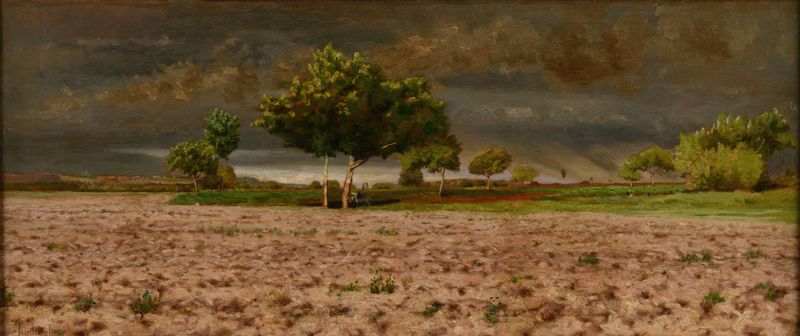
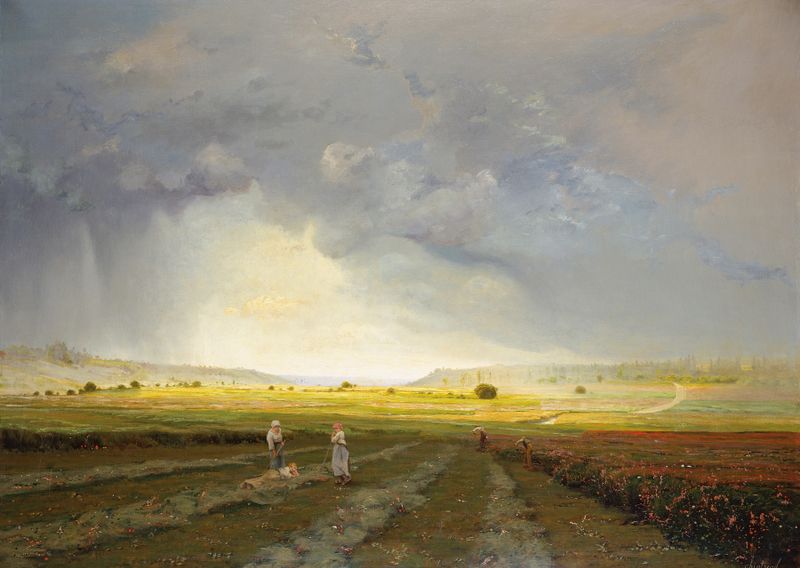
In a world where chaos often reigns, art becomes a refuge, a portal to tranquility. As nature unfolds in its raw beauty, each brushstroke whispers the secrets of the earth, challenging us to confront the disarray around us. Look to the foreground where gentle undulations of green hills cascade softly, inviting the eye to meander through the painted landscape. The vibrant blues of the sky contrast with earthy tones below, creating a harmonious balance between the tranquility of nature and the turmoil of existence.
Notice how the dappled light filters through the clouds, illuminating patches of grass and inviting a deeper contemplation of the scene. The palette here is a celebration of the natural world, but beneath the serene surface lies an undercurrent of disquiet. Within the lush scenery, there is a palpable tension between the idyllic and the chaotic. The juxtaposition of light and shadow suggests a fleeting moment, a slice of reality on the brink of change.
The swaying grasses and distant trees seem to dance in the wind, reminding us of nature's constant movement, while the sky looms overhead, a testament to the tumultuous emotions we navigate daily. This landscape captures not just the beauty of Marcoussis but also the chaos that can coexist within it. Antoine Chintreuil painted this work in 1864 during a period marked by an emerging interest in the Impressionist movement, which sought to capture fleeting moments in time. Living in France, he was influenced by the changing perceptions of landscapes and the advent of plein air painting.
The world was witnessing a shift, both in the realm of art and in the context of modernity, drawing attention to the natural elements that would become foundational in the works of later Impressionists.