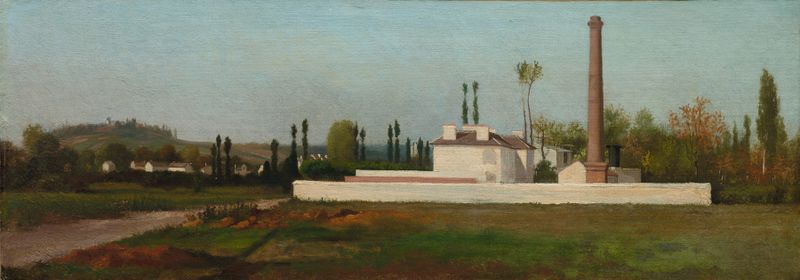
The Marl Pit at Mulcent;Evening — History & Facts
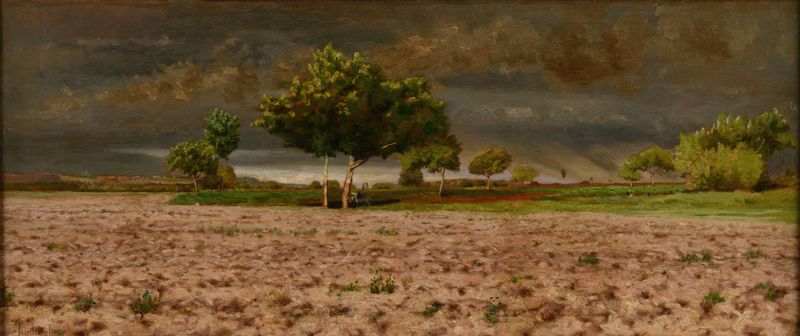
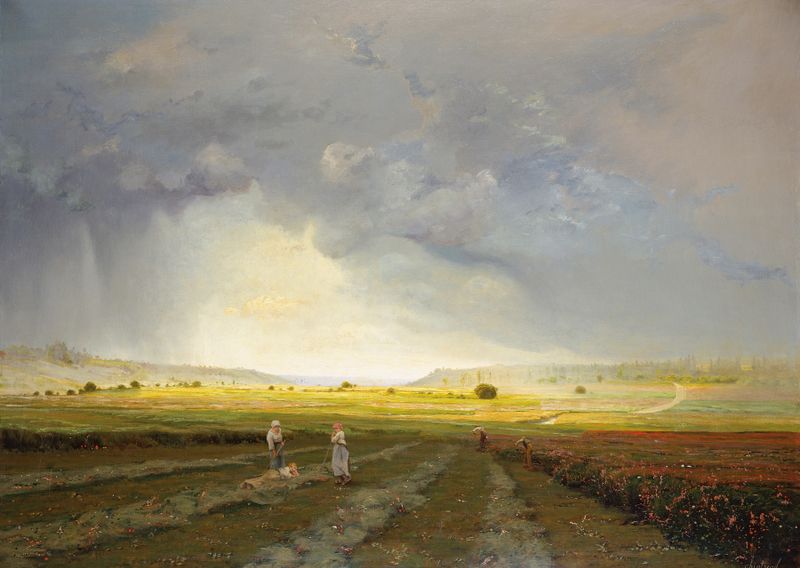
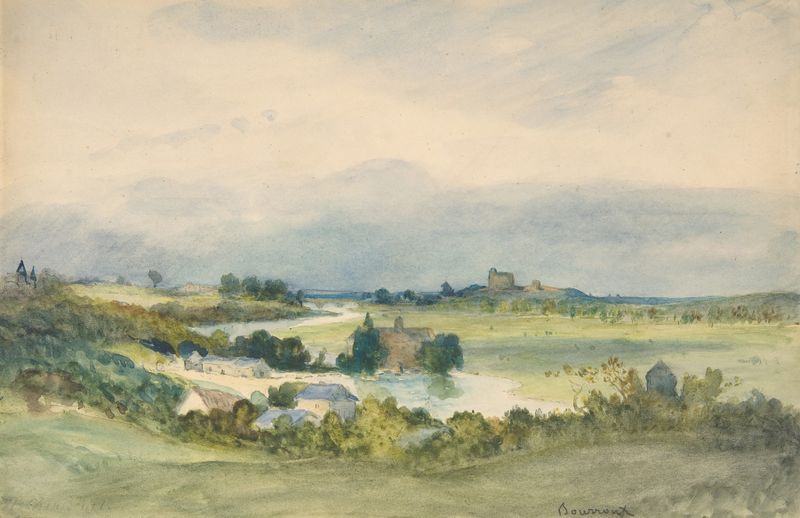
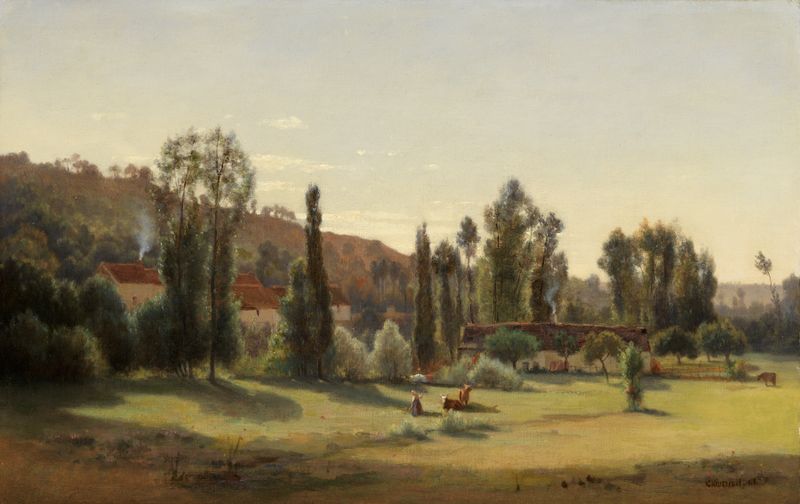
In a world filled with turmoil, art transforms the mundane into a vessel of awe, inviting us to witness the sublime. Look to the left at the soft, flowing curves of the hills, where muted greens and blues blend harmoniously, teasing the boundaries between land and sky. The evening light delicately bathes the scene, casting a warm, golden glow that dances across the landscape. Notice how the brushstrokes evoke a sense of movement, guiding your gaze through the undulating terrain and into the tranquil waters, which reflect the surrounding beauty like a mirror of contemplation. Yet, within this peaceful portrayal lies an undercurrent of tension.
The contrast between the vibrant sky and the stillness of the water suggests a fleeting moment, capturing the very essence of time—an ephemeral experience that can vanish with the fading light. The trees, though sturdy, seem to lean towards the horizon, as if drawn by the pull of dusk, hinting at a relationship between nature and the passage of time. The artist’s choice of color and form speaks to both serenity and an unspoken longing, evoking a profound emotional resonance. Antoine Chintreuil painted The Marl Pit at Mulcent; Evening after 1857, during a period of artistic exploration and Impressionism.
Living in France, Chintreuil's work reflected burgeoning movements that sought to capture the effects of light and atmosphere directly from nature. His commitment to portraying the emotive power of landscapes positioned him among the notable figures seeking to revolutionize the relationship between art and perception.