
Landschap bij Eext (Drenthe) — History & Facts
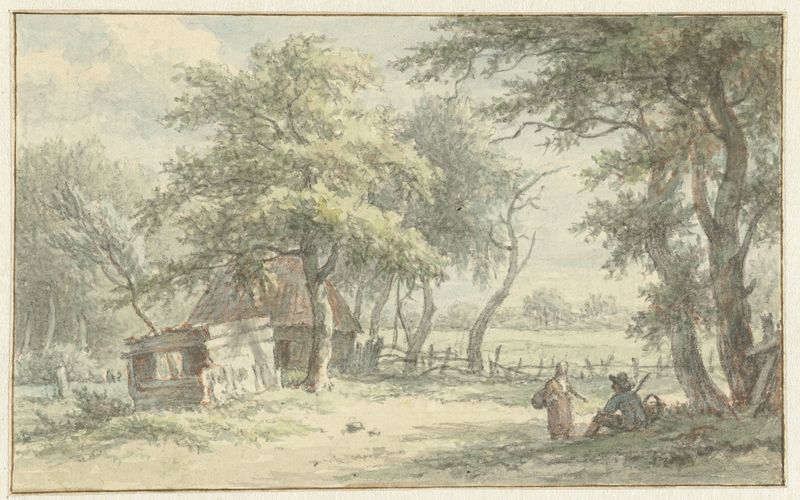
Can paint confess what words never could? In Landschap bij Eext (Drenthe), a landscape unfolds not just as a depiction of nature but as a profound elegy to what remains unseen and unspoken. Look to the left at the rolling hills dotted with lush green grass, where a serene river gently curves its way through the scene. The palette is rich yet grounded, with soft greens and earthy browns counterbalanced by the delicate blues of the sky. Notice how light spills in from the upper corner, casting a golden hue that breathes life into the landscape, while shadowy patches hint at the encroaching dusk.
The composition draws your gaze in a natural flow, inviting contemplation rather than mere observation. Delve deeper into the subtle contrasts: the vibrancy of life in the foreground and the stillness of the distant horizon. Each element seems to whisper of absence — the solitude of the winding paths suggesting journeys never taken, and the fading light hinting at the inevitability of change. Trees stand tall, yet their branches are bare, evoking a haunting sense of loss intertwined with the beauty of the moment captured. In 1793, at a time when Romanticism was beginning to reshape the art world, the artist found himself in the quiet landscapes of Drenthe, reflecting a personal and collective yearning for connection amid a rapidly transforming society.
This was a period of economic upheaval and political change in Europe, and through this work, he captured not just a scene but the deep emotions that resonate with a shared human experience.
More Artworks by Egbert van Drielst
Browse all →
Ruïne van het Huis De Haer
Egbert van Drielst

Landschap in de omgeving van Wageningen
Egbert van Drielst
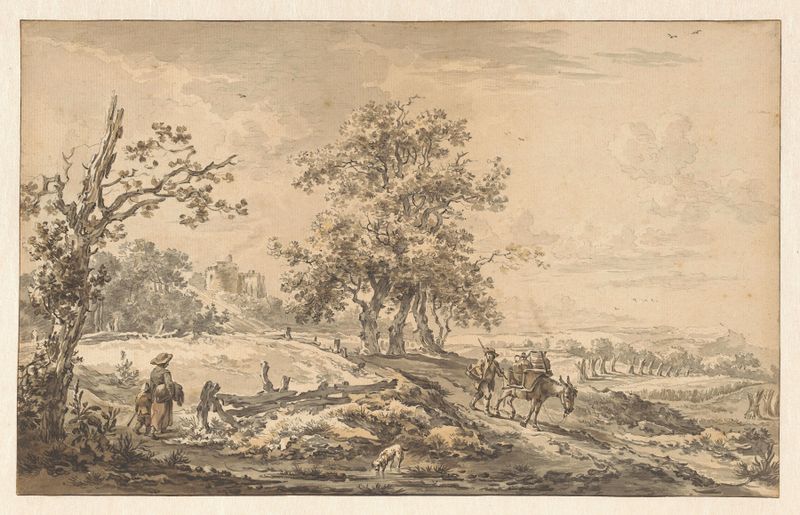
Vrouw met kind en man met ezel in landschap
Egbert van Drielst
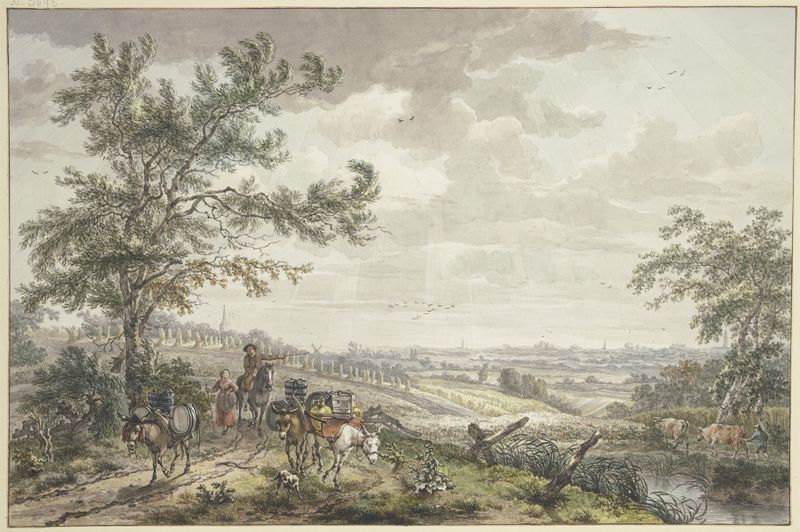
Landscape with Pack Donkeys, near Hilversum
Egbert van Drielst
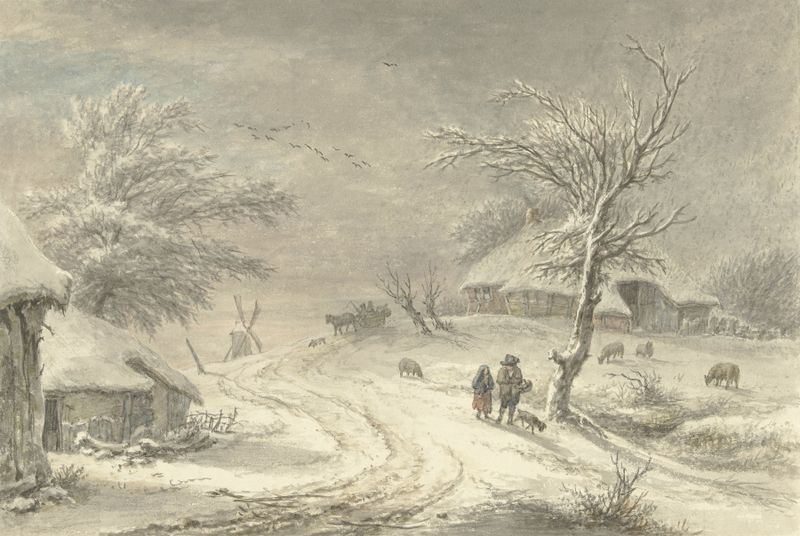
Wintergezicht te Exloo, Drenthe
Egbert van Drielst
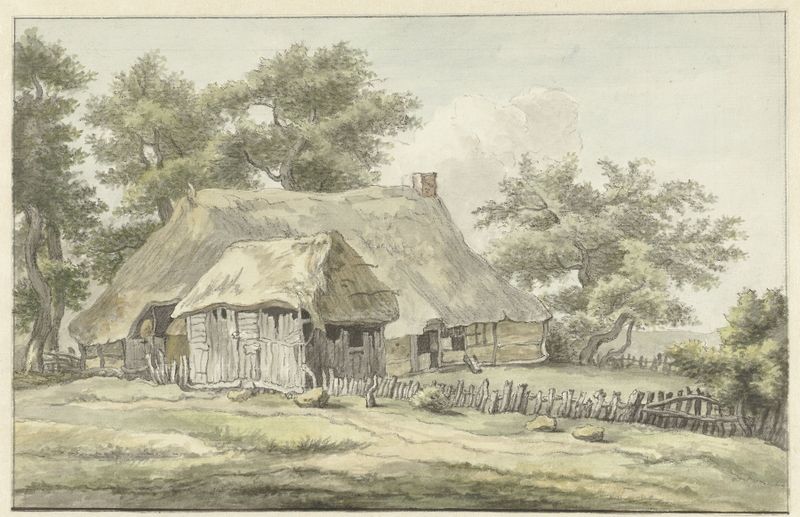
Boerderij te Eext, Drenthe
Egbert van Drielst

Landscape with watermill
Egbert van Drielst

Boerderij te Eext (Drenthe)
Egbert van Drielst

Landschap bij Eext, Drenthe
Egbert van Drielst
Figuren bij hutje in het Naarder Houd
Egbert van Drielst





