
Landschap in de omgeving van Wageningen — History & Facts
In the quiet embrace of nature, memories slip through the fingers like grains of sand, leaving behind echoes of what once was. In this serene landscape, the artist beckons us to contemplate loss, the impermanence of all we hold dear. Look to the broad expanse on the left, where rolling hills meet a soft azure sky, dotted with wisps of white clouds. Notice the delicate brushwork that captures the lush greenery, each stroke a testament to life’s vibrancy amid an inevitable decline.
The palette, adorned with muted earth tones and subtle highlights, creates a harmonious balance, inviting the viewer to linger in the tranquility of the scene. Yet, amid this idyllic portrayal, subtle tensions arise. The towering trees cast long shadows, suggesting the passage of time and the weight of memory. In the foreground, a solitary figure—perhaps a farmer or wanderer—stands contemplative, a small silhouette against the grandeur of nature, embodying the human experience of solitude and loss.
The juxtaposition of the lively landscape against this solitary presence evokes a poignant reflection on the inevitable interplay of joy and sorrow. Egbert van Drielst painted this work during a transformative period in 18th-century Dutch art, between 1755 and 1818. Rooted in a time when Romanticism began to flourish, he explored themes of nature and emotion, often capturing the nuances of rural life. This painting reflects both his personal journey and the broader artistic movement, where the longing for a lost connection with nature became a profound exploration of existence.
More Artworks by Egbert van Drielst
Browse all →
Ruïne van het Huis De Haer
Egbert van Drielst
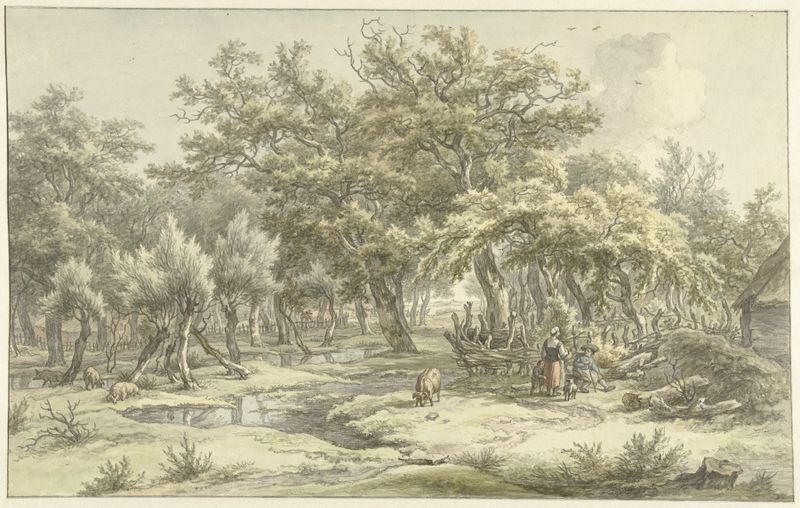
Landschap bij Eext (Drenthe)
Egbert van Drielst
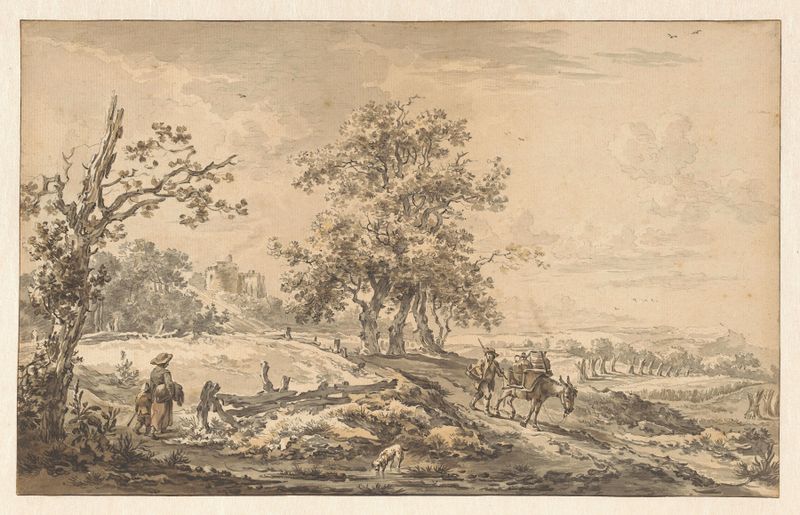
Vrouw met kind en man met ezel in landschap
Egbert van Drielst
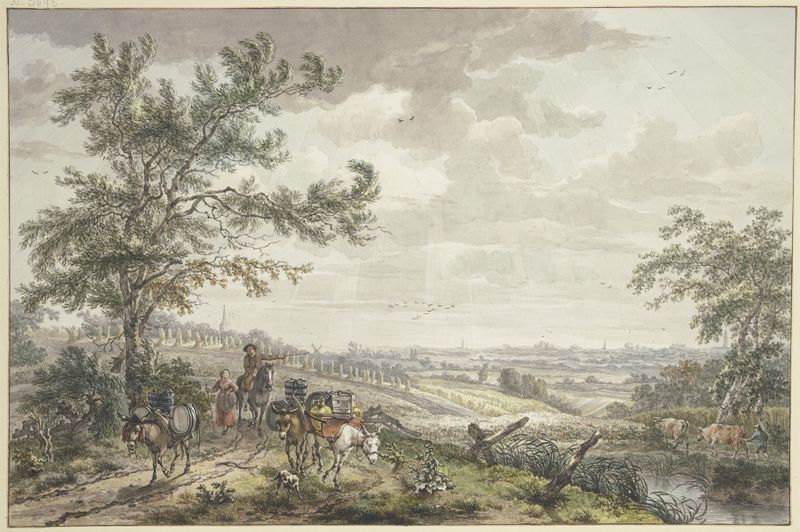
Landscape with Pack Donkeys, near Hilversum
Egbert van Drielst
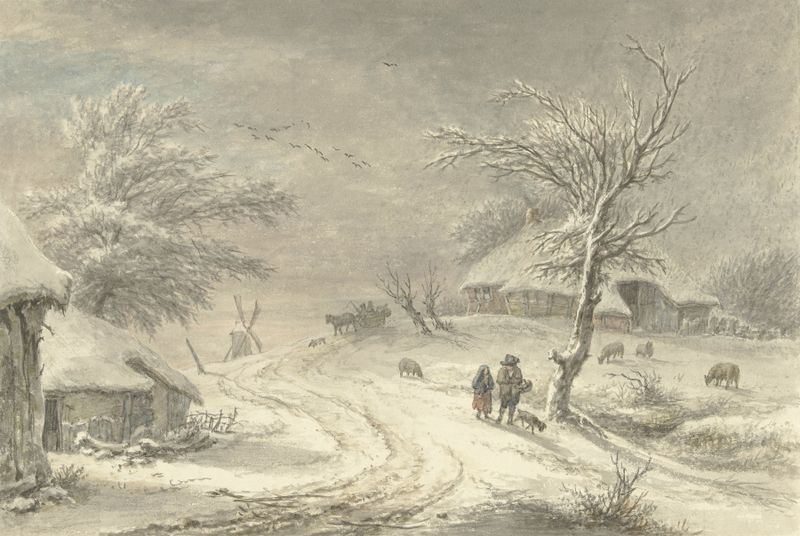
Wintergezicht te Exloo, Drenthe
Egbert van Drielst
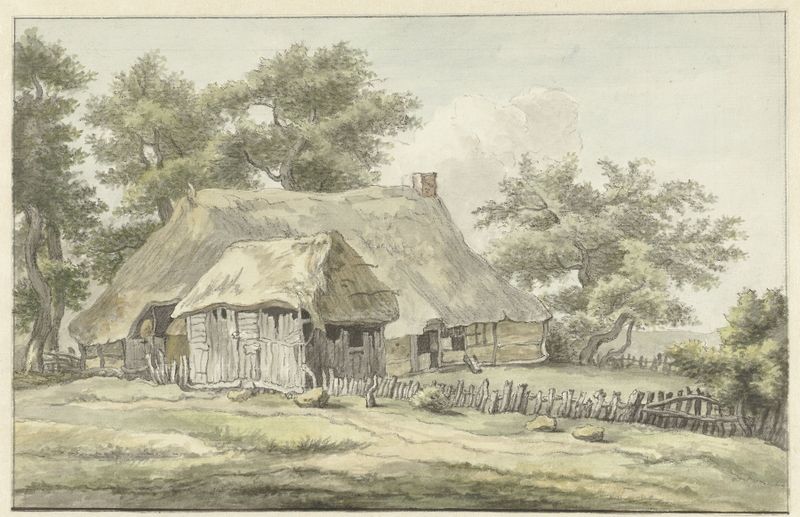
Boerderij te Eext, Drenthe
Egbert van Drielst

Landscape with watermill
Egbert van Drielst

Boerderij te Eext (Drenthe)
Egbert van Drielst

Landschap bij Eext, Drenthe
Egbert van Drielst
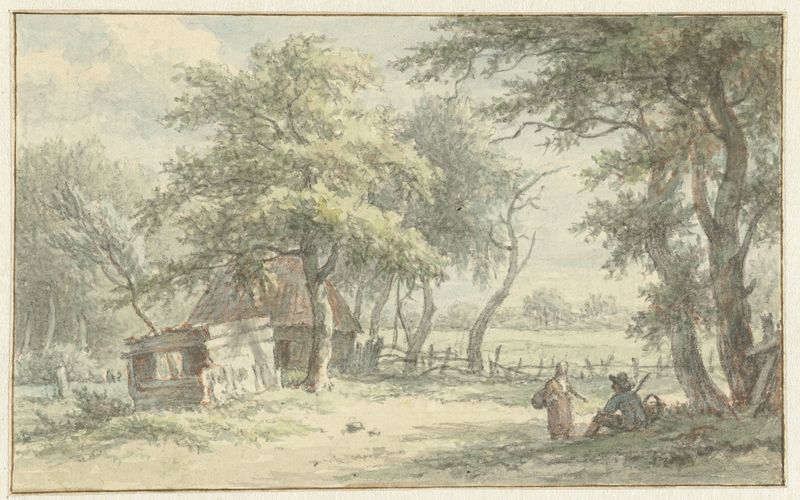
Figuren bij hutje in het Naarder Houd
Egbert van Drielst





