
Landschap met wandelaars — History & Facts
Color serves as both memory and emotion in the vibrant landscapes of our lives, a testament to the fleeting moments we cherish. Look closely at the sweeping greens and blues that dominate the canvas; they guide your gaze across the rolling hills and dotted figures. Notice how the strokes blend harmoniously, creating a tapestry that invokes a sense of serenity. The light dances delicately over the scene, hinting at the warmth of sunlit afternoons where wanderers stroll, cloaked in the gentle embrace of nature’s tranquility. Yet, beneath this idyllic surface lies a subtle tension.
The figures, though serene, appear small and detached from the landscape, echoing humanity’s isolation amid beauty. The contrast between the vibrant colors of the surroundings and the figures’ muted tones suggests a poignant dialogue about existence and connection. Each brushstroke carries an emotional weight, quietly reminding us of the moments we may overlook. During the time Landschap met wandelaars was created, Vuillard was deeply immersed in the innovative world of Post-Impressionism.
Painted between 1878 and 1940, this period saw him experimenting with color and form, reflecting both personal introspection and the evolution of artistic expression. The backdrop of a rapidly changing society pushed him to capture the essence of human experience, making his landscapes a personal yet universal narrative.
More Artworks by Édouard Vuillard
Browse all →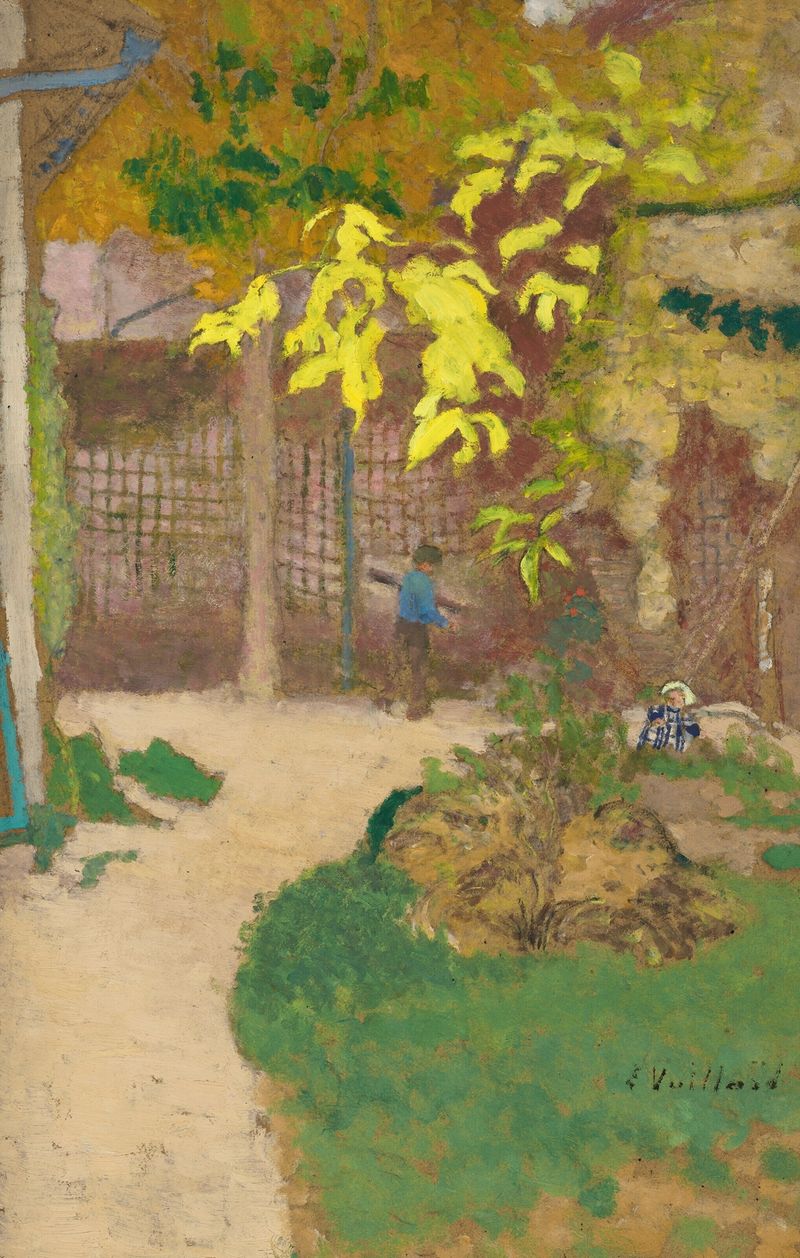
Le Jardin
Édouard Vuillard
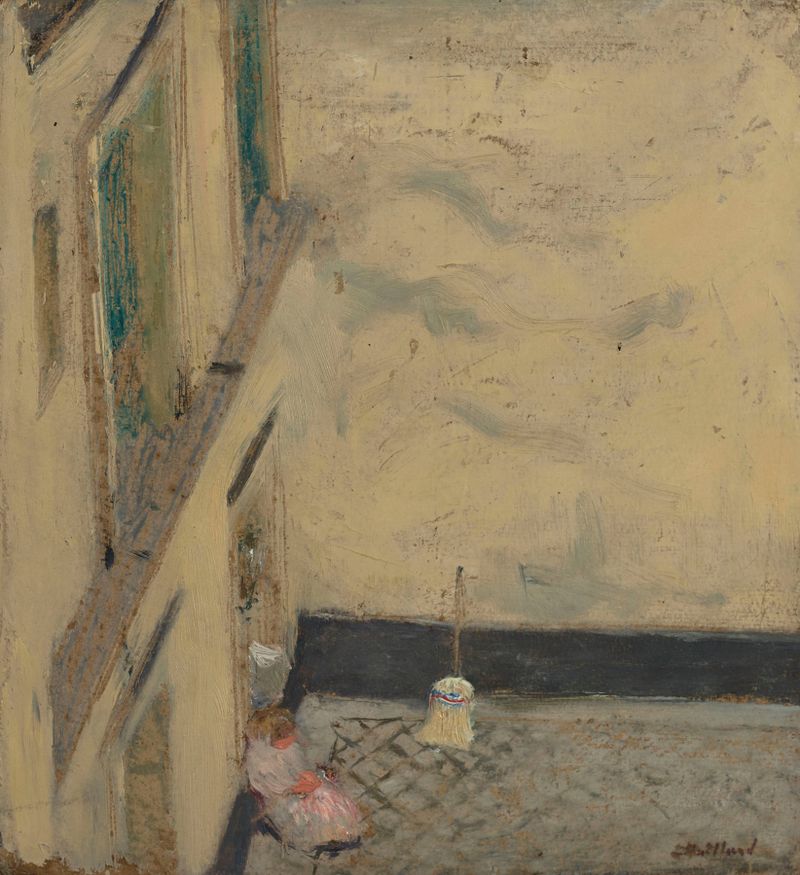
Le Balai dans la cour, 346 rue Saint-Honoré
Édouard Vuillard

Place Vintimille
Édouard Vuillard
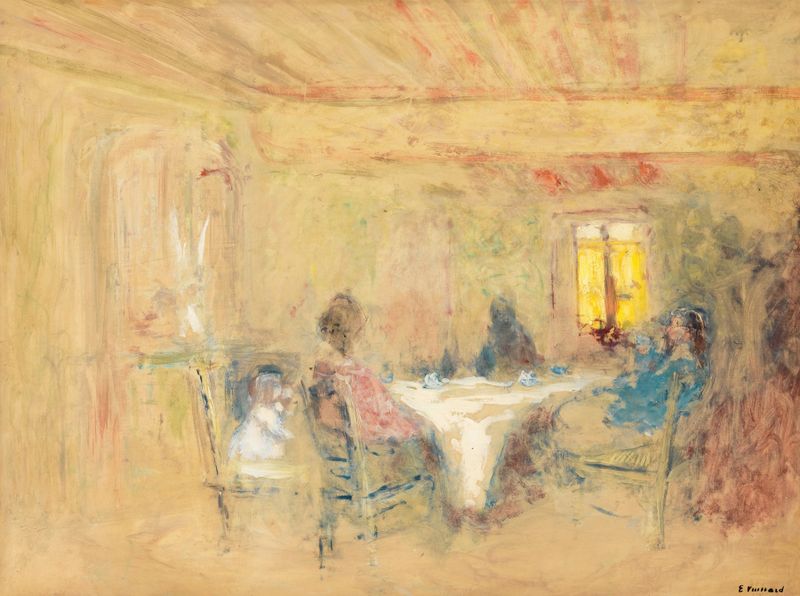
À Table
Édouard Vuillard
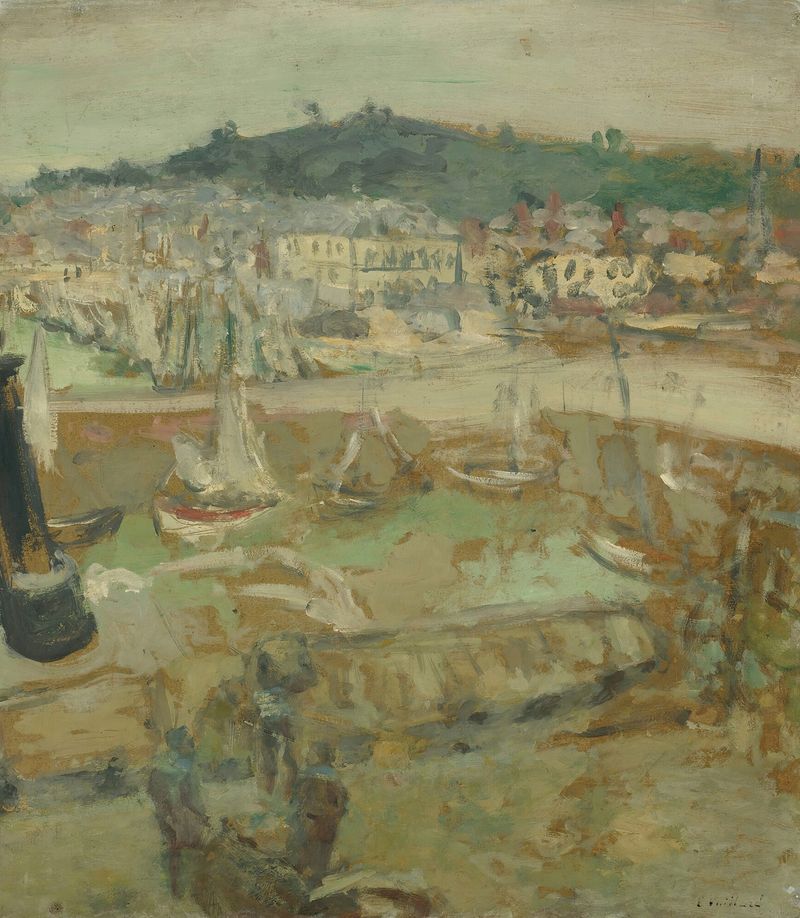
Le Petit Port, Honfleur
Édouard Vuillard
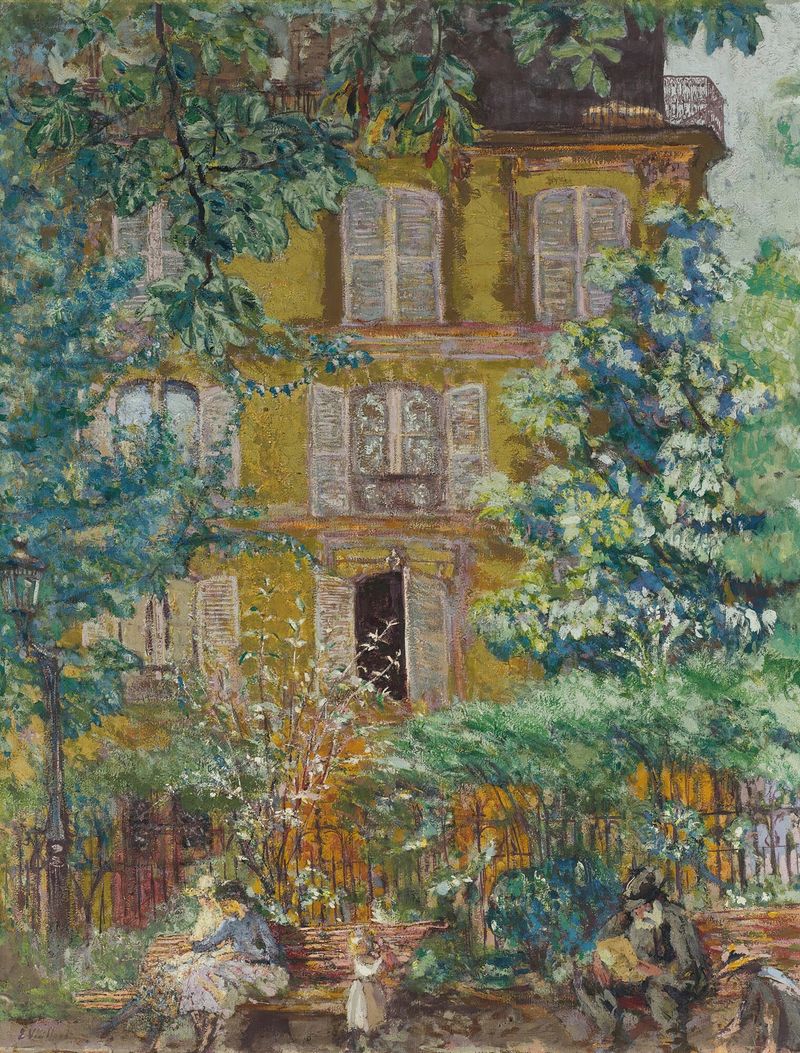
Le Square
Édouard Vuillard

Les Toits Mauves
Édouard Vuillard
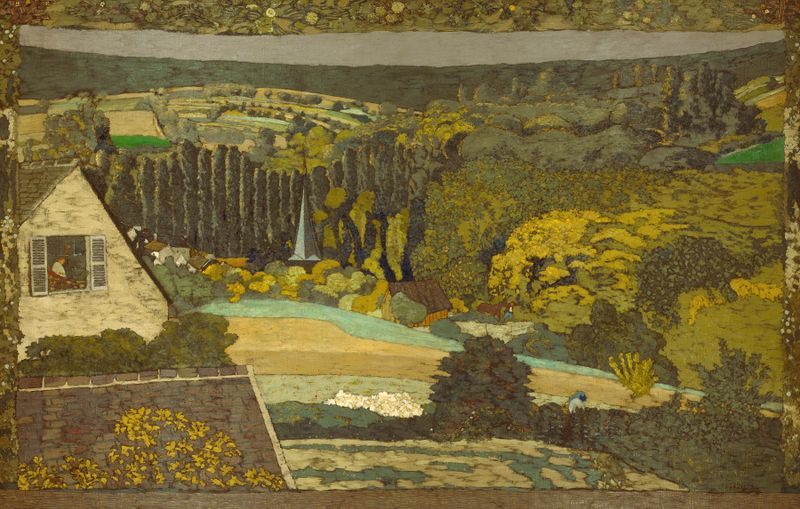
Landscape; Window Overlooking the Woods
Édouard Vuillard
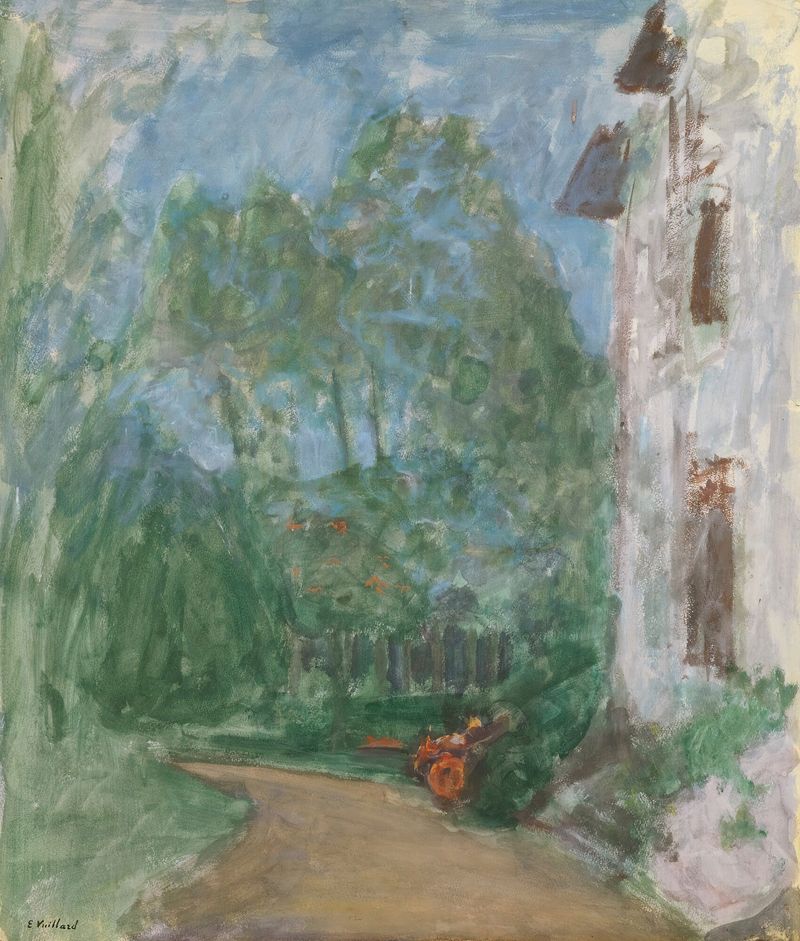
Le Chemin Devant La Maison
Édouard Vuillard

La Grève
Édouard Vuillard





