
L’Arc de triomphe — History & Facts
What if beauty was never meant to be finished? Hubert Robert’s L’Arc de triomphe immerses us in a void that challenges our perceptions of completion and decay. Look to the left at the skeletal frame of the arch, rising majestically yet incompletely against an expansive sky. The soft hues of ochre and grey interplay with the vibrant greens of the surrounding foliage, creating a juxtaposition between man-made grandeur and nature's insistent encroachment. Notice the delicate brushwork, particularly in the way the light dances upon the surface, revealing both texture and time’s passage in the stone. Here lies a tension between the architectural ambition and the inevitable wear of existence.
The structure stands as a monument not just to triumph but to the transience of all things; its unfinished state evokes a bittersweet acknowledgment of fragility. The figures, small and almost insignificant, engage in leisurely activities around the arch, suggesting life continues amidst the remnants of grandeur, a reminder of the void left by what could have been. In the years 1763-1764, the artist painted this work during a period of vibrant artistic exploration in France. Returning from Italy, Robert was inspired by the classical ruins and the ideals of beauty that prevailed in the art world.
This was a time of burgeoning neoclassicism, where artists sought to combine elements of the monumental with contemplative reflections on history and time.
More Artworks by Hubert Robert
Browse all →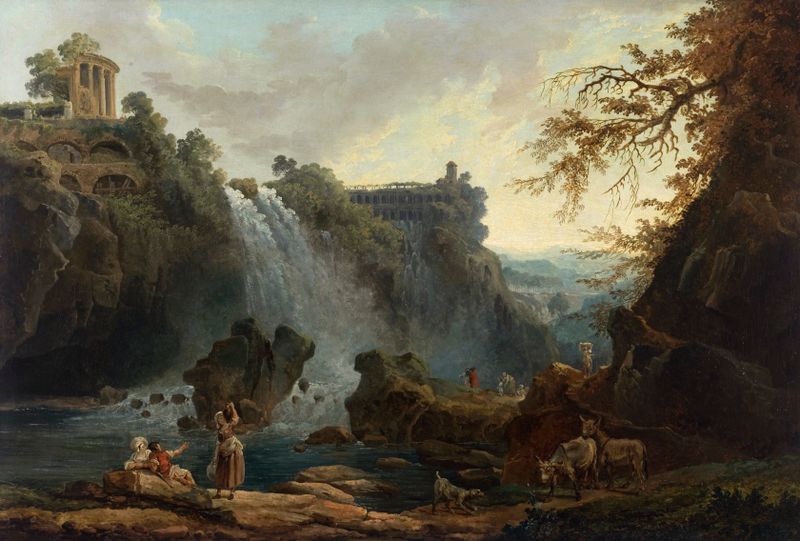
Les Cascatelles de Tivoli
Hubert Robert
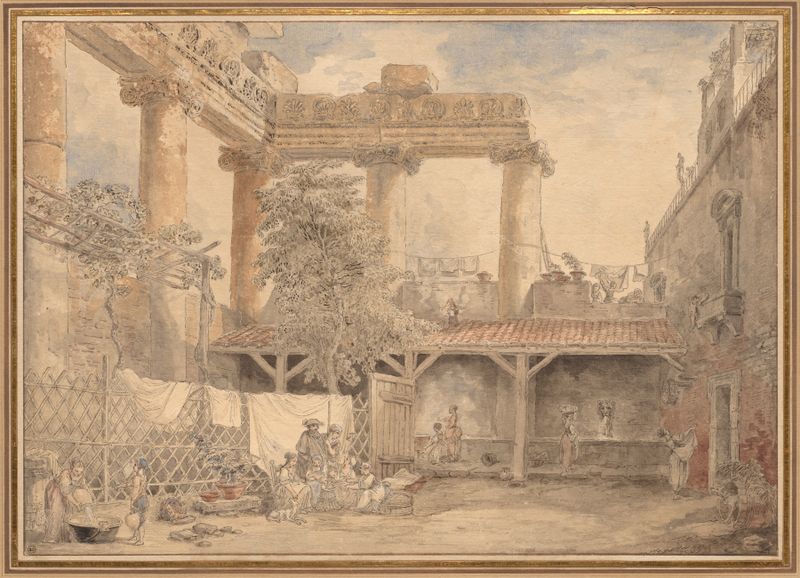
Roman Ruins, Villa Pamfili
Hubert Robert

The Rustic Bridge, Château de Méréville, France
Hubert Robert

The Portico of a Country Mansion
Hubert Robert

Architectural Capriccio
Hubert Robert

The Obelisk
Hubert Robert
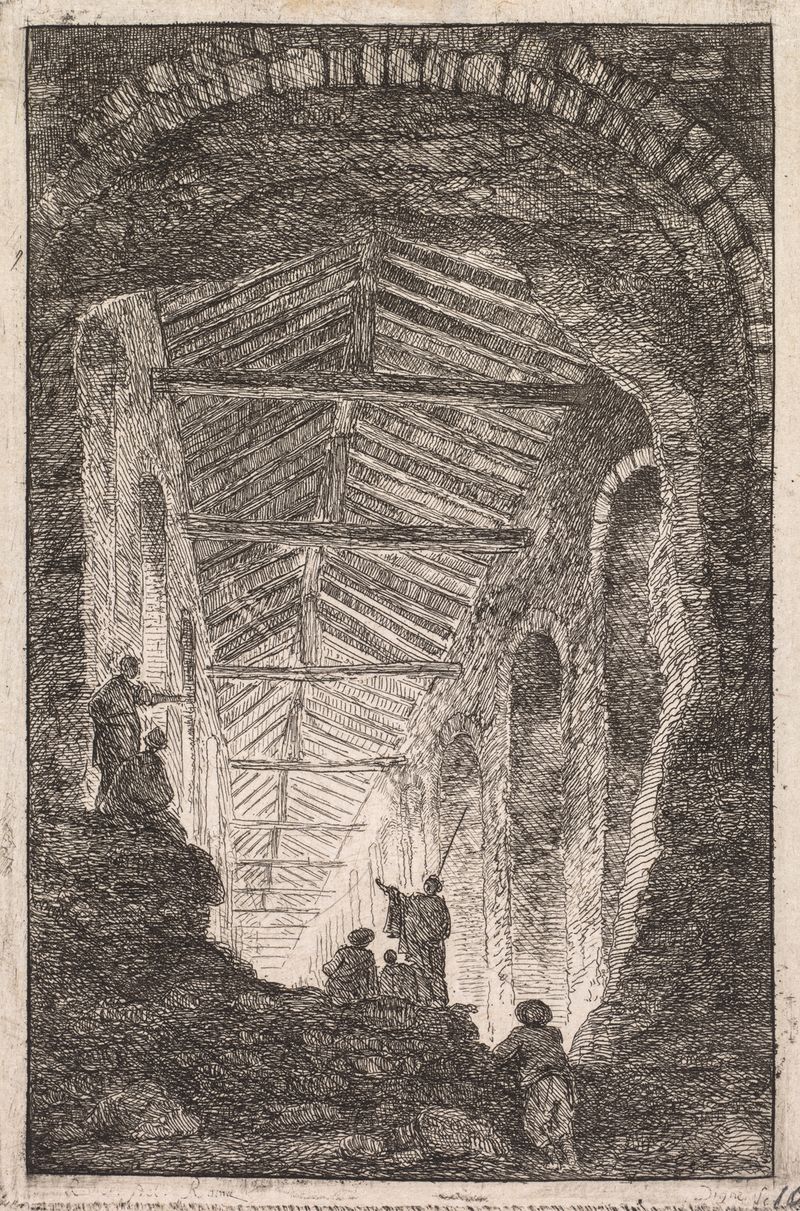
The Antique Gallery
Hubert Robert

L’incendie de l’Opéra, vu des jardins du Palais-Royal, le 8 juin 1781
Hubert Robert
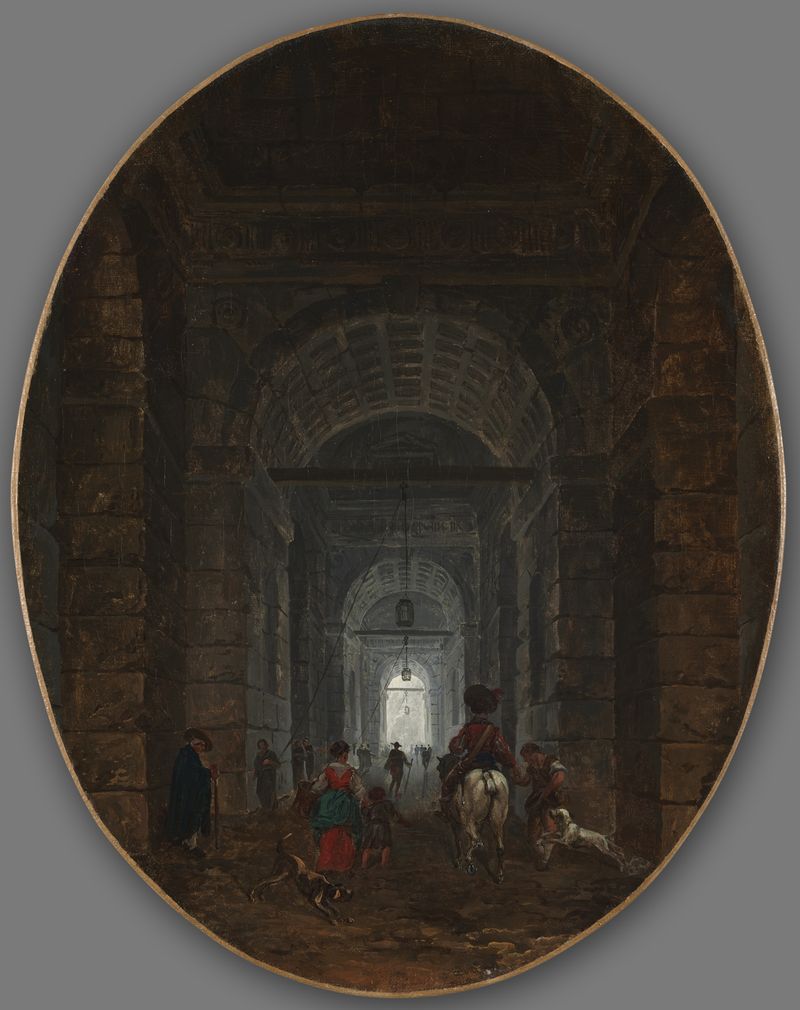
The Grotto of Posillipo
Hubert Robert

Architectural Capriccio with ruins of the Temple of Saturn and the Colosseum in the background
Hubert Robert
More Architecture Art
Browse all →
The statue of Liberty
Frédéric Auguste Bartholdi

View of Houses in Delft, Known as ‘The Little Street’
Johannes Vermeer

View of Houses in Delft, Known as ‘The Little Street’
Johannes Vermeer

The Cathedral in Rouen. The portal, Grey Weather
Claude Monet

The yellow house
Vincent van Gogh

The Church in Auvers-sur-Oise, View from the Chevet
Vincent van Gogh