Launching day at the East India Dock, Blackwall on the Thames — History & Facts
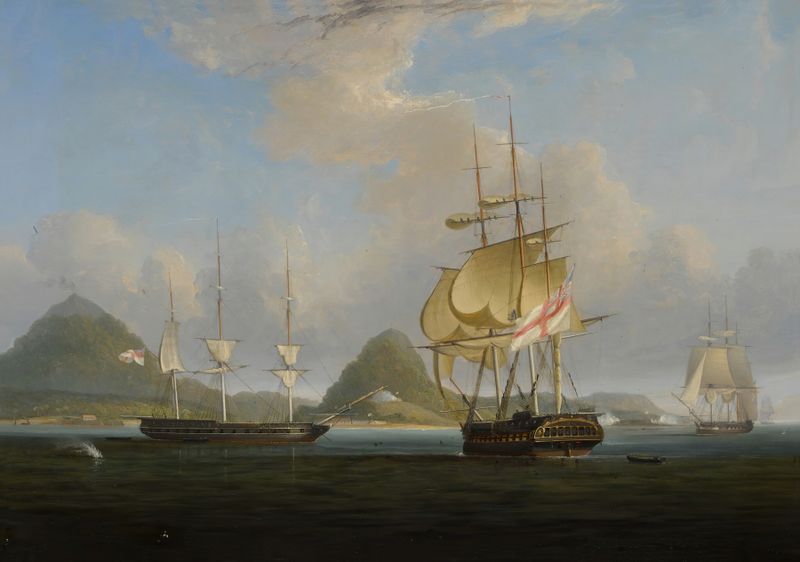
In the heart of the bustling Thames, a longing for lost moments resonates from this stunning depiction of activity and anticipation. Through this artwork, we are drawn into a world where the quiet between sounds speaks volumes, igniting a yearning for connection amidst the hum of life. Look to the center of the canvas, where the ship, poised for launch, stands majestically against the river. Notice how the warm hues of the evening sky blend seamlessly with the cool tones of the water, creating an ethereal atmosphere.
The figures gathered along the dock, clad in period clothing, are rendered with meticulous detail, their gestures frozen in a mixture of excitement and apprehension, as they witness a moment that signifies both beginnings and endings. Within the interplay of light and shadow, one can sense the deeper emotional currents at work—the aspirations of the workers, the uncertain future of the vessel, and the community's collective breath held in anticipation. Each figure, despite the chaos of the scene, harbors an individual story, hinting at personal desires and dreams that unfold alongside the ship’s journey. The juxtaposition of the stillness of the dock against the impending movement of the launch evokes a bittersweet tension that lingers long after the eye has roamed the canvas. During a time when industrial progress was reshaping society, the artist captured this scene with a keen awareness of transformation.
Created in the late 19th century, Launching day at the East India Dock, Blackwall on the Thames reflects not only the spirit of maritime enterprise but also the profound shifts occurring in England. Lynn’s pivot towards such engaging subjects was emblematic of a broader movement in art that sought to document the interplay of progress and human emotion during a transformative era.