Le Bassin aux nymphéas — History & Facts
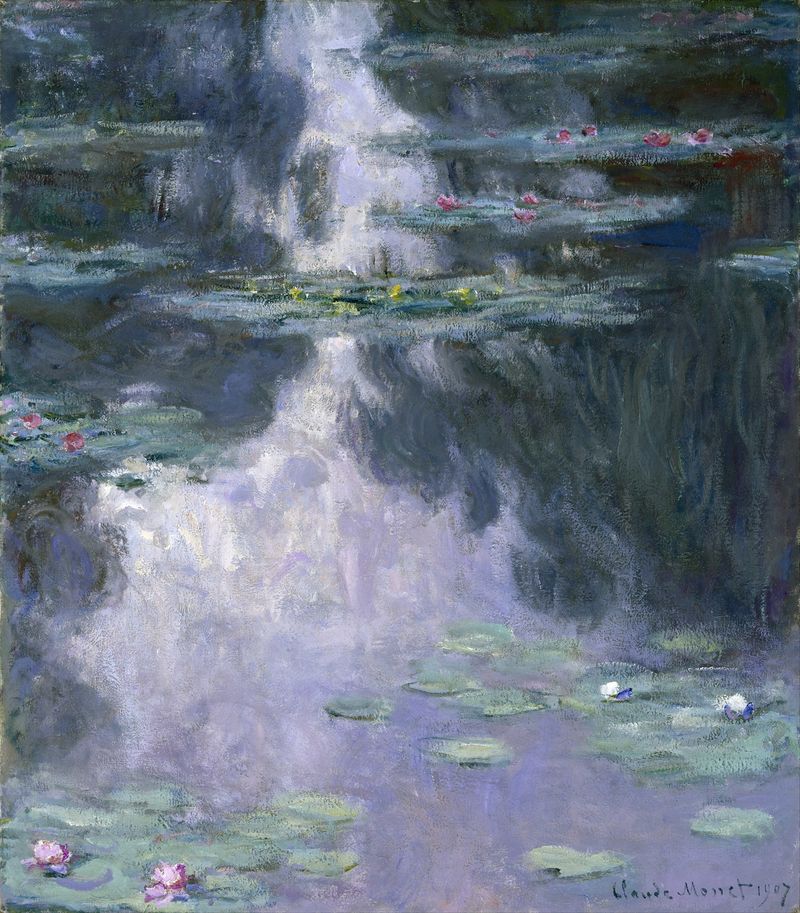
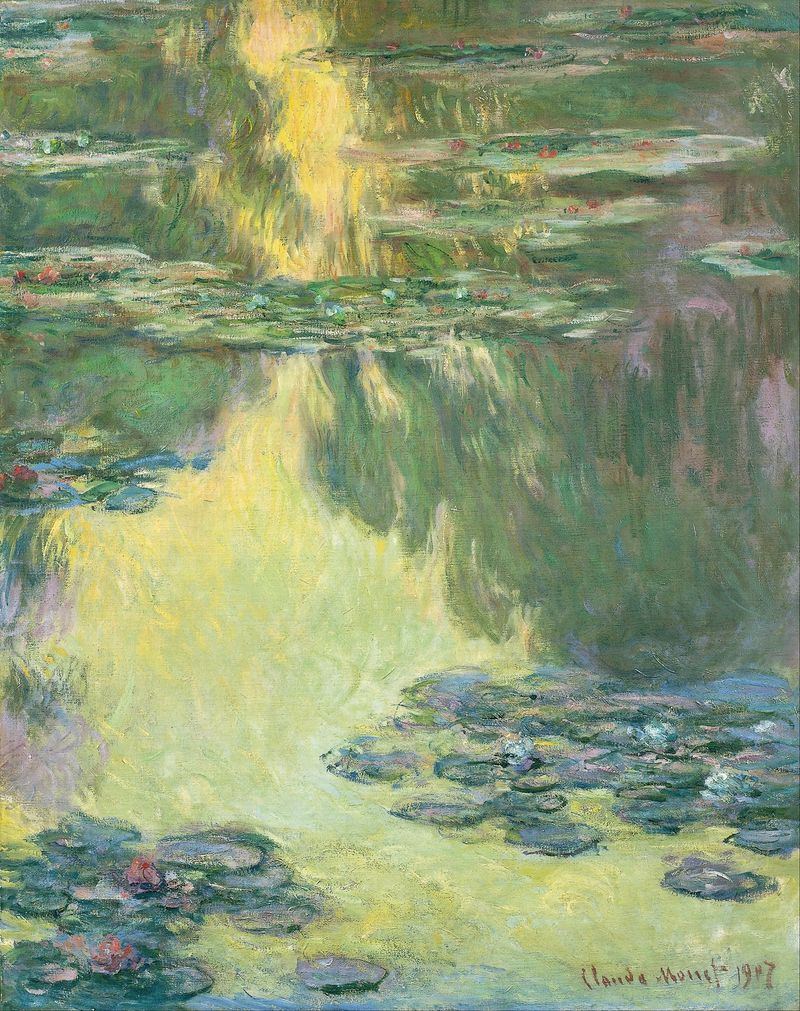
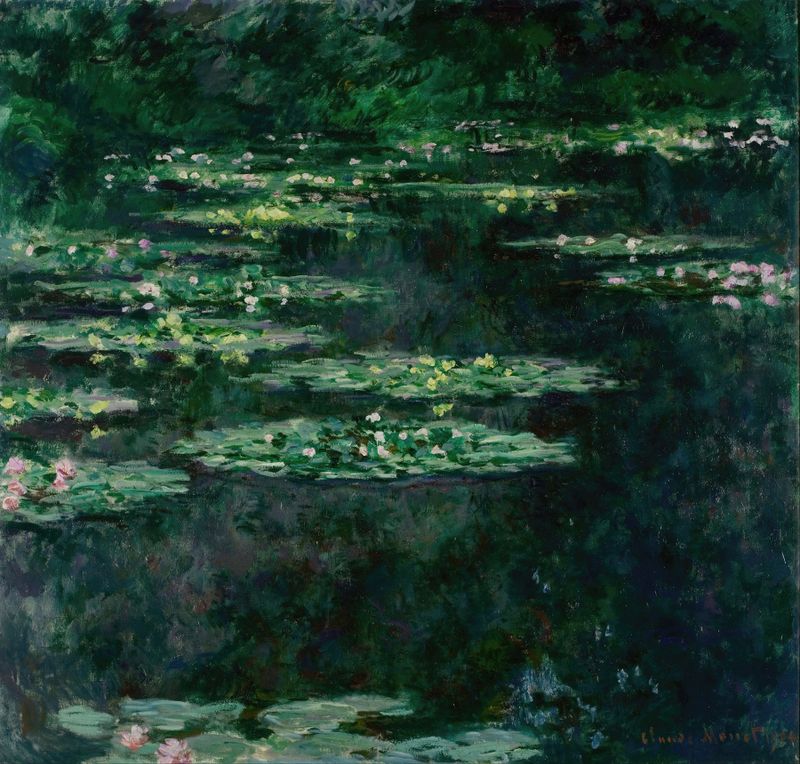
In the quiet of a garden, moments stretch infinitely, whispering the passage of time through their tranquil beauty. Each brushstroke carries the weight of ephemeral light, revealing layers of existence unseen by hurried eyes. Look to the lower right, where soft hues of blue and green blend seamlessly in the water's surface, inviting the viewer to lose themselves in the reflection of lily pads. Notice how the delicate brushwork captures the ripples, creating a sense of movement that contrasts with the stillness surrounding the pond.
The dappled light filtering through the leaves above plays across the scene, a subtle interplay of shadow and illumination that draws attention to the vibrant palette, rich in blues and greens, evoking a serene yet vibrant atmosphere. As you explore, consider the interplay between nature and time. The lilies, though seemingly caught in a moment, symbolize the ever-changing cycles of life, blooming and fading in a continuous rhythm. The layering of color hints at the complexity of perception; what appears peaceful may hide the chaos of the elements beneath the surface.
In every petal, there is a reminder of the fleeting nature of beauty, a reflective pause in a world that often rushes by. During the years 1917 to 1919, Monet worked on this piece from his garden in Giverny, amidst a world engulfed in the turmoil of war. His later years were marked by personal loss and a gradual deterioration of his vision, yet he maintained a steadfast commitment to capturing the essence of his beloved water garden. This dedication to his craft amidst adversity highlights the profound connection between the artist and the passage of time, leading to a masterpiece that resonates with a universal longing for tranquility.