Le Canal San Marco, Au Crépuscule, Venise — History & Facts
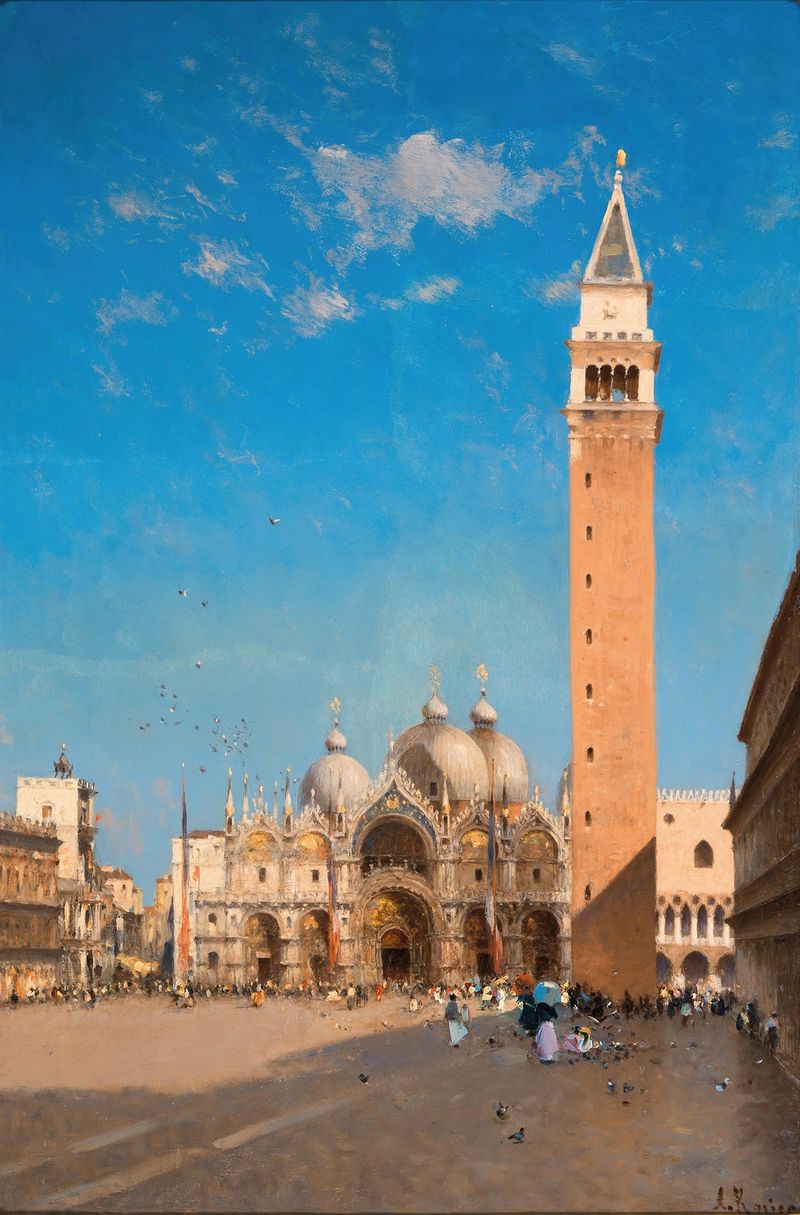
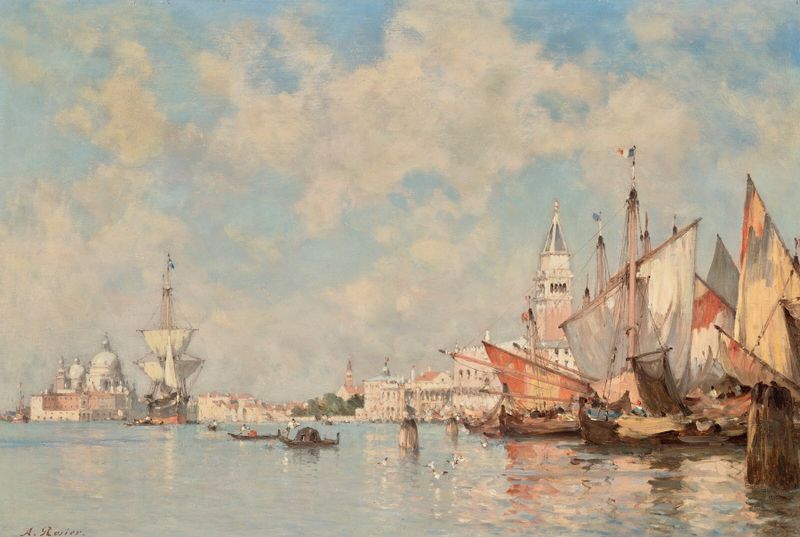
This sentiment captures the essence of an artist’s journey through the void of creativity, where each stroke speaks of both absence and presence. Look to the center of the canvas where the canal glistens under the fading twilight. The water reflects a spectrum of muted blues and warm earth tones, as if the day is whispering its final farewell. Notice the delicate interplay between the structure of the buildings and the shimmering surface; the artist skillfully employs soft lines that blur the boundaries, evoking a sense of fluidity and transience.
The light, painted with subtle yet precise brushwork, creates an ethereal atmosphere, inviting the viewer to step closer to the edge of the scene. The artwork holds a profound silence, reminiscent of moments spent in solitude. The twilight suggests an end but also a promise of renewal. Small details, like the distant silhouette of a gondola and the hint of a streetlamp just beyond the frame, evoke thoughts of life lingering just out of reach, amplifying the inherent void.
These elements transform the mundane into a realm of introspection, where stillness reigns and every reflection carries unspoken stories. Amédée Rosier created this piece during an era when Impressionism was establishing itself, likely in the late 19th century, a time ripe with experimentation in color and light. Living in Paris, Rosier was part of a burgeoning art community that sought authenticity in everyday life, often inspired by the romantic allure of Venice. Known for his keen observation of urban landscapes, this painting embodies his engagement with the ephemeral beauty of twilight, as he navigated both personal and artistic transitions.