
Esclavon banks, Venice — History & Facts
This poignant reflection encapsulates the duality of movement and stillness, where the soul dances amidst the weight of existence. Look to the center of the canvas, where vibrant reflections ripple across the water's surface, creating an interplay between light and shadow. The brushwork is both fluid and precise, guiding the viewer’s gaze toward the surrounding architecture, which stands as silent witnesses to the dynamic energy of the scene. The warm tones of the sunset bath the buildings in a golden hue, infusing the painting with a warmth that contrasts sharply with the cool blues of the water below. Yet, beneath this serene facade lies an undercurrent of tension.
The restless waves seem to whisper secrets of longing and displacement, inviting viewers to ponder the stories of those who tread these banks. This juxtaposition of serene beauty and the chaotic movement beneath hints at the transient nature of life itself, echoing the struggles and aspirations of individuals amidst the grandeur of Venice. In the context of his time, the artist painted this piece in a period marked by a burgeoning interest in Impressionism, capturing the fleeting effects of light and atmosphere. Working in Venice, the city influenced his vision, as he sought to immortalize moments of beauty amidst the complexities of modern life.
This era was characterized by a shift in artistic perspectives, with a focus on capturing the ephemeral, reflecting not only personal introspection but also the broader societal changes unfolding around him.
More Artworks by Amédée Rosier
Browse all →
The Golden Horn With The Süleymaniye Mosque
Amédée Rosier
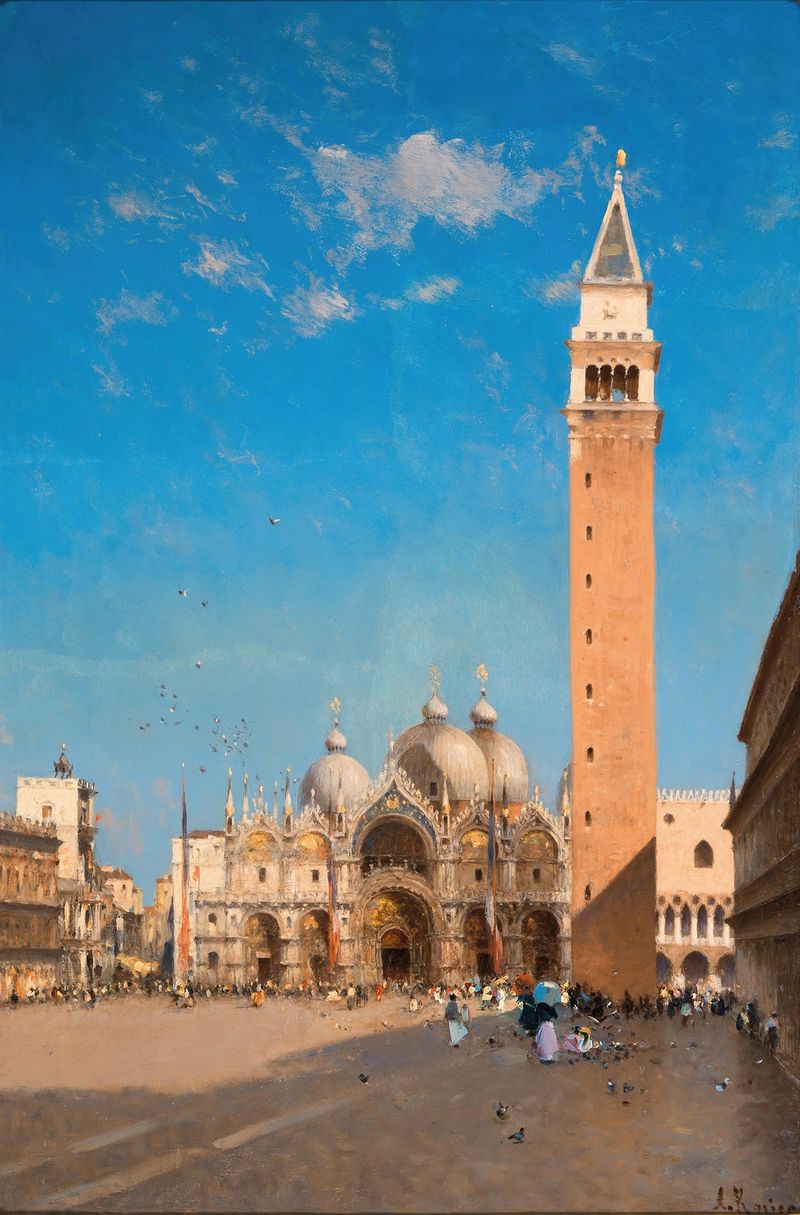
Venice, St Mark’s Square
Amédée Rosier
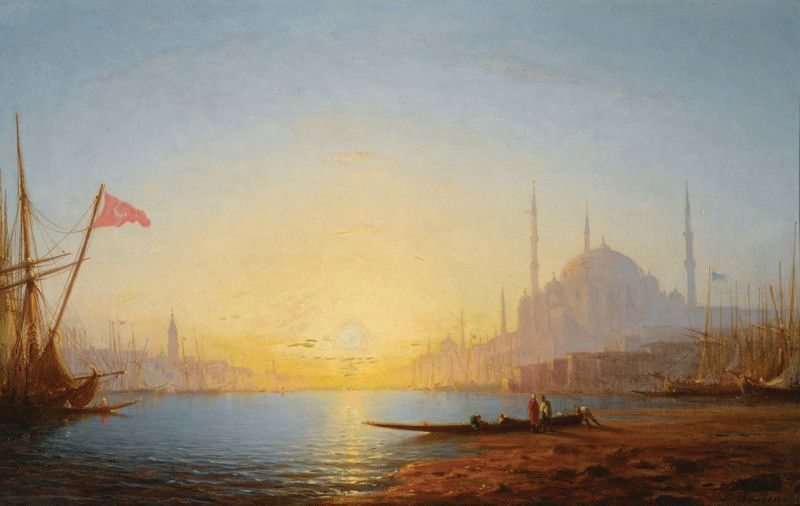
View Of Constantinople
Amédée Rosier

The Grand Canal
Amédée Rosier
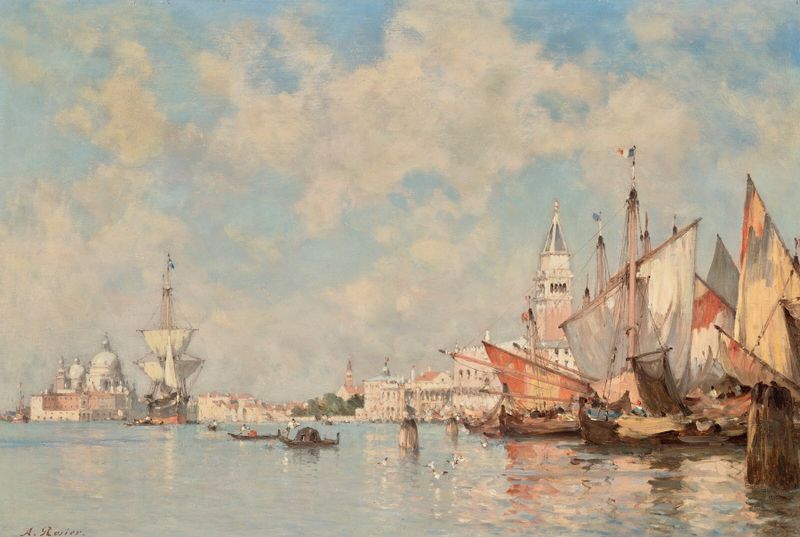
Boats in front of St. Mark’s Square, St Maria della Salute beyond
Amédée Rosier

Venice
Amédée Rosier
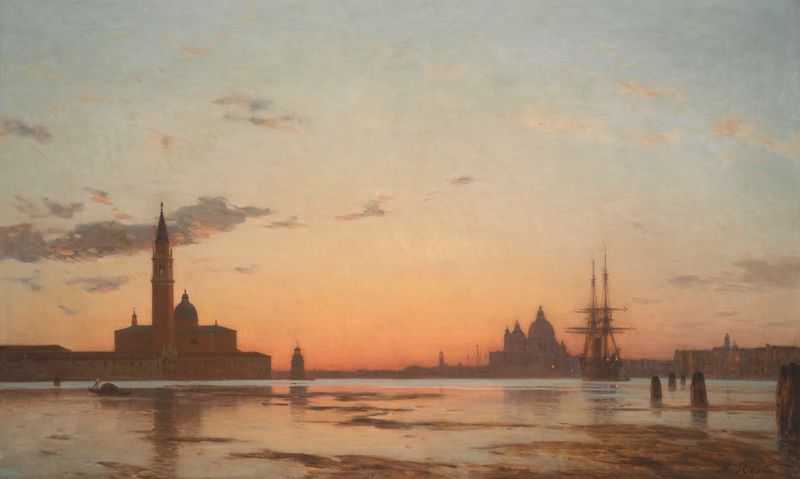
Le Canal San Marco, Au Crépuscule, Venise
Amédée Rosier





