The Golden Horn With The Süleymaniye Mosque — History & Facts
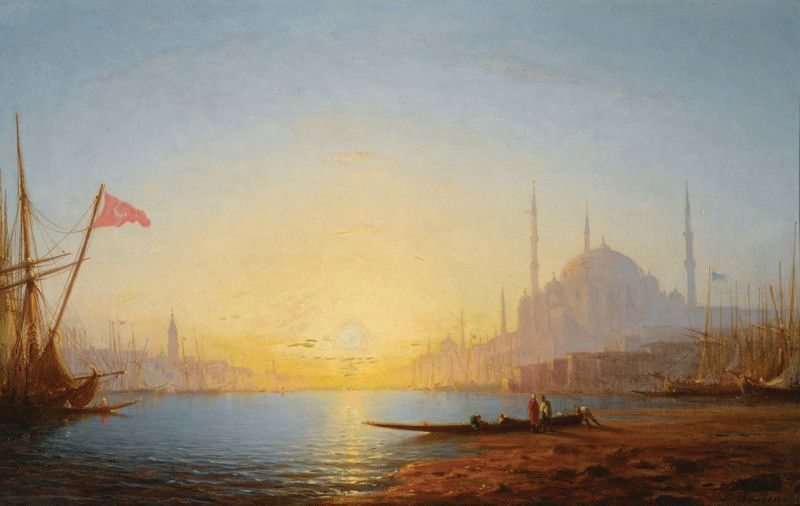
Who listens when art speaks of silence? As the viewer gazes upon the landscape, a revelation unfolds, whispering secrets of time and place through its stillness. Look to the left, where the serene waters of the Golden Horn reflect the soft hues of dawn. The silhouettes of the Süleymaniye Mosque rise majestically against the pale sky, their domes and minarets creating a harmonious dance of geometry and grace. Notice how the gentle gradient of blues and golds envelops the scene, drawing your eye toward the intricate details of the mosque's architecture, which stand proud yet soft against the tranquil backdrop. Delve deeper, and the contrasting elements of nature and humanity emerge.
The calm water, almost mirror-like in its serenity, serves as a counterpoint to the bustling life of Istanbul, suggesting that behind the vibrant city lies a tapestry of moments waiting to be discovered. The light seems to fall with reverence, illuminating the mosque while casting the surrounding landscape into a meditative shadow, evoking a sense of peace amidst the chaos of the world. This duality invites reflection on the transient nature of existence, where stillness can spark profound contemplation. Amédée Rosier painted this work during a time when European artists were increasingly captivated by the allure of the East, seeking to capture its beauty and complexity.
The exact date remains uncertain, yet it is likely from the late 19th century, a period marked by a growing interest in Orientalism. Rosier’s exploration of Istanbul’s landscapes reflects not only his artistic journey but also the broader cultural exchanges occurring within a rapidly modernizing world.