
Le chemin de la ferme — History & Facts
Can beauty exist without sorrow? In Le chemin de la ferme, the fields stretch endlessly, evoking both serenity and an underlying tension, as if a whispered betrayal lingers just beyond the horizon. Begin by looking to the left, where a path winds through golden fields, drawing the eye toward the distant farmhouse, a symbol of both refuge and isolation. Notice how the interplay of warm earth tones and cooler shadows creates a sense of time—perhaps dusk or dawn, when emotions are most palpable. The figures, modestly portrayed, seem intimately connected to this landscape, their gestures hinting at stories untold. There’s a profound contrast between the tranquil beauty of the pastoral scene and the subtle unease it invokes.
The soft, flowing lines of the path seem inviting, yet they lead away from the viewer, suggesting a departure or a choice yet to be made. The figures, though engaged in their toil, evoke a sense of quiet contemplation, as if they are burdened by unspoken truths, hinting at a delicate balance between hard labor and emotional weight. Lhermitte created this work around 1887, during a time when he was establishing his reputation as a leading realist painter in France. The art world was grappling with the rise of Impressionism, yet Lhermitte remained committed to a more traditional representation of rural life.
His focus on the human condition and the emotional complexity of everyday moments resonated with audiences, securing his place in the canon of 19th-century French art.
More Artworks by Léon Augustin Lhermitte
Browse all →
The Harvesters
Léon Augustin Lhermitte
La Fenaison
Léon Augustin Lhermitte
Glaneuses En Avant De Vieilles Meules
Léon Augustin Lhermitte
Haymaking
Léon Augustin Lhermitte
La Moisson
Léon Augustin Lhermitte
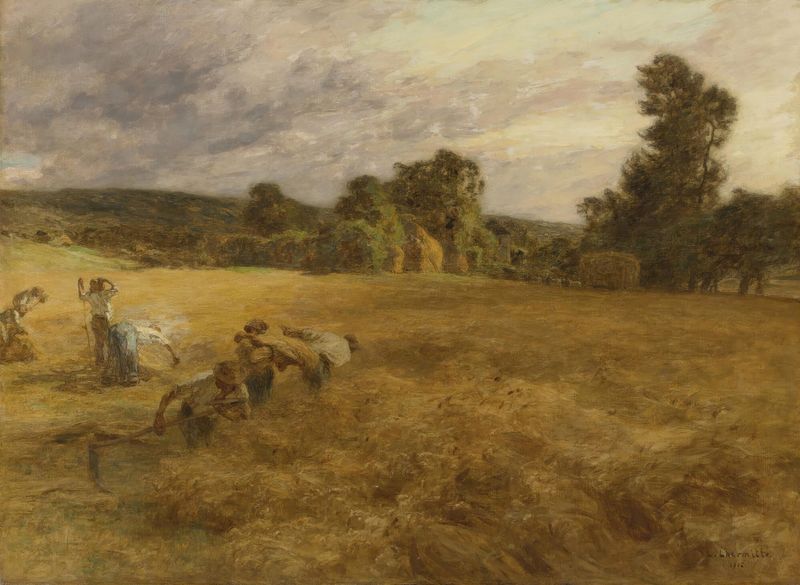
L’orage En Moisson
Léon Augustin Lhermitte
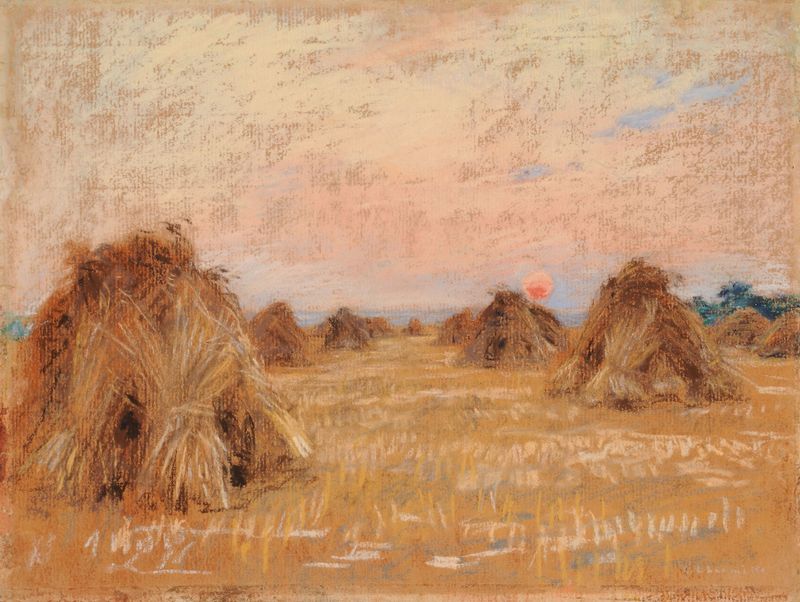
Fin de journée
Léon Augustin Lhermitte
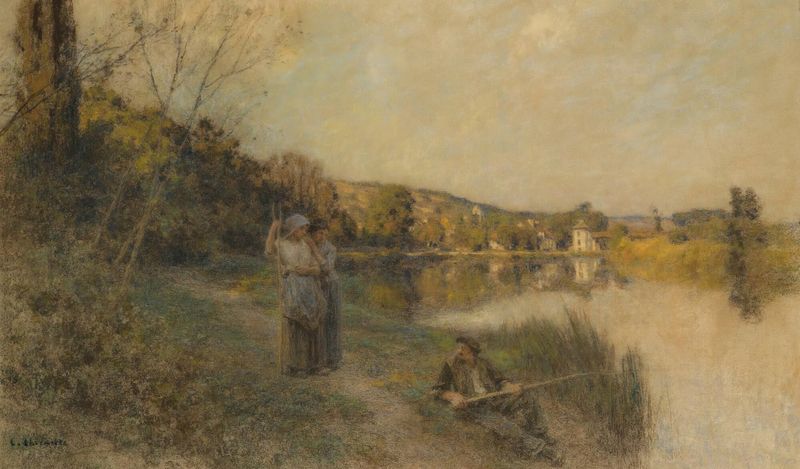
Fin De Belle Journee, Soleil Couchant, Pecheur
Léon Augustin Lhermitte

Quai au Sable, Chartèves
Léon Augustin Lhermitte
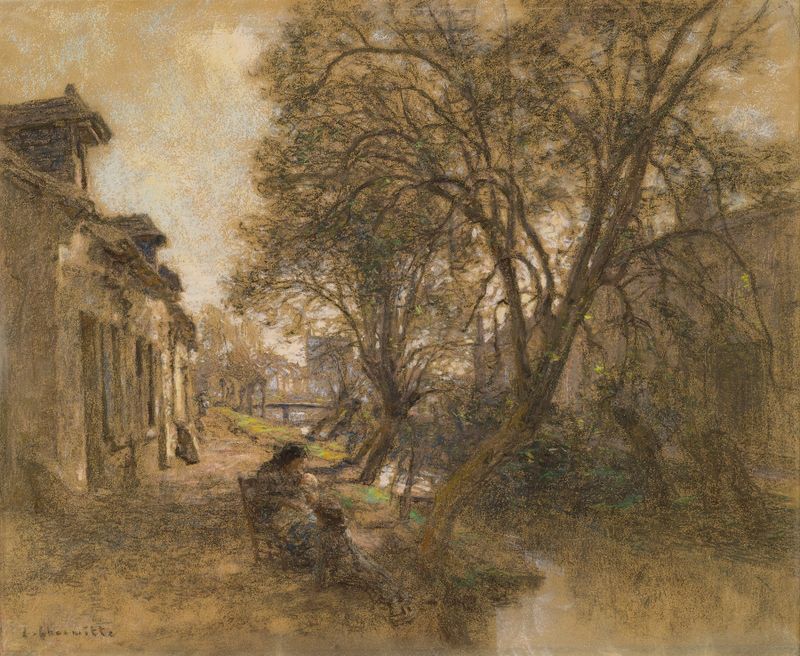
Vue Prise À Saint Bonnet Pres De Bourges
Léon Augustin Lhermitte





