
La Moisson — History & Facts
In La Moisson, the essence of legacy unfurls, echoing the rhythm of labor and the passage of time. It invites contemplation of generational toil, where each stroke speaks of those who came before us and the world they shaped. Look to the center of the canvas, where a group of laborers bend low, their figures almost merging with the golden waves of grain. Notice how the artist masterfully employs warm ochres and deep earth tones to illuminate not just the scene but the very spirit of harvest.
The soft light cascades from above, casting gentle shadows that dance along their backs, emphasizing both their exhaustion and resilience. Each gesture is imbued with significance, capturing the dignity of labor in a moment that feels both intimate and monumental. The interplay between color and texture reveals deeper truths about life’s cyclical nature. The lush field symbolizes abundance, while the weariness etched on the workers’ faces nods to the sacrifices made in pursuit of sustenance.
There is a stark contrast between the vibrant harvest and the muted clothing of the laborers, hinting at the often-overlooked struggles of those who work the land. This tension invites the viewer to reflect on the legacies we inherit and those we leave behind. Lhermitte painted this work in the late 19th century during a time of social change in France, as industrialization began to reshape rural life. He was deeply influenced by the Impressionist movement, yet he retained a focus on realism that celebrated the everyday lives of the working class.
At this time, he sought to forge a connection with the past, portraying scenes that would resonate with both contemporary audiences and future generations.
More Artworks by Léon Augustin Lhermitte
Browse all →
The Harvesters
Léon Augustin Lhermitte
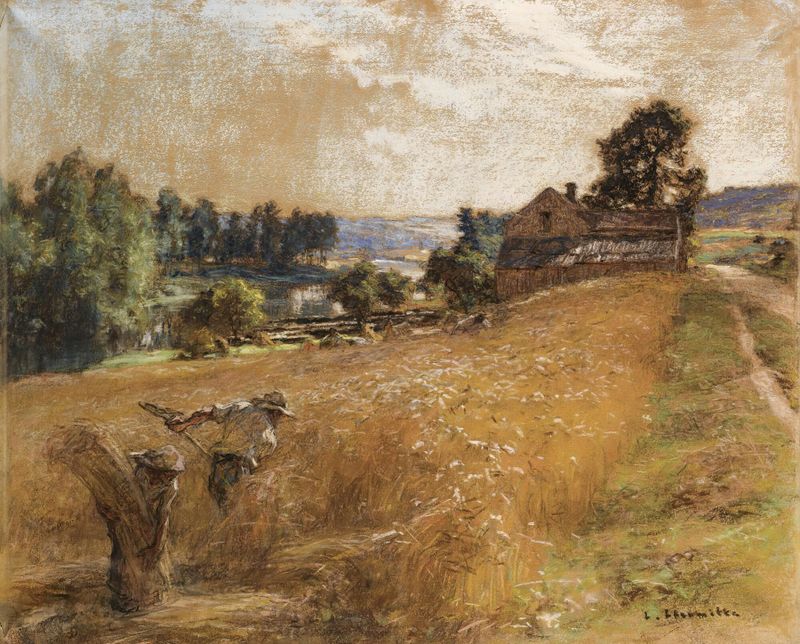
La Fenaison
Léon Augustin Lhermitte
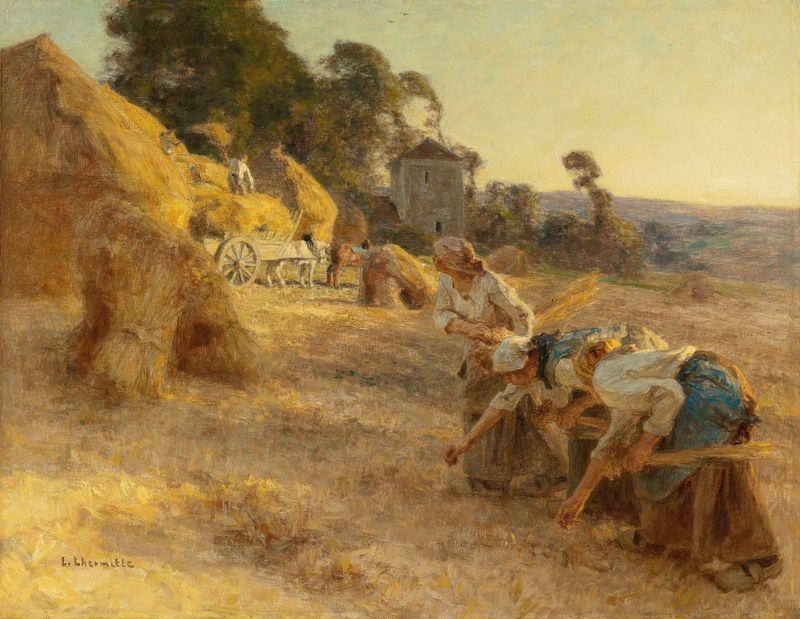
Glaneuses En Avant De Vieilles Meules
Léon Augustin Lhermitte
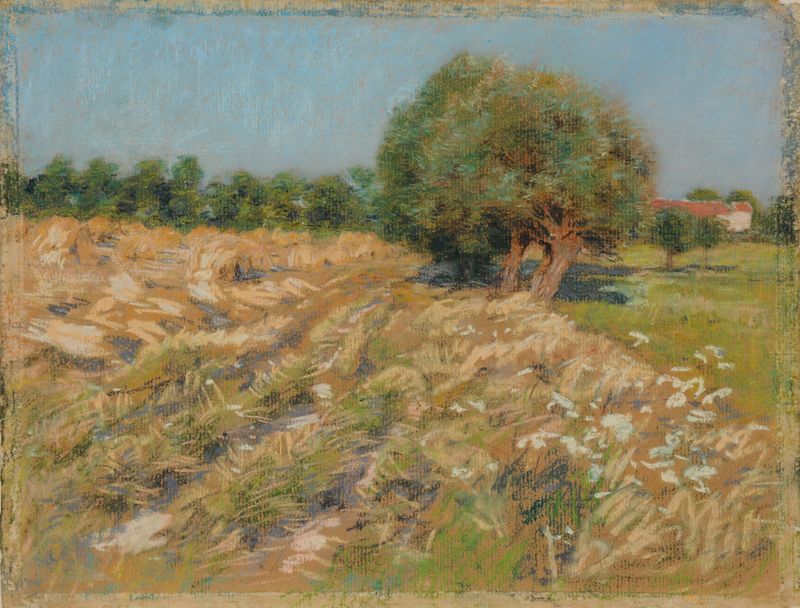
Le chemin de la ferme
Léon Augustin Lhermitte
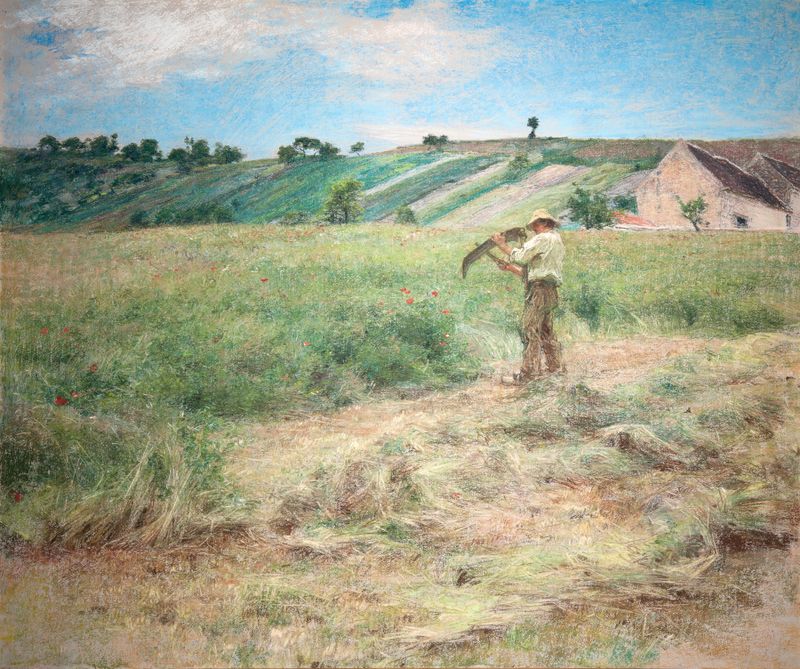
Haymaking
Léon Augustin Lhermitte
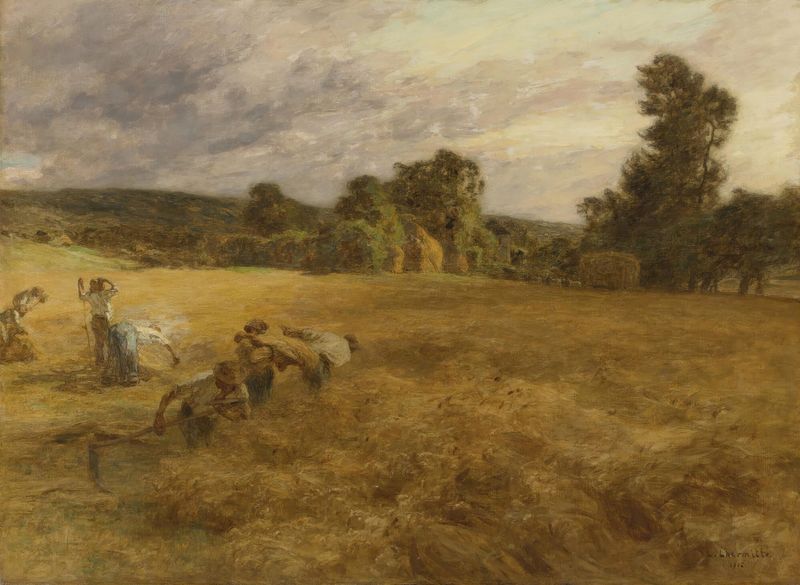
L’orage En Moisson
Léon Augustin Lhermitte
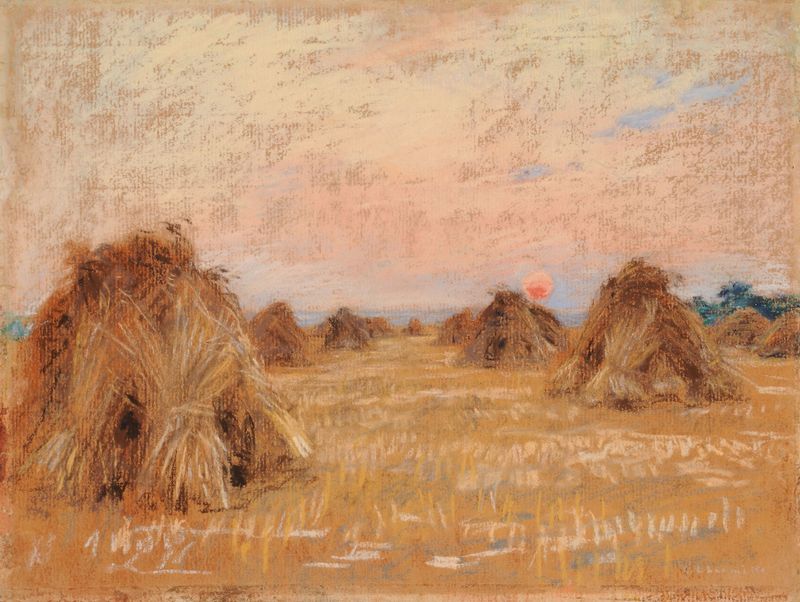
Fin de journée
Léon Augustin Lhermitte
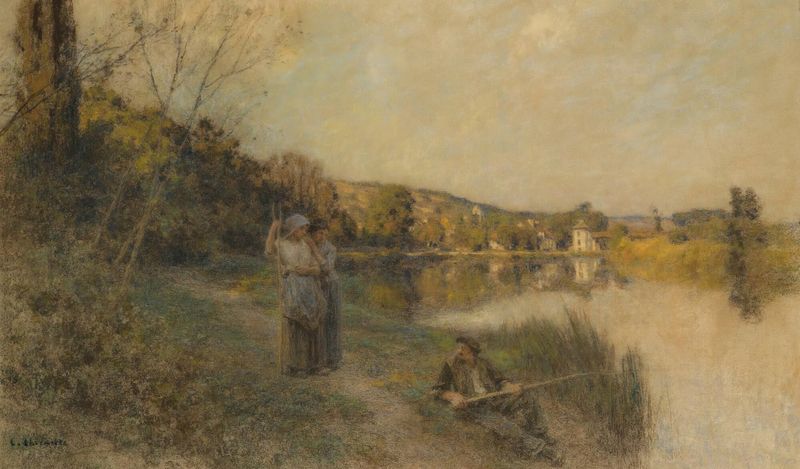
Fin De Belle Journee, Soleil Couchant, Pecheur
Léon Augustin Lhermitte

Quai au Sable, Chartèves
Léon Augustin Lhermitte
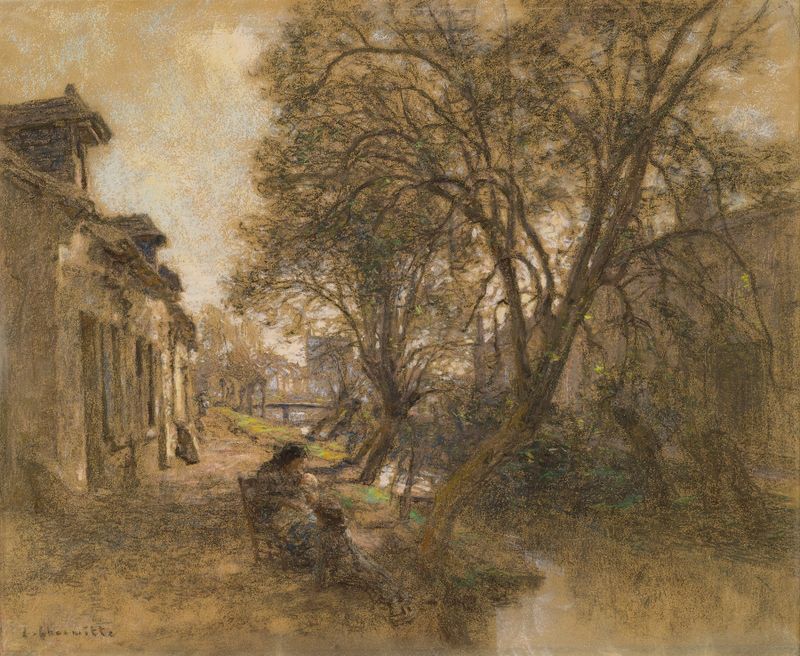
Vue Prise À Saint Bonnet Pres De Bourges
Léon Augustin Lhermitte





