
Fin de journée — History & Facts
Where does light end, and longing begin? In Fin de journée, a moment unfolds that captures the delicate balance between labor and respite, as shadows stretch across the horizon, suggesting the weight of unfulfilled dreams. Look to the left at the figure of a peasant woman, her silhouette framed against the fading sunlight. The soft, golden hues of dusk embrace her, illuminating the contours of her tired face and worn hands. Notice how the light catches the edges of her simple attire, contrasting the rich, earthy tones of the landscape.
The careful layering of paint creates a texture that almost breathes, inviting viewers to feel the coolness of the evening settling in. As the day wanes, the painting speaks to the tension between exhaustion and hope. The woman's quiet demeanor, paired with the expansive fields, evokes a sense of solitude that is both poignant and powerful. The distant horizon hints at the possibility of change, as if the revolution of the age is simmering beneath the surface of daily life.
Each stroke tells a story of resilience, while the fading light embodies the dreams that linger just out of reach. Lhermitte painted this work around 1886, during a time when France was grappling with social and political upheaval. The post-impressionist movement was gaining momentum, encouraging artists to explore themes of everyday life and the human condition. This period reflected a growing awareness of the struggles of the working class, and the artist’s choice to portray such intimate moments speaks to his empathy and desire for social commentary.
More Artworks by Léon Augustin Lhermitte
Browse all →
The Harvesters
Léon Augustin Lhermitte
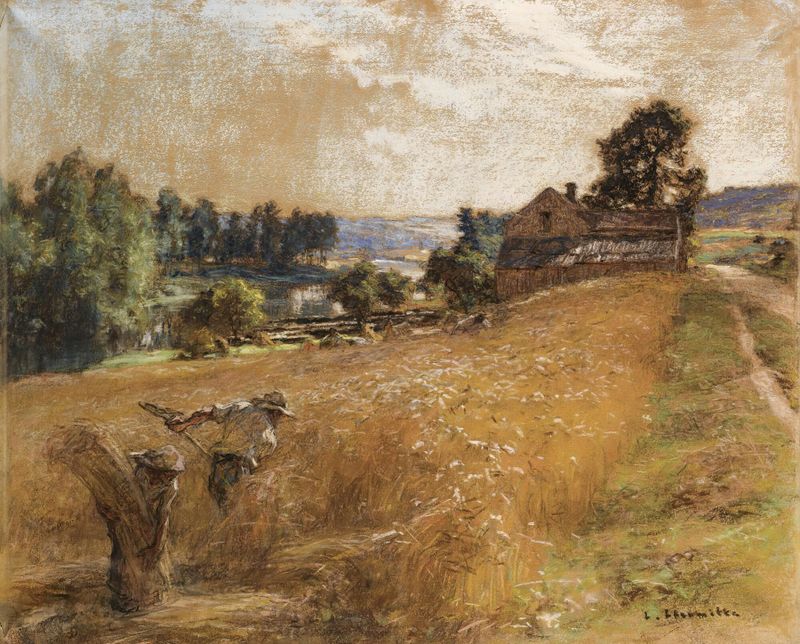
La Fenaison
Léon Augustin Lhermitte
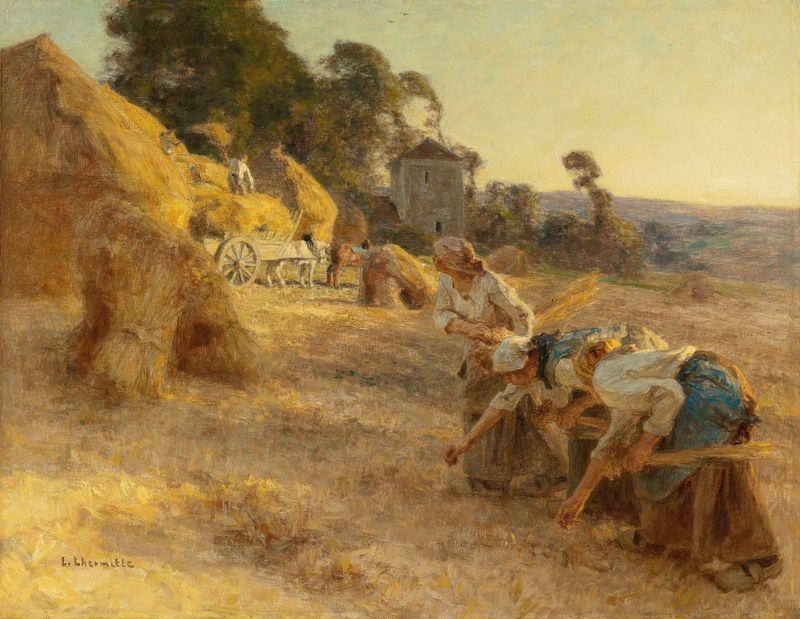
Glaneuses En Avant De Vieilles Meules
Léon Augustin Lhermitte
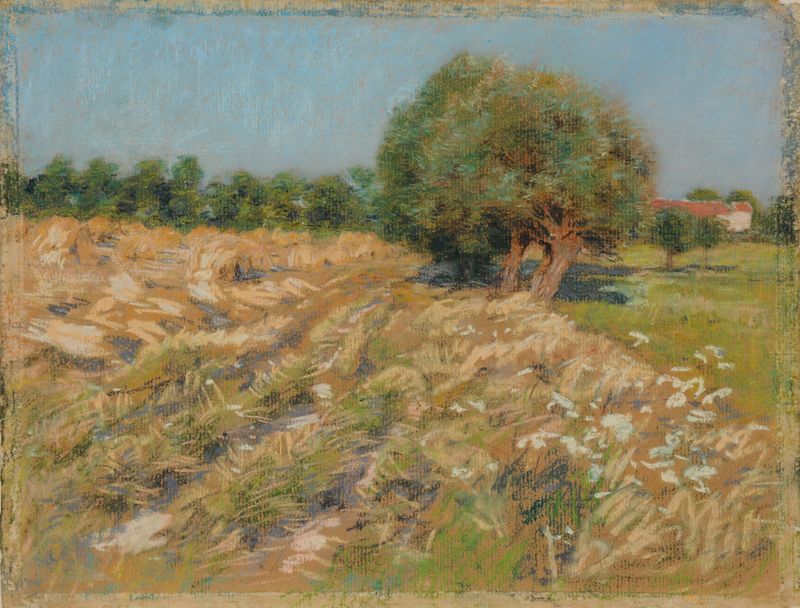
Le chemin de la ferme
Léon Augustin Lhermitte
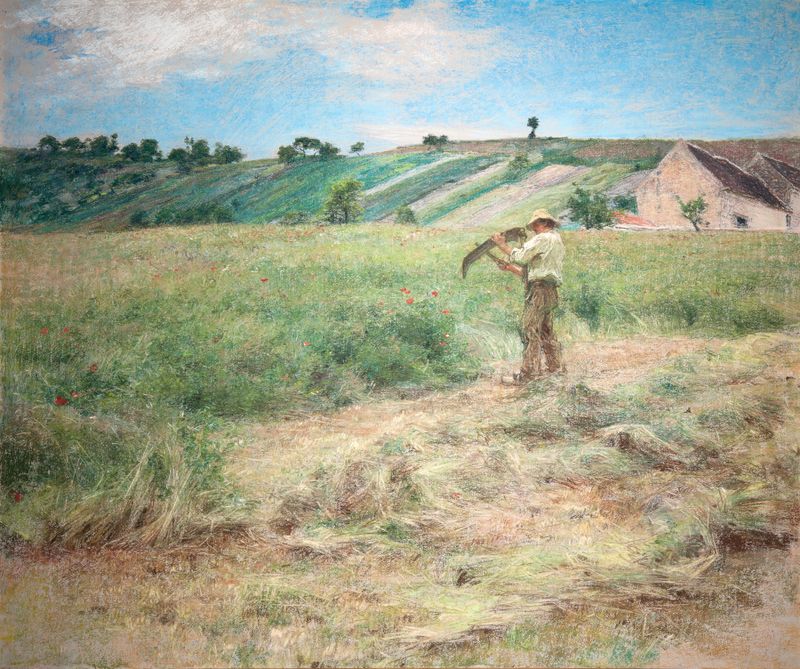
Haymaking
Léon Augustin Lhermitte
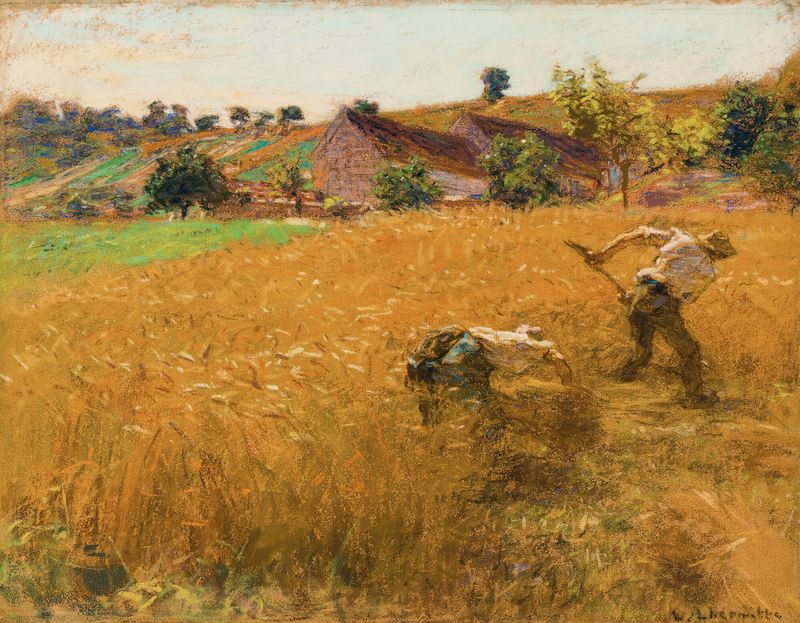
La Moisson
Léon Augustin Lhermitte
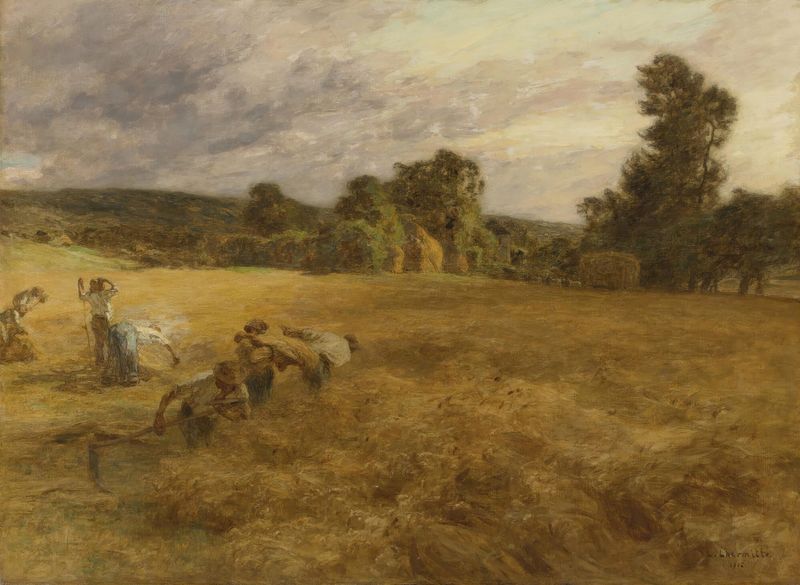
L’orage En Moisson
Léon Augustin Lhermitte
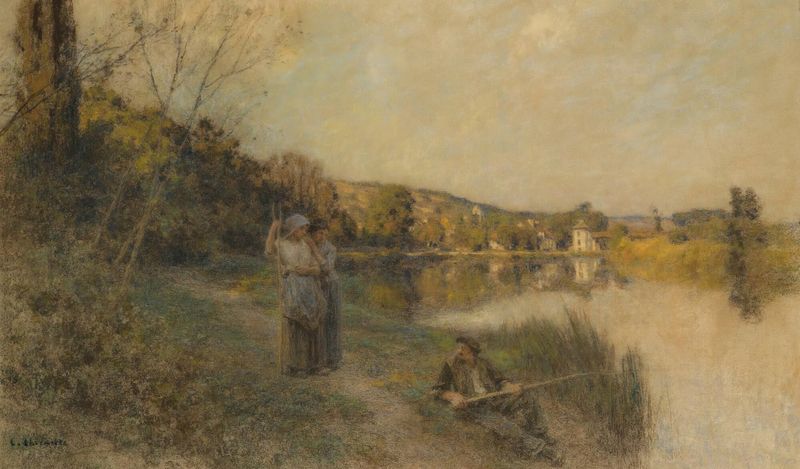
Fin De Belle Journee, Soleil Couchant, Pecheur
Léon Augustin Lhermitte

Quai au Sable, Chartèves
Léon Augustin Lhermitte
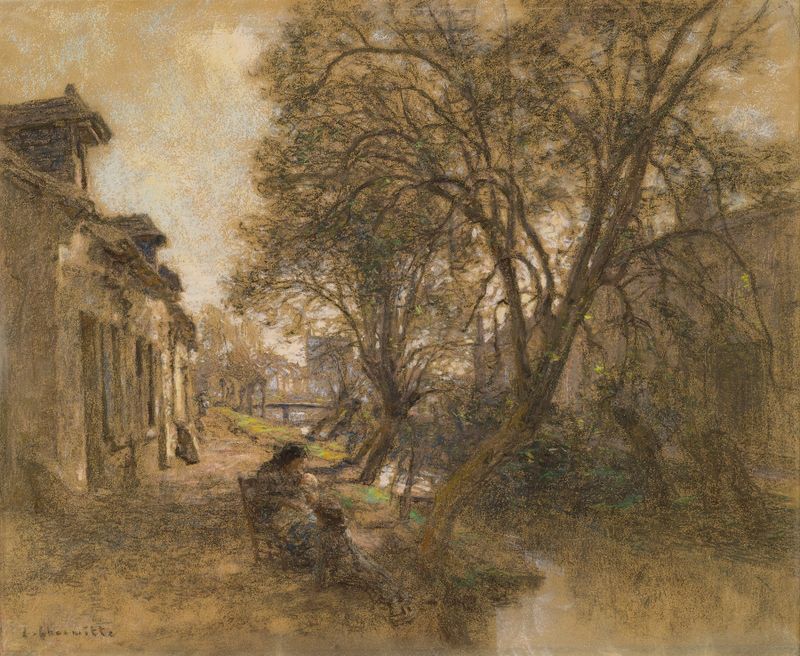
Vue Prise À Saint Bonnet Pres De Bourges
Léon Augustin Lhermitte





