
Le clos des Patriarches, 10 rue de l’Epée de Bois — History & Facts
Can beauty exist without sorrow? In Le clos des Patriarches, 10 rue de l’Epée de Bois, we find a landscape that walks the delicate line between serenity and the inevitable passage of time, inviting us to ponder the interplay of life and mortality. Look to the left where dappled sunlight filters through the trees, casting playful shadows across the pathway. The boughs are lush with verdant greens, yet there’s a muted quality to the palette that hints at something more profound. Notice how the composition draws your gaze toward the distant horizon, where the vibrant foliage meets an equally rich, yet somber sky, revealing the transient nature of beauty itself.
Each brushstroke is deliberate, capturing the essence of a quiet moment that feels both alive and hauntingly poignant. As you immerse yourself in the painting, consider the juxtaposition between the vibrant foliage and the encroaching shadows. The vibrant greens that evoke life also suggest decay, a reminder that every moment of beauty is fleeting. Moreover, the narrow path through the trees symbolizes a journey—each step taken is a march toward both discovery and an unavoidable conclusion.
The stillness of the scene holds an air of contemplation, encouraging viewers to reflect on their own journeys and the fragility of existence. Painted in 1909, this work reflects Georges-Henri Manesse’s engagement with Impressionism in the context of early 20th-century Paris, where artists grappled with modernity and the changes it brought. At this time, Manesse was exploring the dynamics of light and landscape while facing personal challenges, including the shadow of impending World War I. This moment in history marked a crucial transition in art, as creators sought to capture the essence of a world on the brink of transformation.
More Artworks by Georges-Henri Manesse
Browse all →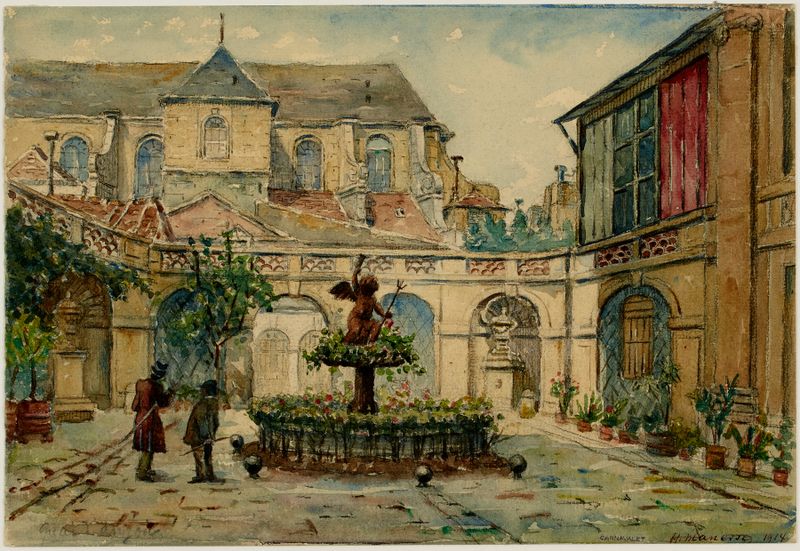
Cour intérieure de l’Hôtel Hesselin, 24 quai de Béthune
Georges-Henri Manesse
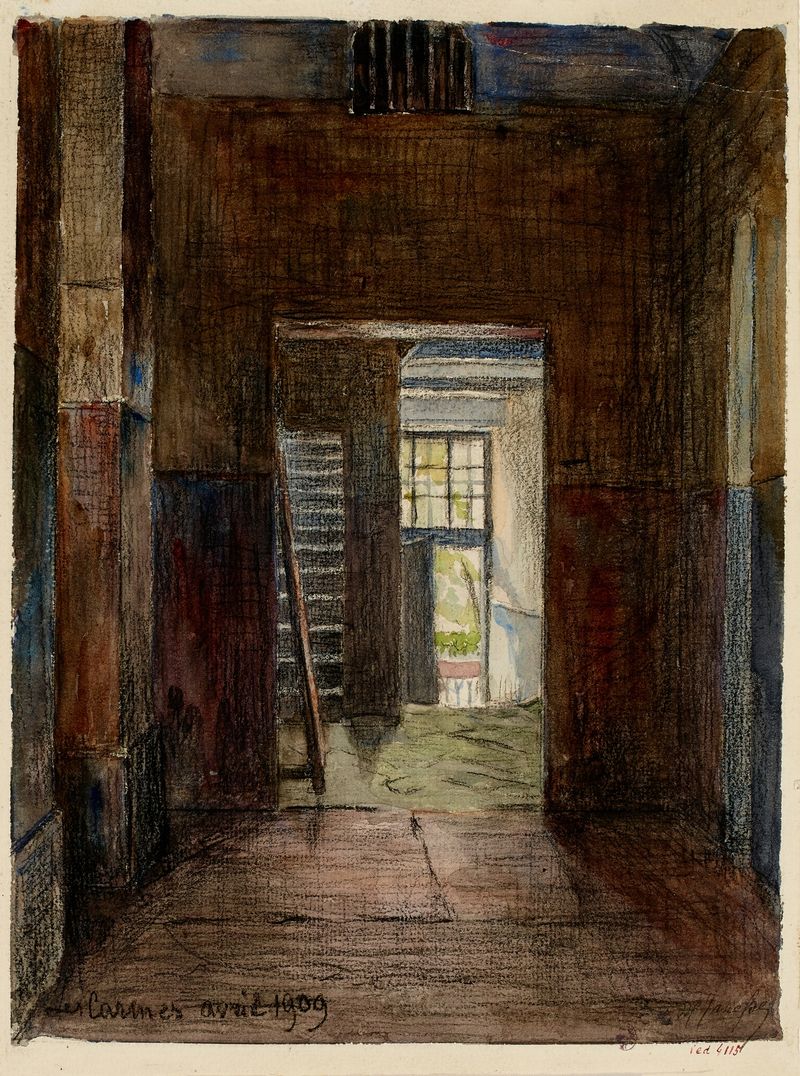
Intérieur du couvent des Carmes, rue de Vaugirard
Georges-Henri Manesse
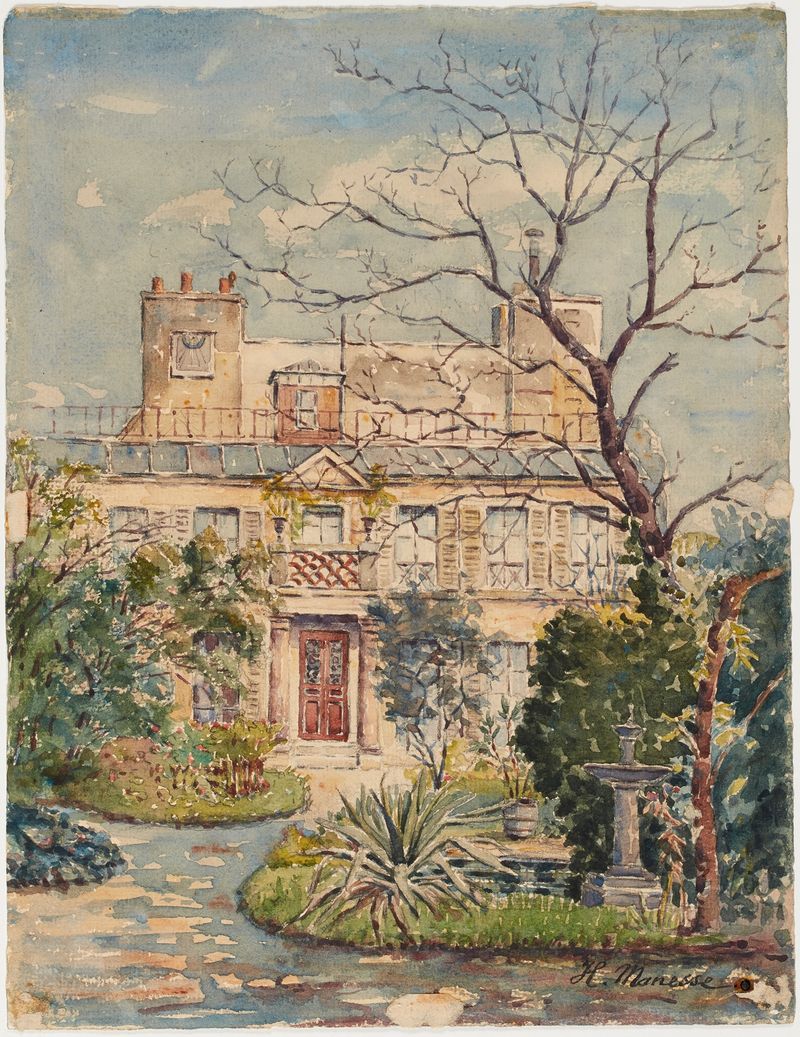
Maison de Victor Hugo, rue du Cherche-Midi
Georges-Henri Manesse
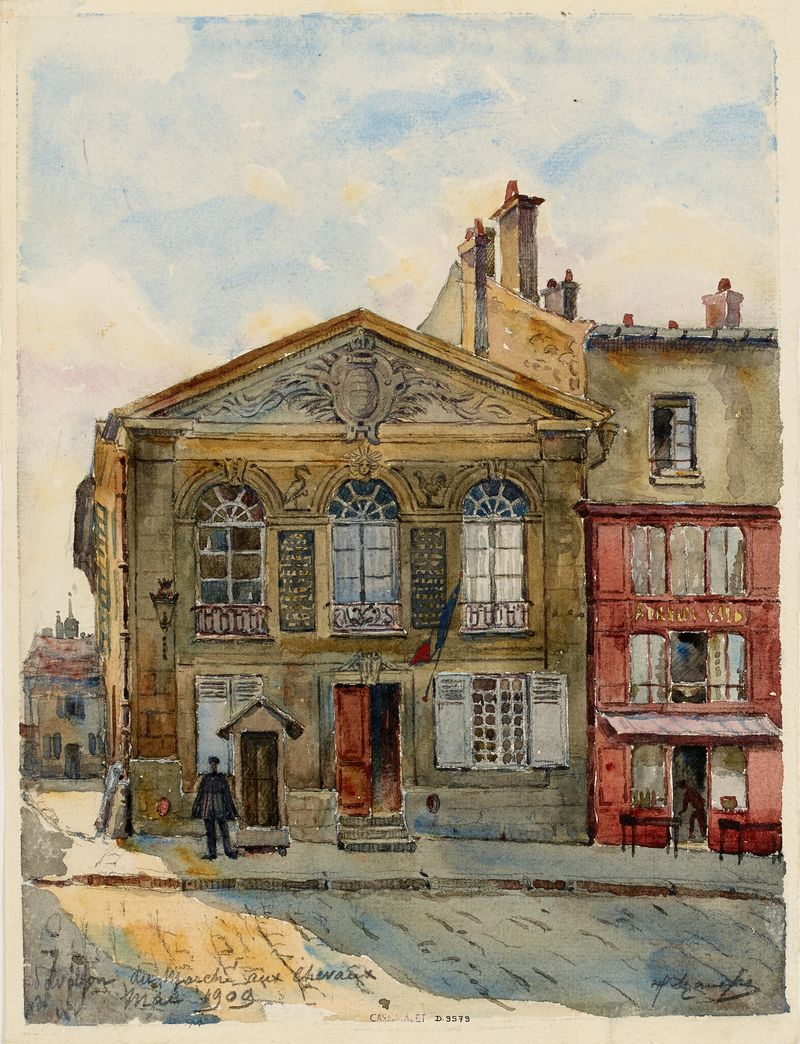
Le pavillon de police du Marché aux chevaux, rue Geoffroy Saint Hilaire
Georges-Henri Manesse

Passerelle des Arts
Georges-Henri Manesse

Vieille maison du XVè siècle, 6 rue Boutebrie
Georges-Henri Manesse
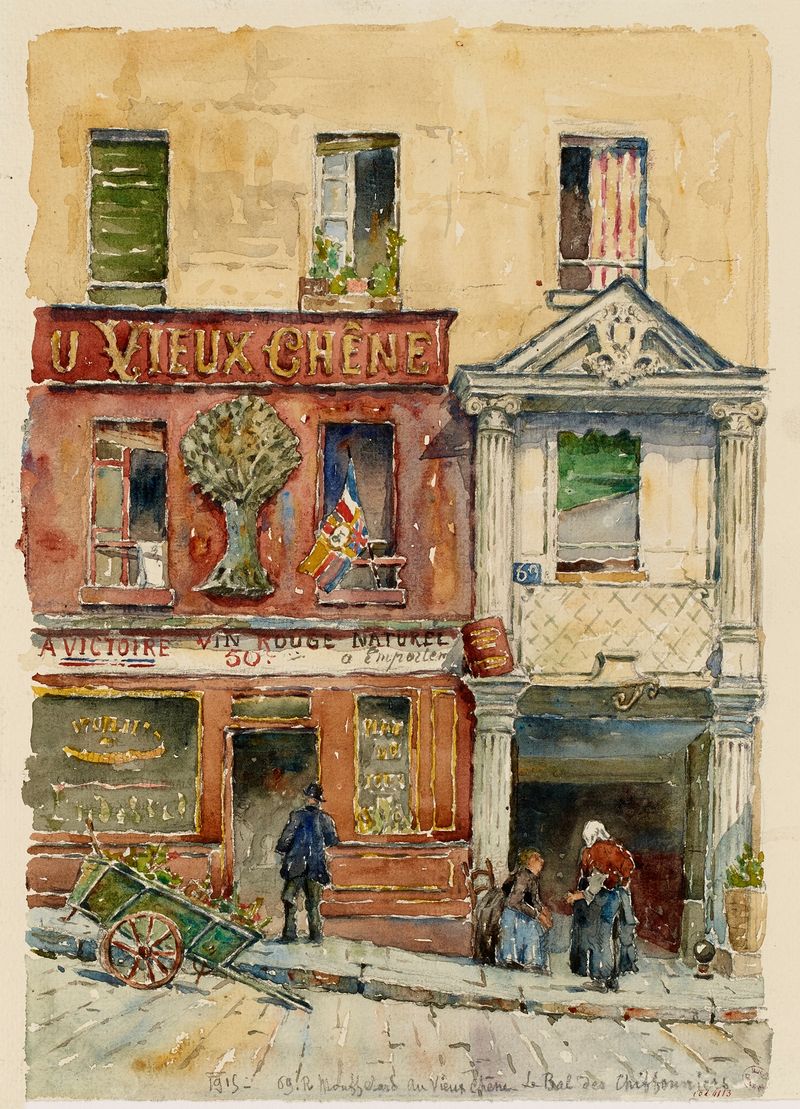
69, rue Mouffetard Boutique de vins à l’enseigne du Vieux chêne
Georges-Henri Manesse
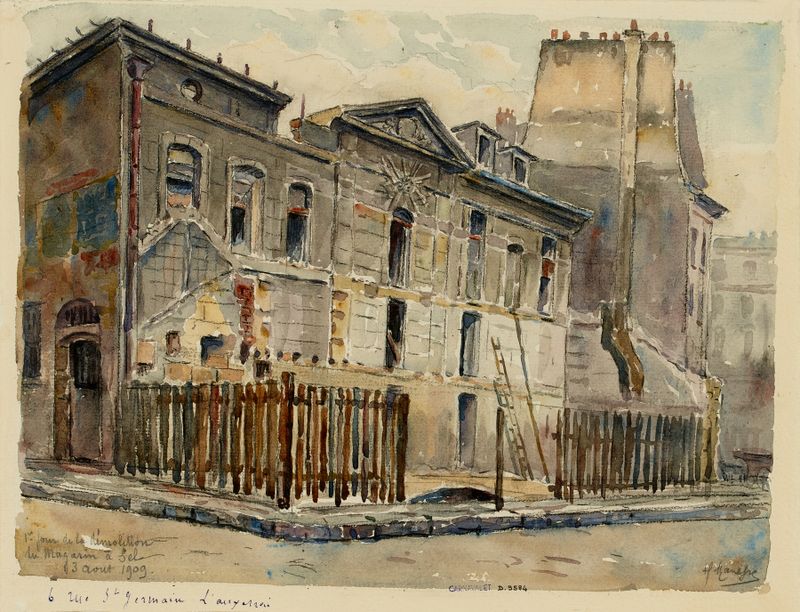
Premier jour de la démolition du magasin à sel, 6 rue Saint Germain de l’Auxerrois
Georges-Henri Manesse
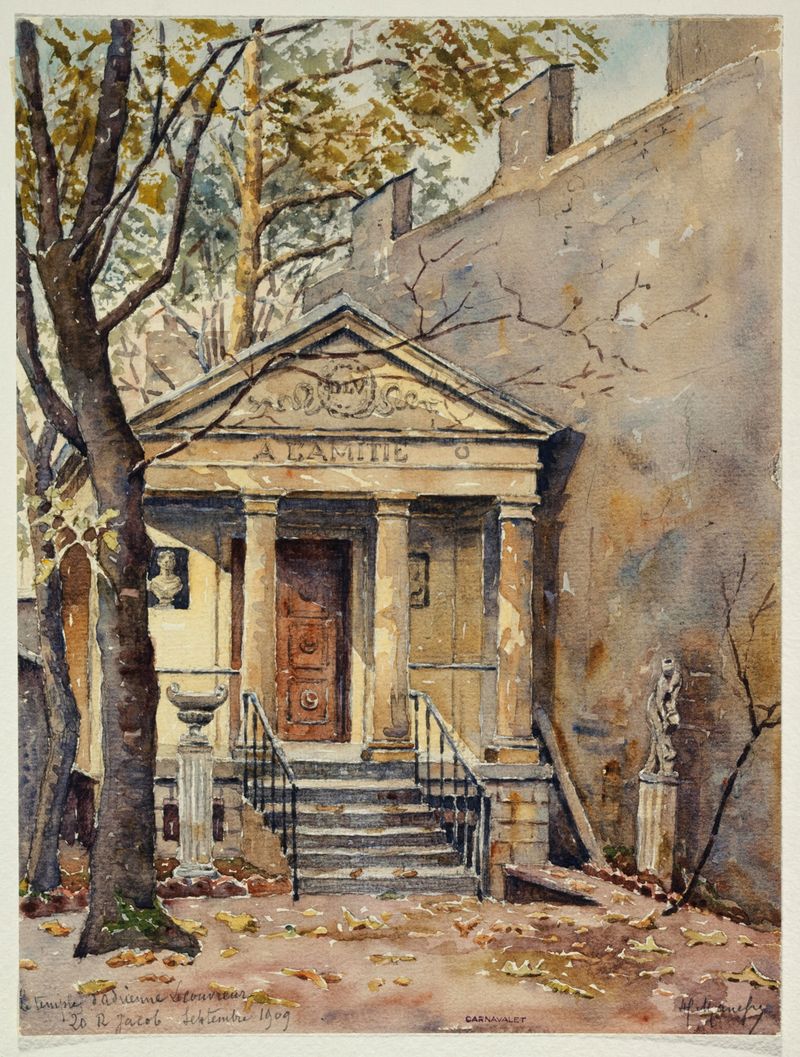
Temple de l’Amitié, 20 rue Jacob où habita Adrienne Lecouvreur
Georges-Henri Manesse

Maison de campagne de Jean-Jacques Rousseau, 20 quai de Passy
Georges-Henri Manesse





