
Le décintrement du pont de Neuilly, le 22 septembre 1772 — History & Facts
Can paint confess what words never could? In Le décintrement du pont de Neuilly, the artist captures a moment of profound transformation, a narrative that transcends the simple act of destruction. Look to the center of the canvas, where the bridge, a once-stalwart symbol of connection, is now a skeleton of its former self. Notice how the delicate play of light creates an ethereal glow around the rubble, highlighting both the majesty and the fragility of human architecture. The palette of muted grays and earthy tones evokes a somber mood, while the silhouetted figures emotionlessly work amidst the chaos, their gestures suggesting both diligence and resignation. Beneath the surface lies a deeper commentary on change and the passage of time.
The crumbling structure signifies not just physical decay but also the inevitable ebb of human achievement, as nature reclaims its dominion. The juxtaposition of industrious labor against the backdrop of fading grandeur begs the viewer to reflect on the transience of progress. Each detail, from the flecks of ivy creeping over stone to the faded reflections in the water below, invites contemplation on what is lost in the face of advancement. Created between 1772 and 1775, this work emerged during a pivotal period in France as Enlightenment ideas began to collide with the societal structures of the time.
Hubert Robert, a prominent figure in the art world, was deeply engaged in themes of architecture and its relationship with nature, reflecting a growing awareness of transformation and decay. In the wake of political unrest, this piece serves as a poignant reminder of the impermanence of human endeavors amidst the relentless march of time.
More Artworks by Hubert Robert
Browse all →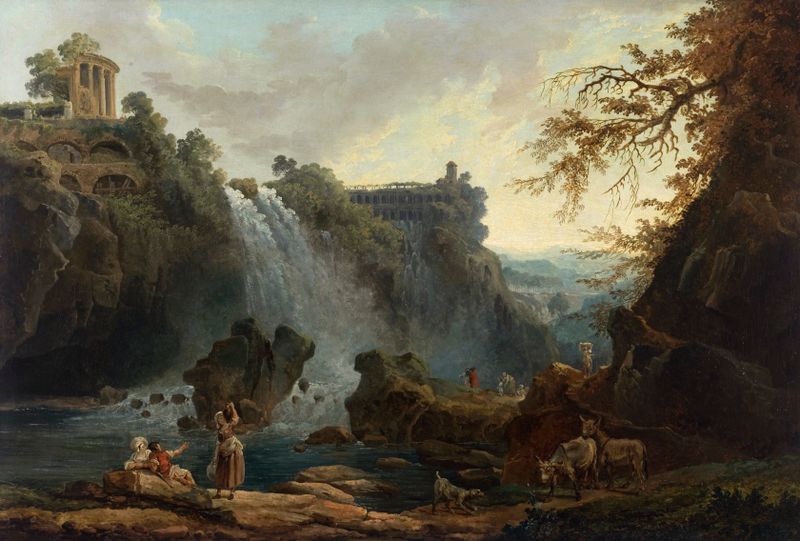
Les Cascatelles de Tivoli
Hubert Robert
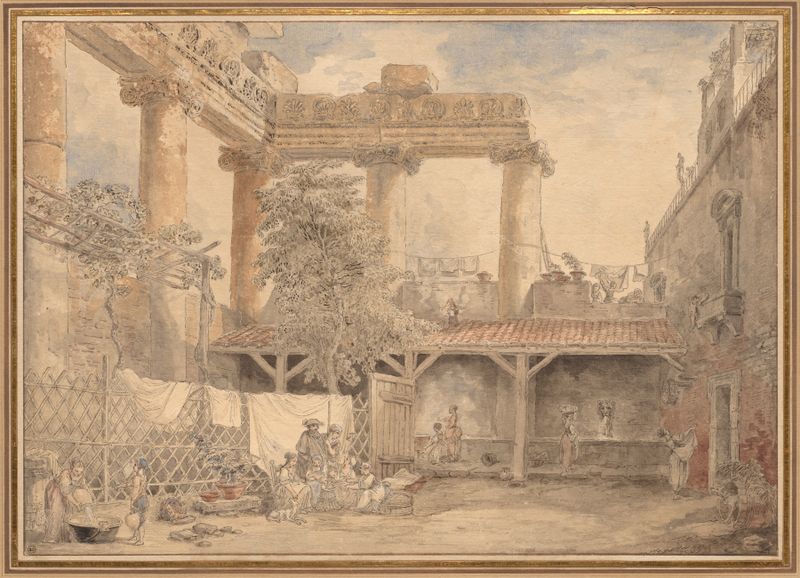
Roman Ruins, Villa Pamfili
Hubert Robert

The Rustic Bridge, Château de Méréville, France
Hubert Robert

The Portico of a Country Mansion
Hubert Robert

Architectural Capriccio
Hubert Robert

The Obelisk
Hubert Robert
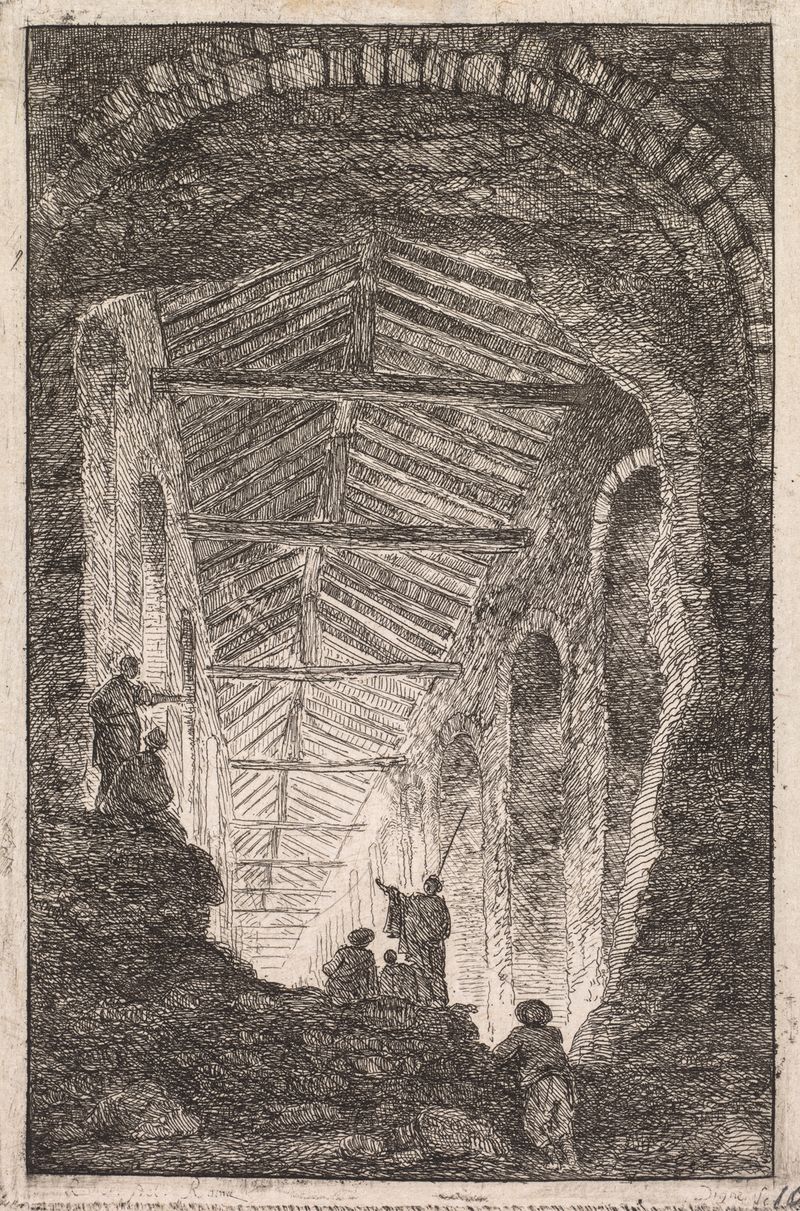
The Antique Gallery
Hubert Robert

L’incendie de l’Opéra, vu des jardins du Palais-Royal, le 8 juin 1781
Hubert Robert
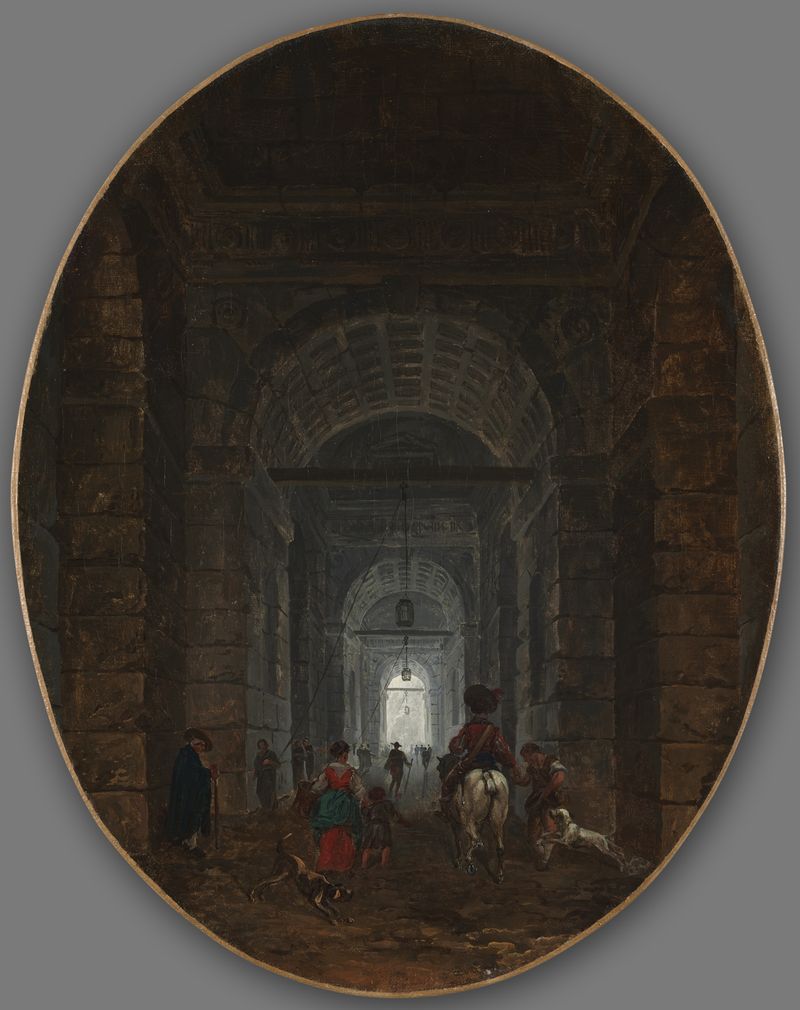
The Grotto of Posillipo
Hubert Robert

Architectural Capriccio with ruins of the Temple of Saturn and the Colosseum in the background
Hubert Robert
More Architecture Art
Browse all →
The statue of Liberty
Frédéric Auguste Bartholdi

View of Houses in Delft, Known as ‘The Little Street’
Johannes Vermeer

View of Houses in Delft, Known as ‘The Little Street’
Johannes Vermeer

The Cathedral in Rouen. The portal, Grey Weather
Claude Monet

The yellow house
Vincent van Gogh

The Church in Auvers-sur-Oise, View from the Chevet
Vincent van Gogh