
Le Grand Duquesne — History & Facts
What if silence could speak through light? In Le Grand Duquesne, the interplay between shadow and illumination whispers of loss and longing, drawing the viewer into a world suspended in time. Focus first on the luminous façade of the building, where soft light bathes the architectural details, evoking a sense of nostalgia. Notice how the muted color palette—composed of gentle blues and warm ochres—creates an atmosphere that is both inviting and melancholic. The brushwork is loose yet deliberate, allowing the viewer's eye to wander, exploring textures that evoke the passage of time and memory. Delve deeper into the composition, where the empty spaces between figures serve as poignant reminders of absence.
The solitary figure in the foreground, shrouded in shadow, suggests a moment of introspection, as if contemplating what once was. This interplay of presence and absence, of light against dark, communicates an emotional tension that resonates with the viewer's own experiences of loss and reflection. In 1899, Sickert was living in London, deeply influenced by the evolving art scene and his interactions with the Impressionists. This period was marked by a shift towards exploring modern life and its complexities, allowing him to capture the nuanced emotions of his subjects.
Le Grand Duquesne embodies this transition, reflecting both personal and societal narratives of change, memory, and the weight of what we leave behind.
More Artworks by Walter Richard Sickert
Browse all →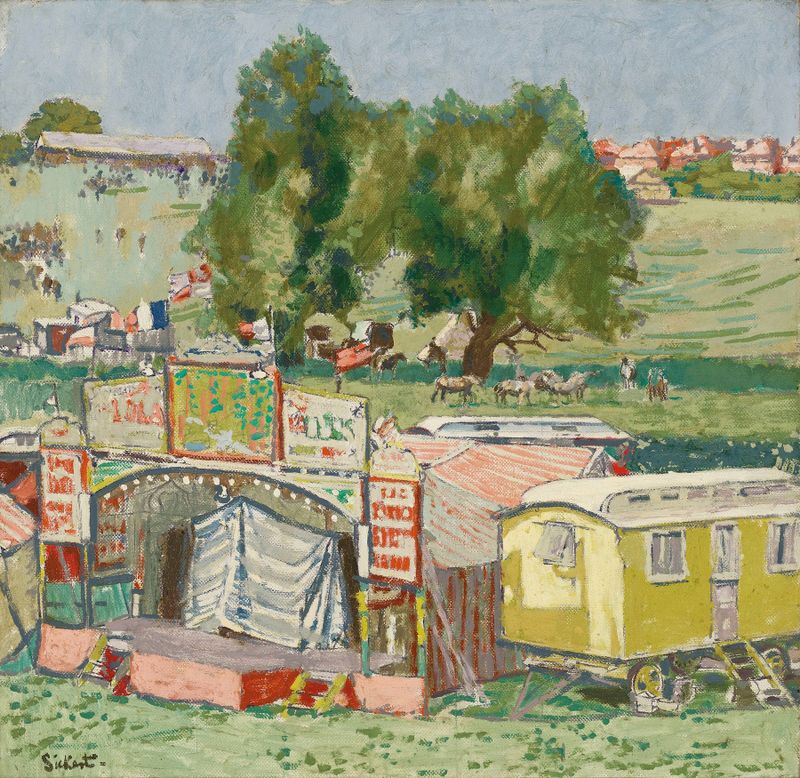
Barnet Fair
Walter Richard Sickert
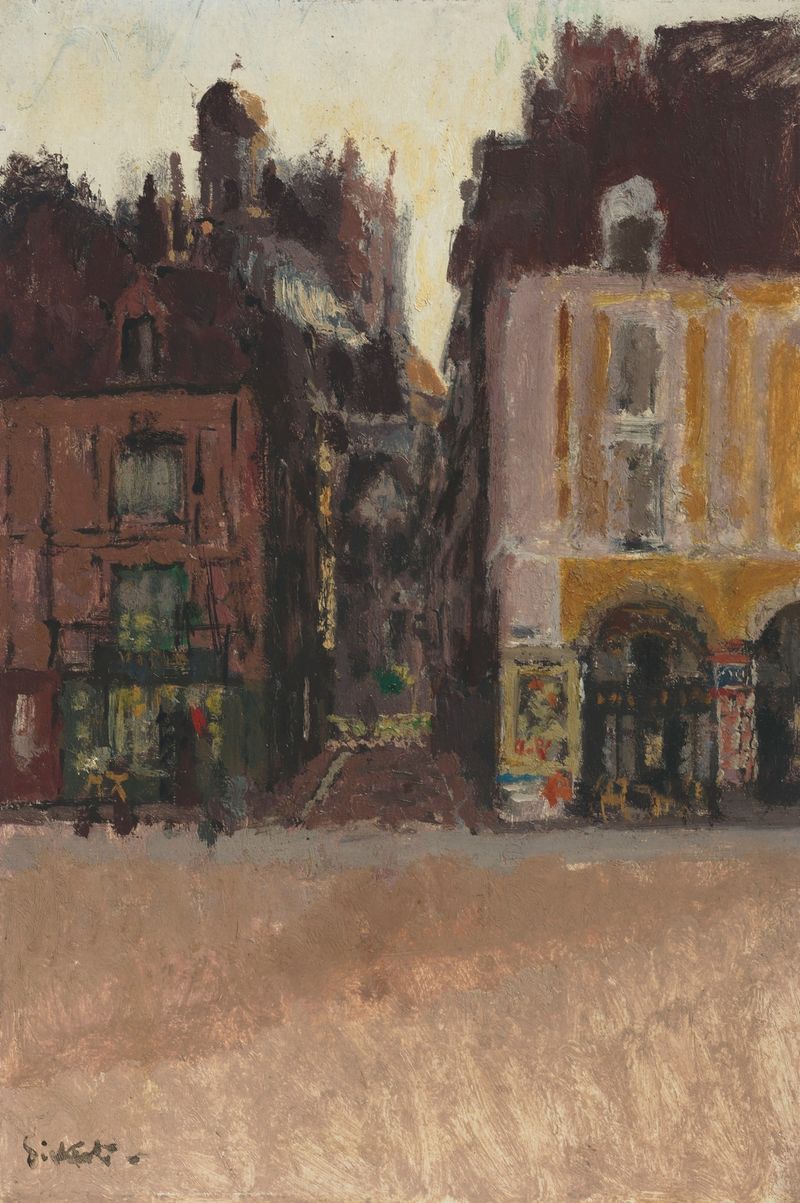
La Rue Notre Dame and the Quai Duquesne, Dieppe
Walter Richard Sickert

Street Scene
Walter Richard Sickert

Lansdown Crescent, Bath
Walter Richard Sickert

Belmont, Lansdown Road, Bath
Walter Richard Sickert

St Jacques, Dieppe
Walter Richard Sickert

Venice, La Salute
Walter Richard Sickert
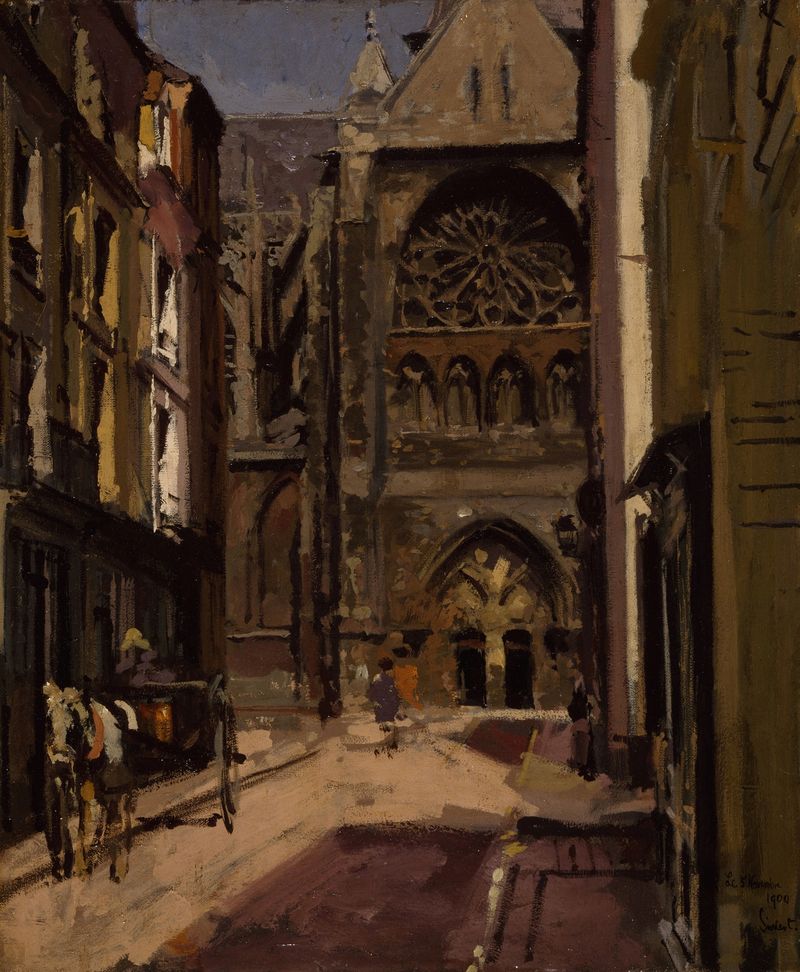
La Rue Pecquet, Dieppe, France
Walter Richard Sickert

Le Quai Henri IV
Walter Richard Sickert

Venetian Canal
Walter Richard Sickert
More Architecture Art
Browse all →
The statue of Liberty
Frédéric Auguste Bartholdi

View of Houses in Delft, Known as ‘The Little Street’
Johannes Vermeer

View of Houses in Delft, Known as ‘The Little Street’
Johannes Vermeer

The Cathedral in Rouen. The portal, Grey Weather
Claude Monet

The yellow house
Vincent van Gogh

The Church in Auvers-sur-Oise, View from the Chevet
Vincent van Gogh