
Le passage des Patriarches — History & Facts
What if beauty was never meant to be finished? In Le passage des Patriarches, this notion blossoms within a dreamlike composition, hinting at the fleeting yet eternal qualities of art and life itself. Look to the left at the interplay of light and shadow, where soft, ethereal tones blend seamlessly with sharper, more defined edges. The figures, draped in flowing garments, seem to glide across the canvas, their expressions caught between serenity and introspection. Notice how the gentle hues of blues and golds create an atmosphere of warmth, while the winding path draws the eye deeper into the scene, suggesting a journey not just of the body, but of the spirit. Yet, beneath this serene surface lies a tapestry of contrasts.
The juxtaposition of the solid, monumental figures against the delicate, ephemeral landscape reflects the tension between permanence and transience. Each element—the arching trees, the dappled light, the stoic countenances—whispers of a deeper narrative concerning legacy, faith, and the passage of time. The viewer is invited to ponder what these figures carry within them, perhaps the weight of history or the lightness of hope. Painted in 1903, the artist captured this evocative moment while immersed in the artistic currents of early 20th-century France.
At this time, Bonneton was exploring themes of spirituality and mythology, responding to the shifting cultural landscape that embraced both the traditional and the modern. His work emerged as a reflection of the era's quest for beauty, marking a poignant intersection between past legacies and future possibilities.
More Artworks by Germain Eugène Bonneton
Browse all →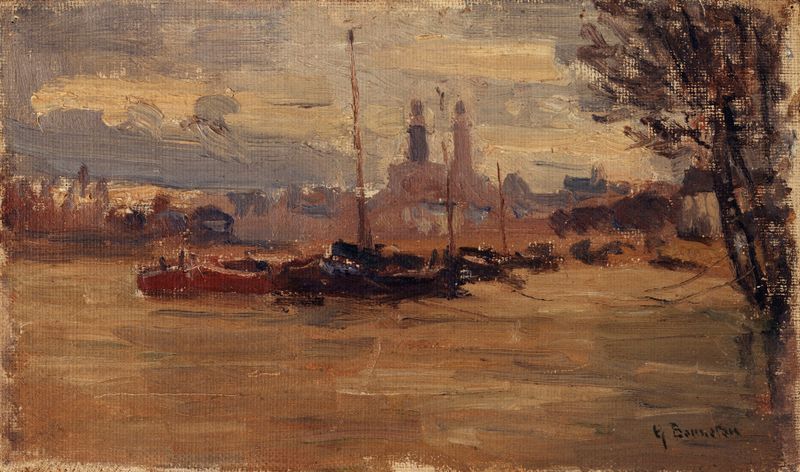
La Seine au pont des Invalides (inondations de 1910)
Germain Eugène Bonneton
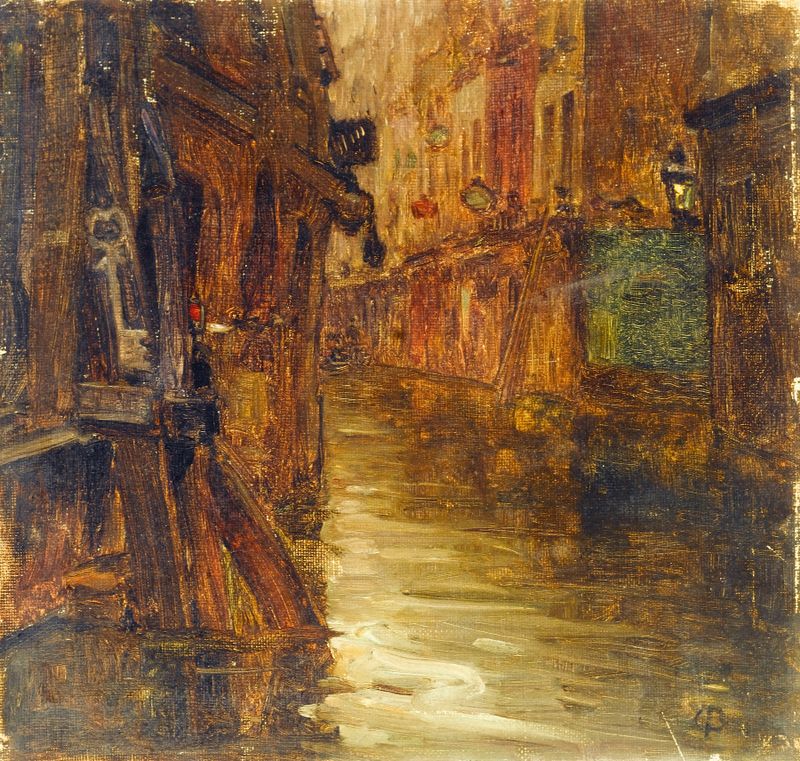
La rue de Bièvre, vue du boulevard Saint-Germain (inondations de 1910)
Germain Eugène Bonneton
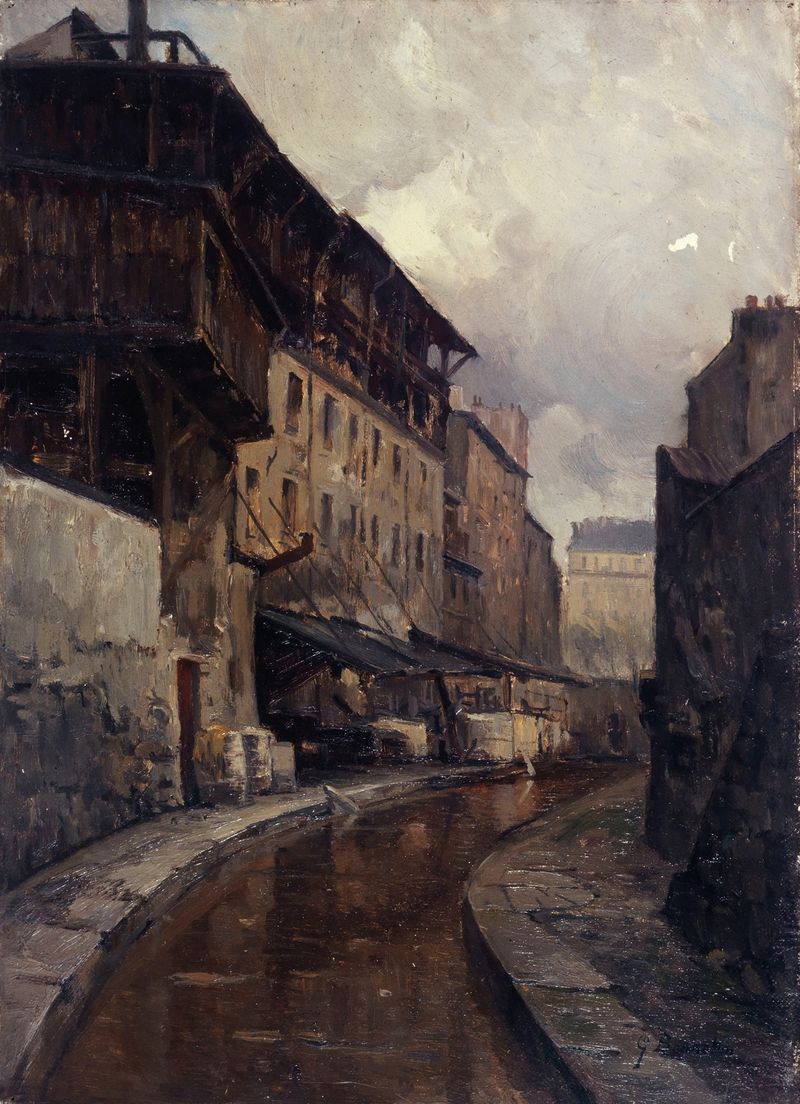
La Bièvre, rue de Valence
Germain Eugène Bonneton

La Bièvre, entre la rue Pascal et la rue Broca
Germain Eugène Bonneton

Entrée du passage Moret, rue des Cordelières
Germain Eugène Bonneton
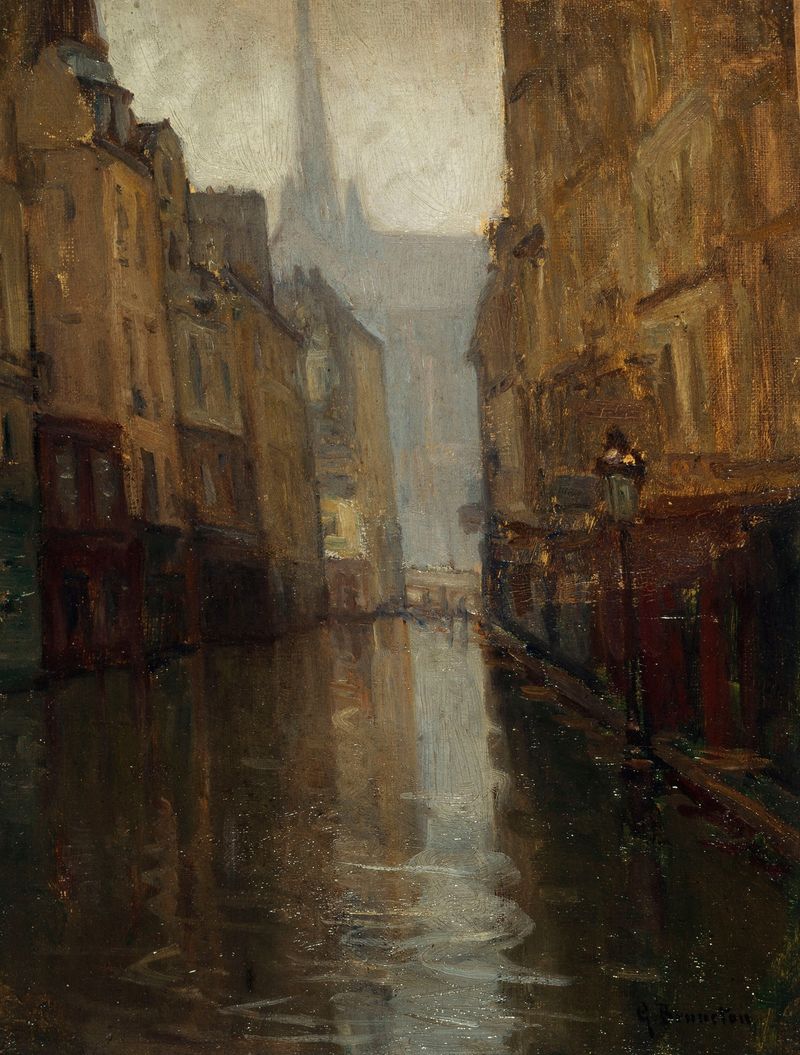
La rue du Haut-Pavé vers le quai de Montebello (inondations de 1910)
Germain Eugène Bonneton

La rue du Haut-Pavé vers la place Maubert (inondations de 1910)
Germain Eugène Bonneton
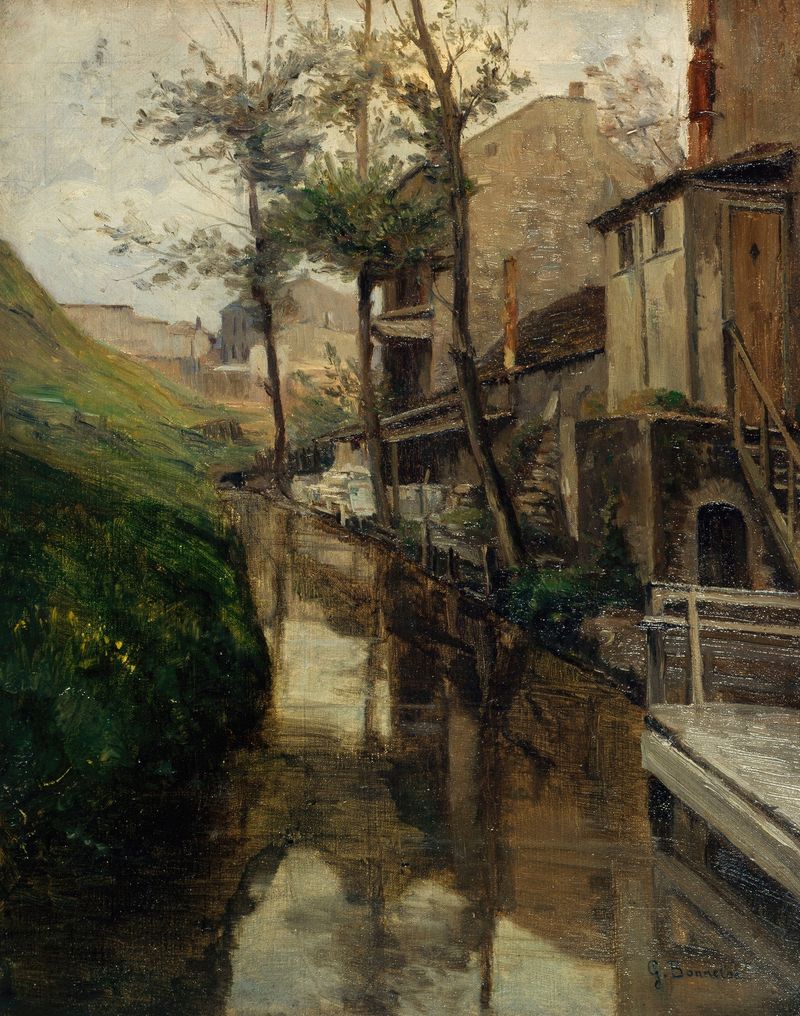
La Bièvre, rue Vulpian
Germain Eugène Bonneton
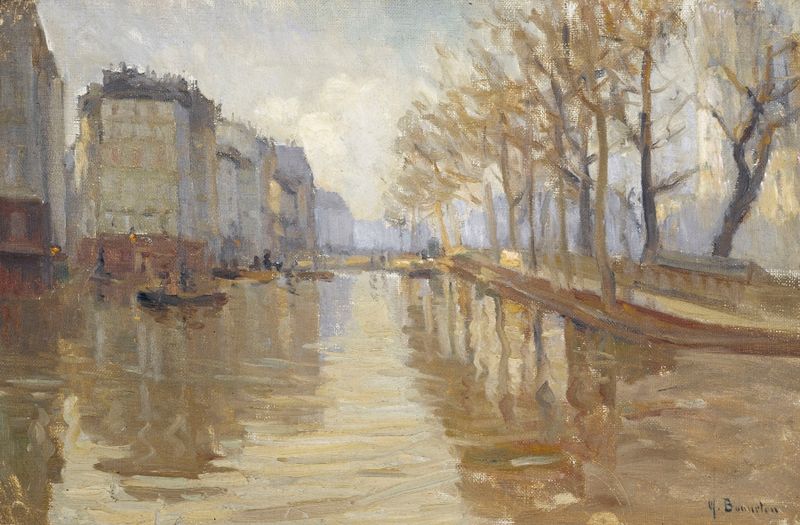
Le quai Montebello (inondations de 1910)
Germain Eugène Bonneton
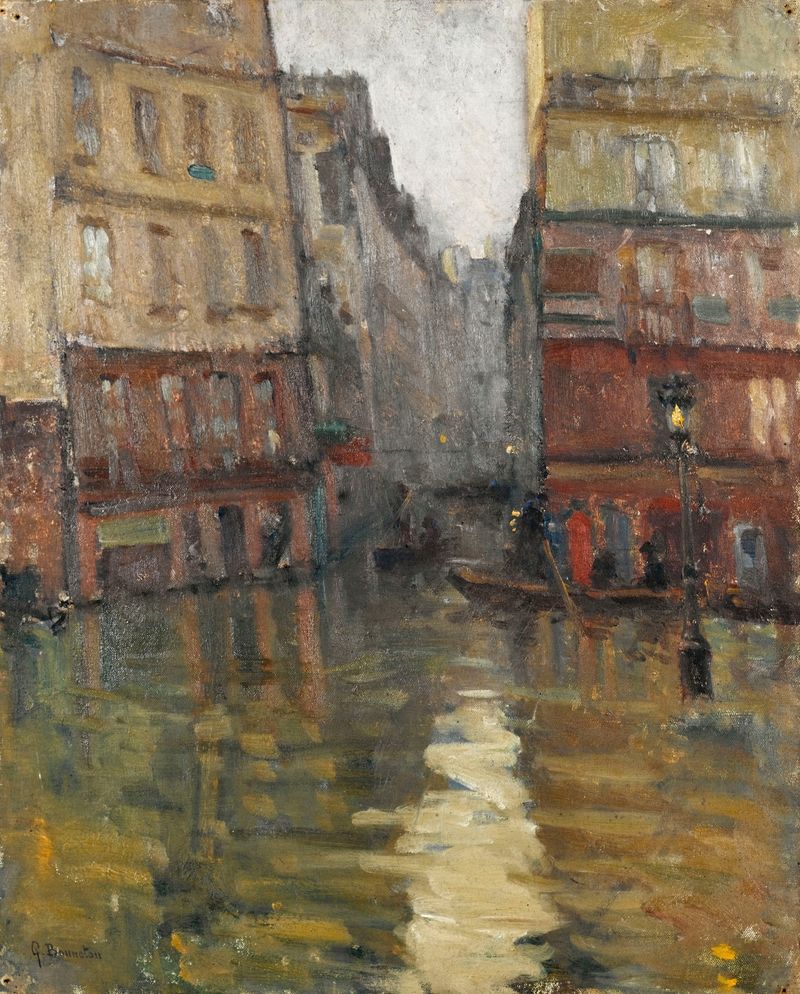
La rue Maître-Albert (inondations de 1910)
Germain Eugène Bonneton





