
Le Puy Barriou, Creuse — History & Facts
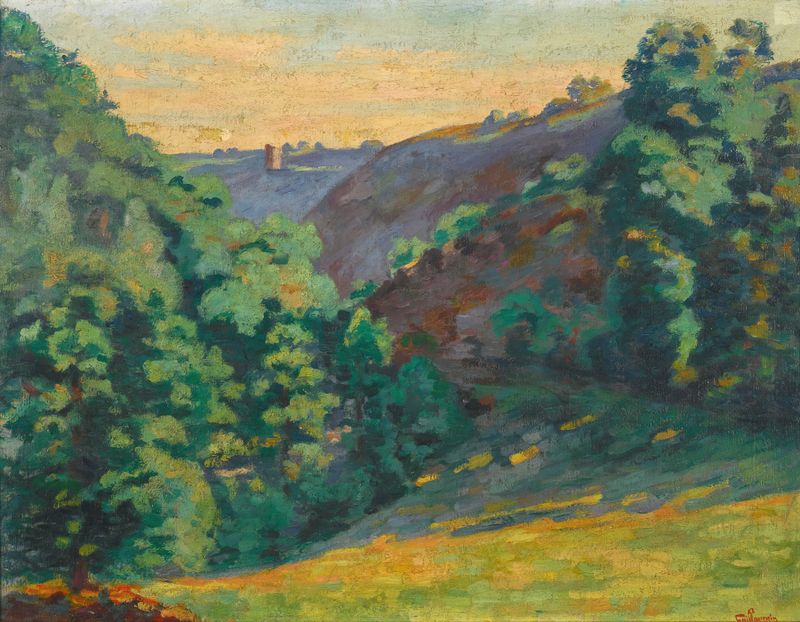
Can beauty exist without sorrow? In Armand Guillaumin's Le Puy Barriou, Creuse, the landscape whispers a melancholic tale, inviting viewers to peer into the tender embrace of nature’s duality. Look to the left at the sweeping curves of the hills, rolling gently under a sky that teeters between dusk and dawn. The soft strokes of the brush create a sense of movement, where trees blend into a patchwork of greens and ochres, laced with delicate hints of lavender. Notice how the light dances across the surface, illuminating patches of wildflowers that seem to shimmer with life, yet evoke a poignant stillness that underlines the fleeting nature of beauty. Amidst this lush scenery, contrasts abound.
The vibrant colors pulsate with vitality, yet they are intertwined with a sense of longing, as if the landscape holds its breath in anticipation of change. The distant horizon suggests a boundary, perhaps an unreachable dream, emphasizing the emotional tension between the allure of the present and the weight of what is to come. Each brushstroke captures not just a scene but an echo of the heart’s unfulfilled desires. In 1900, Guillaumin was residing in France, deeply influenced by the Impressionist movement.
This period marked a time of personal and artistic evolution for him, as he sought to capture the world around him with newfound clarity and emotion. The beauty of places like Creuse inspired him to convey the subtleties of nature, reflecting both the vibrancy and ephemerality of the landscapes that surrounded him.
More Artworks by Armand Guillaumin
Browse all →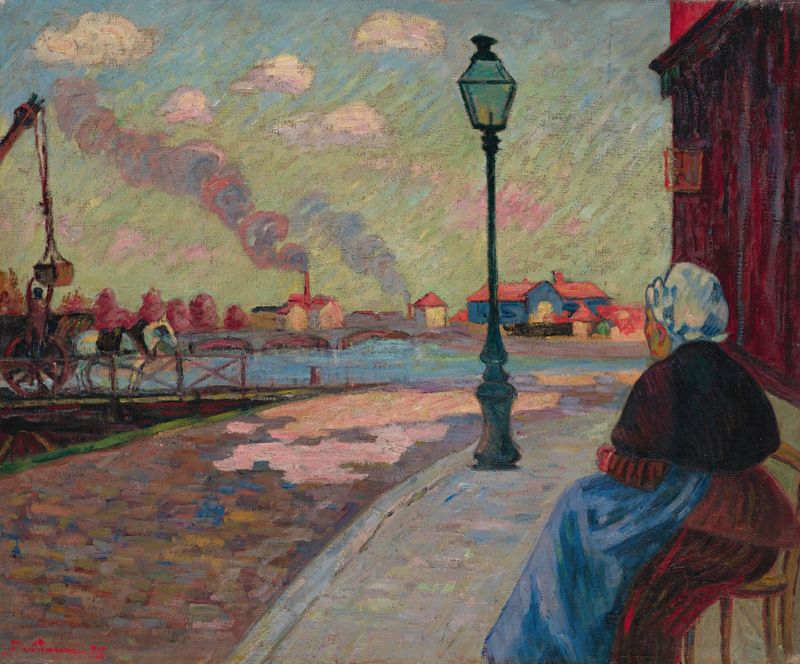
La Seine À Charenton
Armand Guillaumin
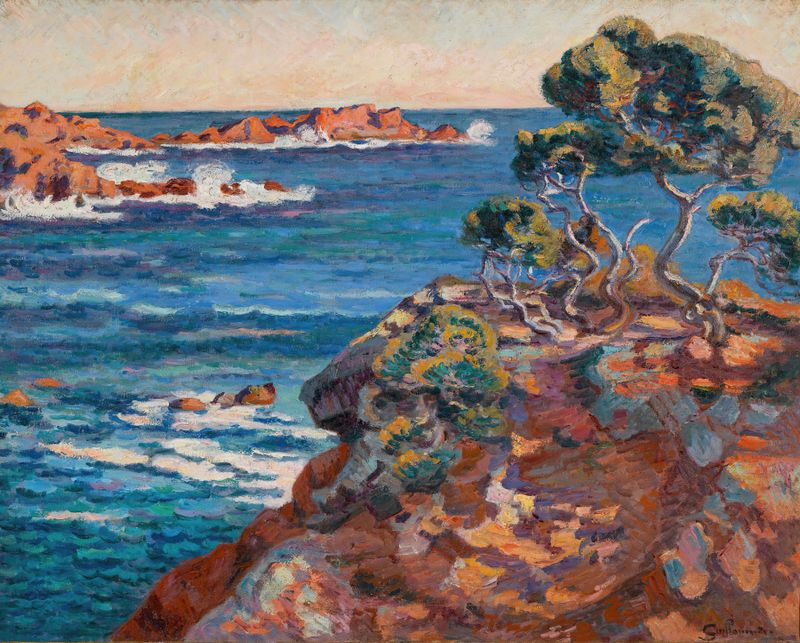
Bord De Mer À Agay
Armand Guillaumin
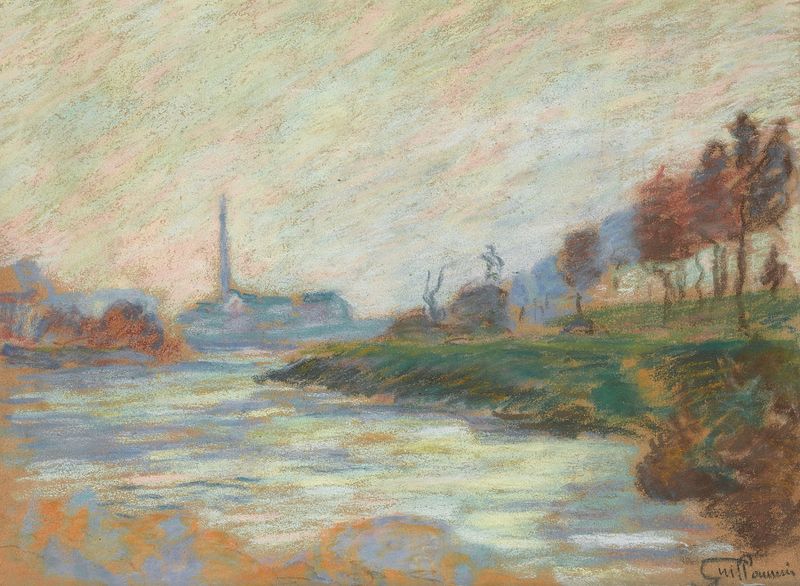
Confluent De La Marne Et De La Seine, Île De La France
Armand Guillaumin

Le Ravin de la folie, vue de Chateau Crozant
Armand Guillaumin
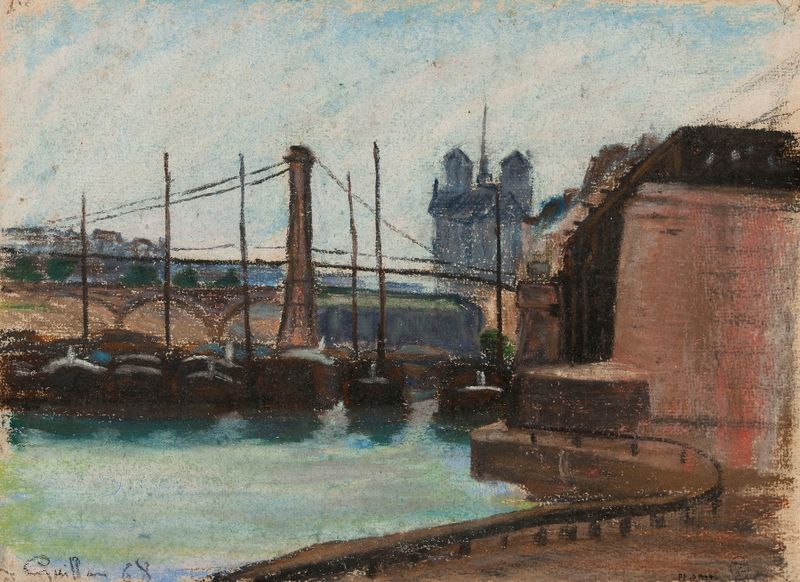
Le Pont d’Austerlitz
Armand Guillaumin

Paysage de Printemps
Armand Guillaumin
Crozant, Le Ravin De La Sedelle À La Folie
Armand Guillaumin
Paysage
Armand Guillaumin

La vallée de la creuse
Armand Guillaumin

L’Eglise Saint-Sulpice, Paris
Armand Guillaumin





