
Le Square Louis XVI — History & Facts
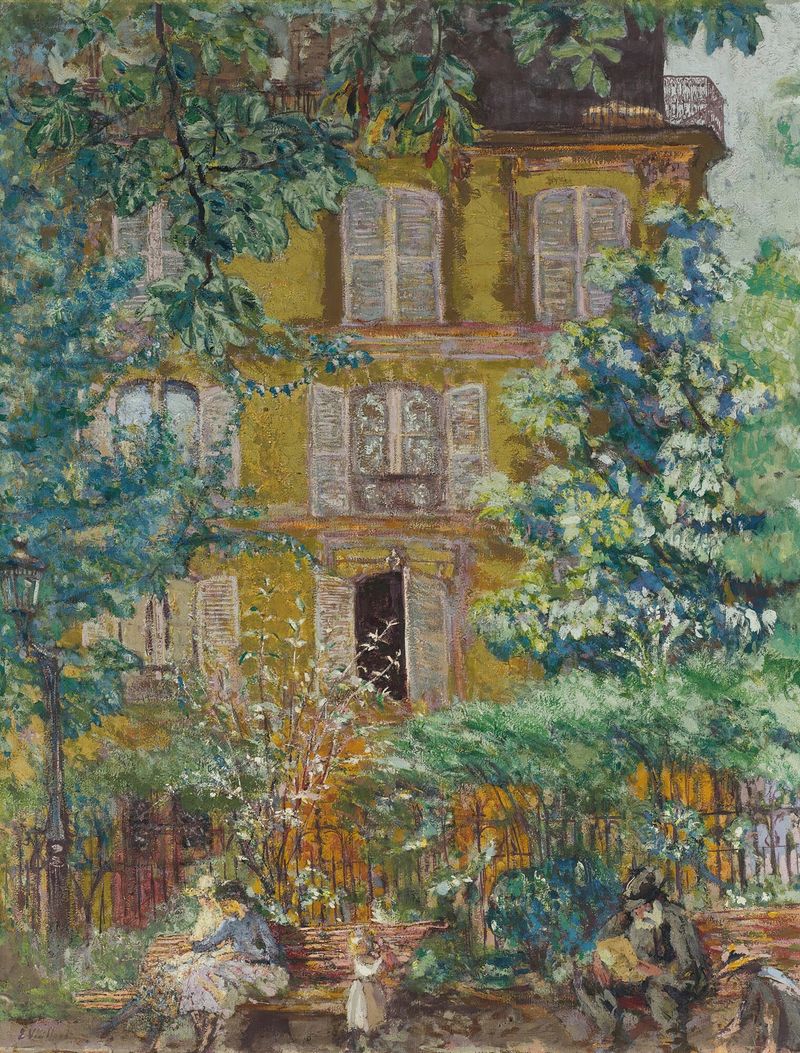
Who listens when art speaks of silence? In Le Square Louis XVI, Édouard Vuillard captures a moment steeped in quietude, whispering of the madness that can dwell beneath the surface of tranquility. Look to the left at the gentle sweep of the trees, their leaves a riot of greens, dappled with sunlight, while the square hums softly with life. The figures, subtly integrated into the landscape, blend with the palette of muted earth tones, creating an intimate dialogue between man and nature. Notice how the brushwork varies—loose and fluid around the foliage, yet tighter where the figures linger, revealing Vuillard’s mastery in evoking both presence and absence. As you gaze deeper, consider the contrasts at play: the serene environment juxtaposed with the tension of unspoken stories.
Each figure appears absorbed in their own world, yet the viewer senses the collective energy of their shared space, hinting at the madness of isolation amid the crowd. The interplay of light and shadow serves not only to illuminate the scene but also to obscure, reflecting the complexities of human connection and emotional distance. In 1890, Vuillard painted this work during a period of transition in art, as the world began to embrace modernity. Living in Paris, he was at the heart of artistic innovation, influenced by the Nabis group—a collective he was part of—that sought to blend art with intimate and personal experiences.
This piece embodies his exploration of everyday life, revealing the psychological undercurrents that often lie hidden beneath the ordinary.
More Artworks by Édouard Vuillard
Browse all →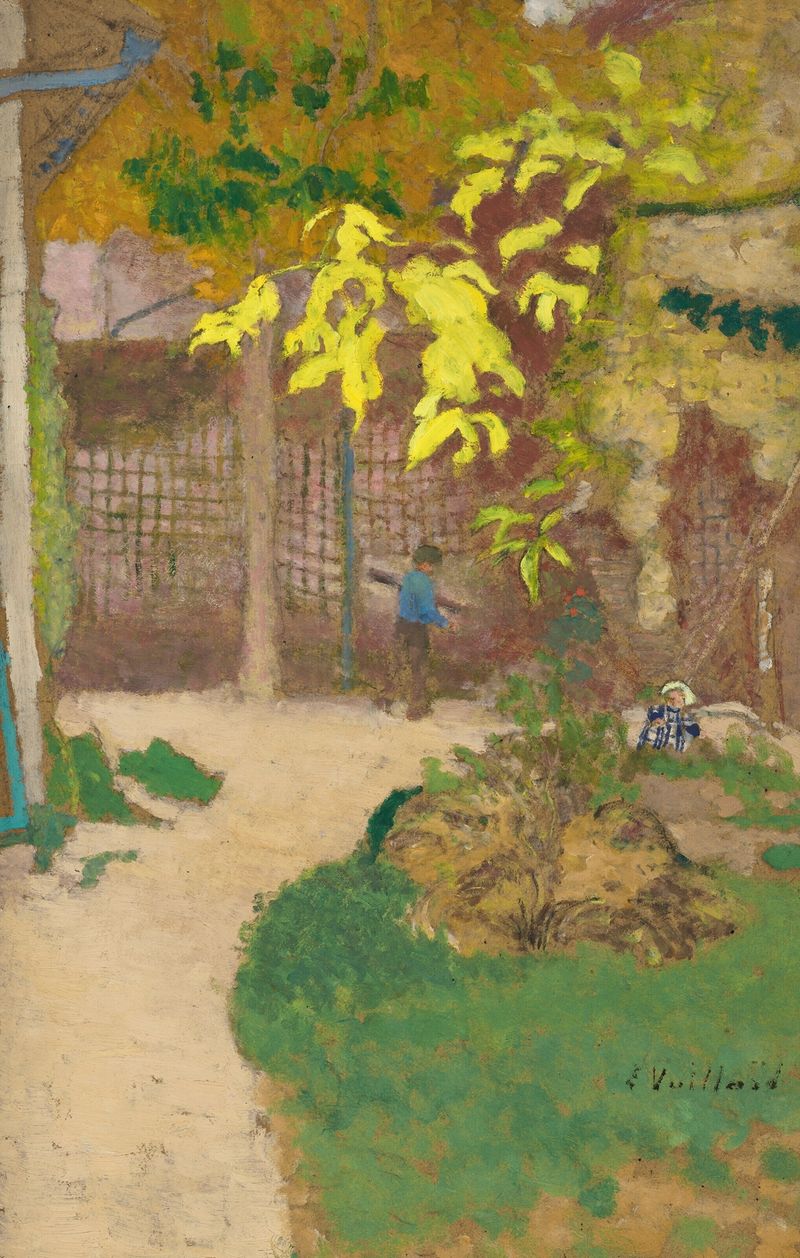
Le Jardin
Édouard Vuillard
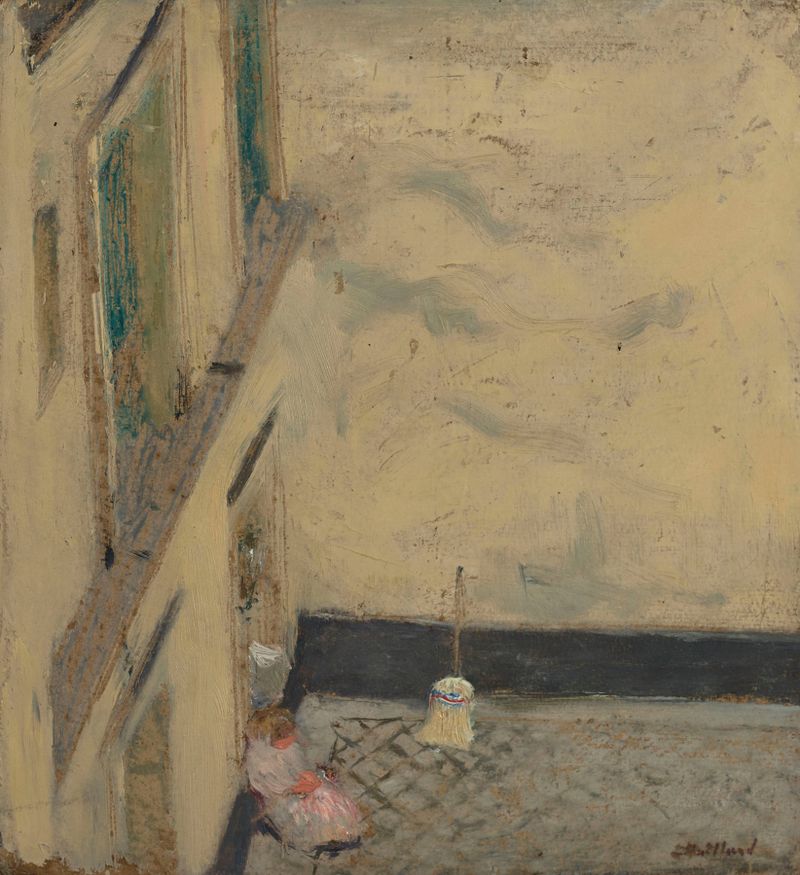
Le Balai dans la cour, 346 rue Saint-Honoré
Édouard Vuillard

Place Vintimille
Édouard Vuillard
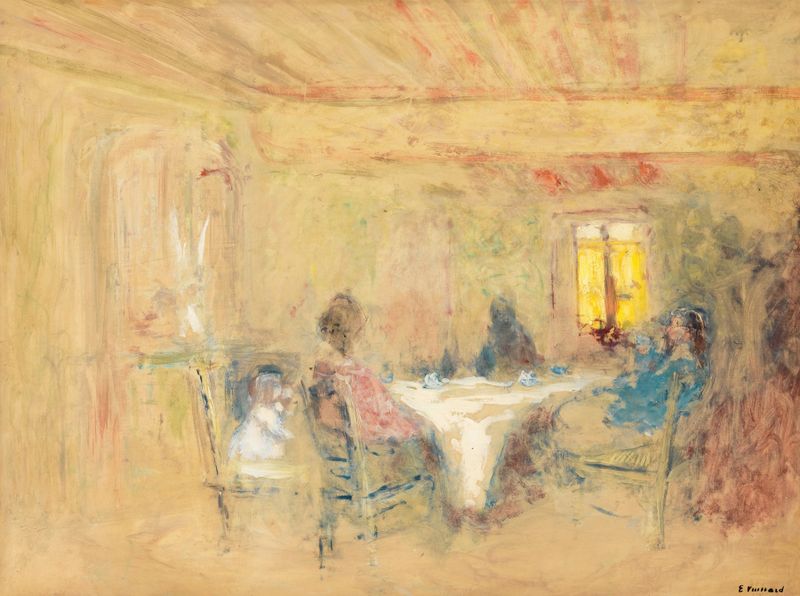
À Table
Édouard Vuillard
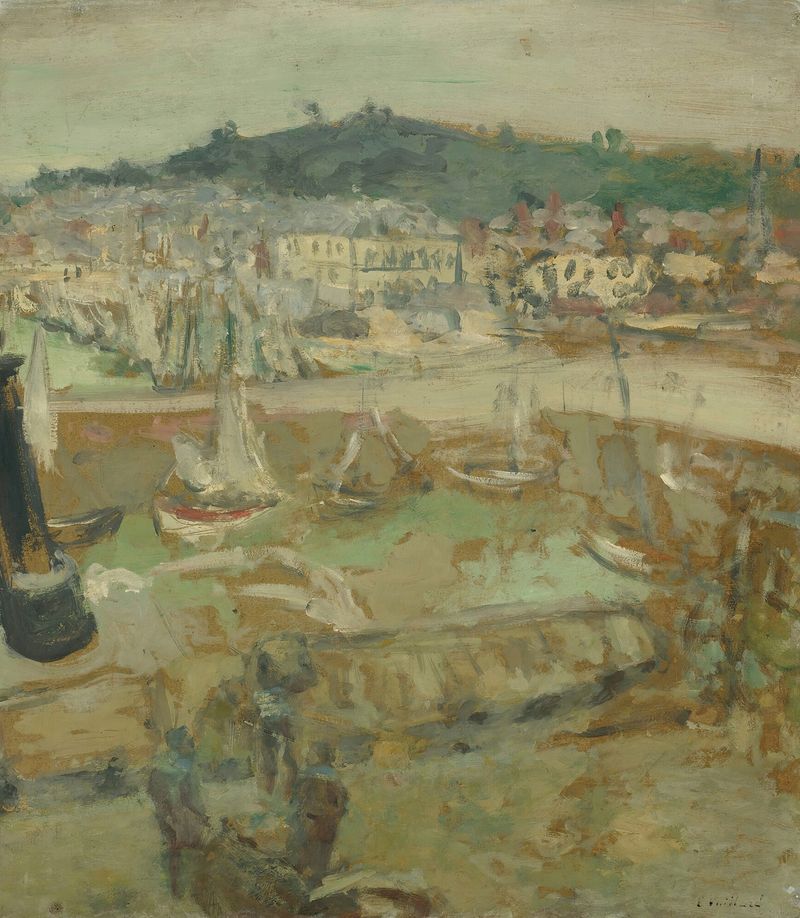
Le Petit Port, Honfleur
Édouard Vuillard
Le Square
Édouard Vuillard

Les Toits Mauves
Édouard Vuillard
Landscape; Window Overlooking the Woods
Édouard Vuillard
Le Chemin Devant La Maison
Édouard Vuillard

La Grève
Édouard Vuillard





