
Le Temple Antique — History & Facts
Could a single brushstroke hold eternity? In Le Temple Antique, Hubert Robert composes a world where the remnants of ancient grandeur intertwine with the whispers of madness, inviting the viewer to ponder the fragility of time. Look to the left at the majestic columns, their weathered surfaces speaking of an era long past. Notice how the warm sunlight spills across the scene, casting gentle shadows that dance upon the ruins, creating a dialogue between light and decay. The vibrant greens of nature reclaiming the stones draw the eye, beckoning a reflection on both beauty and transience, while the sky above, a soft blue with wisps of white, provides a contrasting serenity that elevates the chaos below. Yet, within the stillness lies an unsettling tension.
The juxtaposition of nature's encroachment against the rigid architecture evokes a sense of madness—an inevitable clash of time and existence. The figure, small and solitary amidst the vastness of the temple, emphasizes the fragility of human ambition against the backdrop of enduring ruins. Each stone tells a story of glory and demise, a reminder that even the greatest achievements may ultimately succumb to the relentless passage of time. Painted between 1763 and 1764, this work emerged from Robert’s experiences in Rome, where he was captivated by the grandeur of classical architecture.
During this period, the artist was also influenced by the burgeoning Neoclassicism movement, which sought to revive the ideals of ancient Rome and Greece. The art world was in a transformative state, grappling with the balance of beauty and decay, a theme that Robert masterfully captures in this poignant reflection on eternity.
More Artworks by Hubert Robert
Browse all →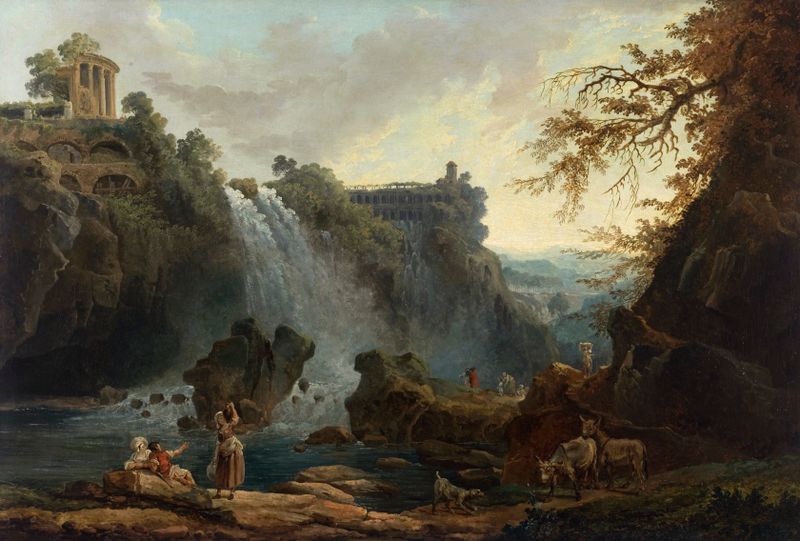
Les Cascatelles de Tivoli
Hubert Robert
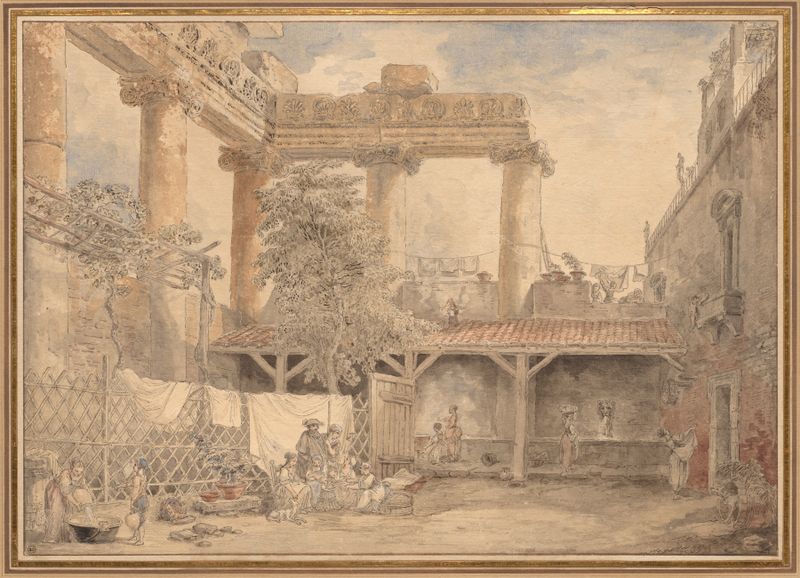
Roman Ruins, Villa Pamfili
Hubert Robert

The Rustic Bridge, Château de Méréville, France
Hubert Robert

The Portico of a Country Mansion
Hubert Robert

Architectural Capriccio
Hubert Robert

The Obelisk
Hubert Robert
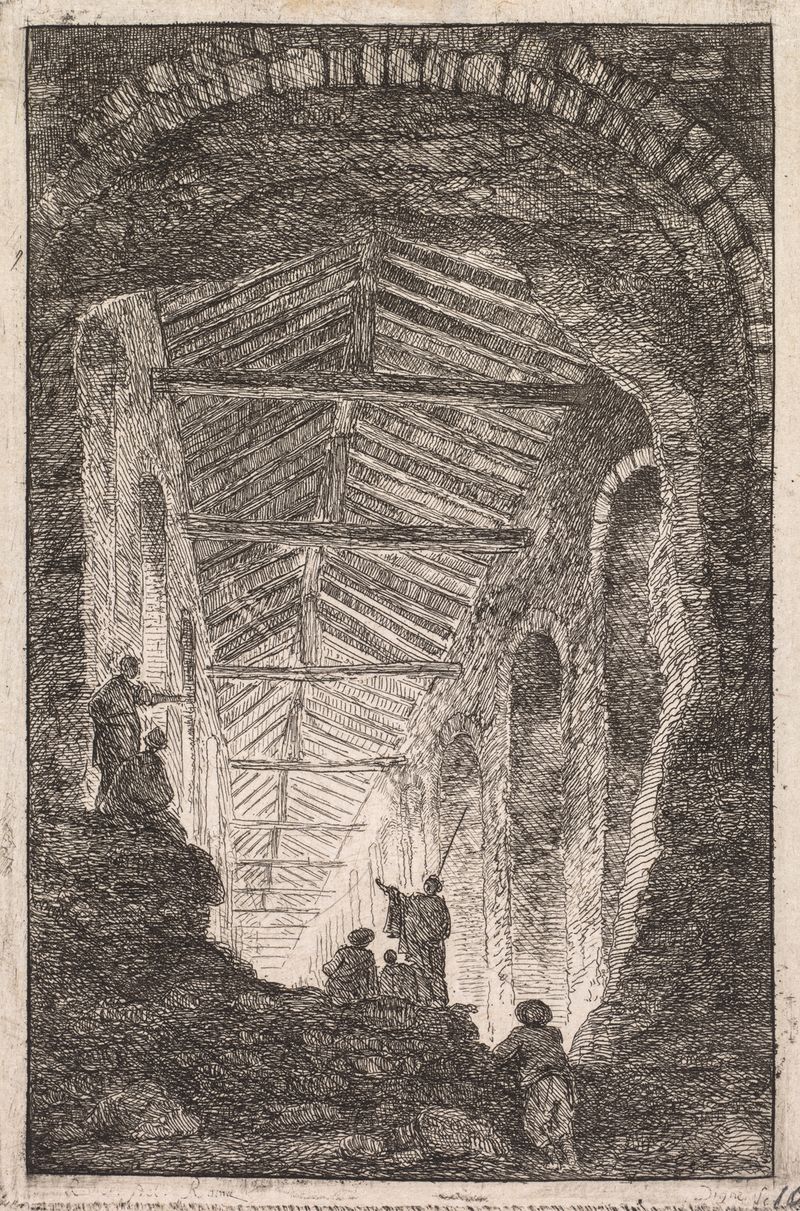
The Antique Gallery
Hubert Robert

L’incendie de l’Opéra, vu des jardins du Palais-Royal, le 8 juin 1781
Hubert Robert
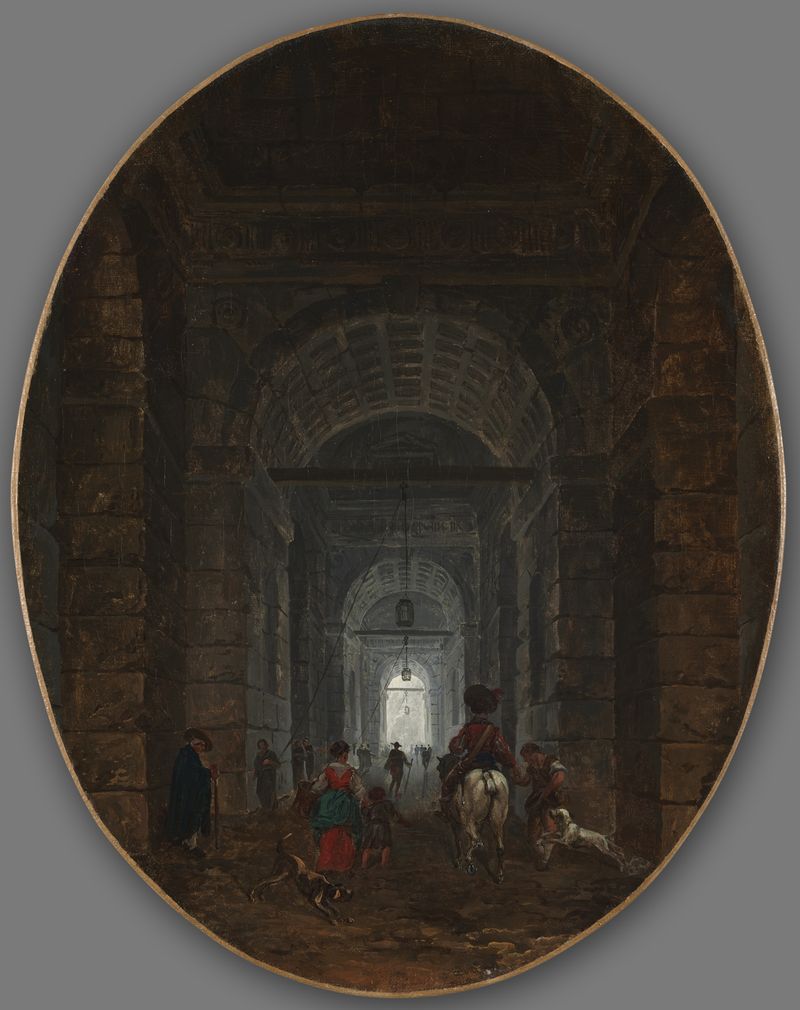
The Grotto of Posillipo
Hubert Robert

Architectural Capriccio with ruins of the Temple of Saturn and the Colosseum in the background
Hubert Robert
More Architecture Art
Browse all →
The statue of Liberty
Frédéric Auguste Bartholdi

View of Houses in Delft, Known as ‘The Little Street’
Johannes Vermeer

View of Houses in Delft, Known as ‘The Little Street’
Johannes Vermeer

The Cathedral in Rouen. The portal, Grey Weather
Claude Monet

The yellow house
Vincent van Gogh

The Church in Auvers-sur-Oise, View from the Chevet
Vincent van Gogh