
Leopoldsteiner-See — History & Facts
Did the painter know this moment would outlive them? In a world constantly in flux, the essence of innocence captured in frozen time holds an unspoken power. Look to the center of the canvas, where the serene waters of Leopoldsteiner-See shimmer under a gentle embrace of sunlight. The delicate interplay of blues and greens pulls the viewer’s gaze, inviting them to explore the tranquility that belies the surrounding vibrancy of nature. Notice the soft brushstrokes that capture the reflections on the lake’s surface, creating a mirror-like quality that draws us deeper into the scene, as if we are standing at the water’s edge. The composition reveals a duality; the calmness of the lake contrasts with the rugged mountains looming in the background.
It speaks to the innocence of untouched beauty, a reminder of the fleeting moments that life grants us. The inclusion of soft clouds drifting overhead suggests a transient quality to this idyllic setting, emphasizing that such serenity cannot last forever. Every color choice, from the lush greens to the soft blues, plays a part in evoking a sense of peace and longing, simultaneously inviting reflection on the passage of time. Fritz Lach painted this work in 1926, a period marked by significant change in Europe as the aftermath of World War I lingered.
Living in Austria, Lach was influenced by the emerging modernist movements, yet he remained deeply connected to the natural landscapes of his homeland. This piece encapsulates not only his artistic vision but also a yearning for harmony amidst a rapidly evolving world.
More Artworks by Fritz Lach
Browse all →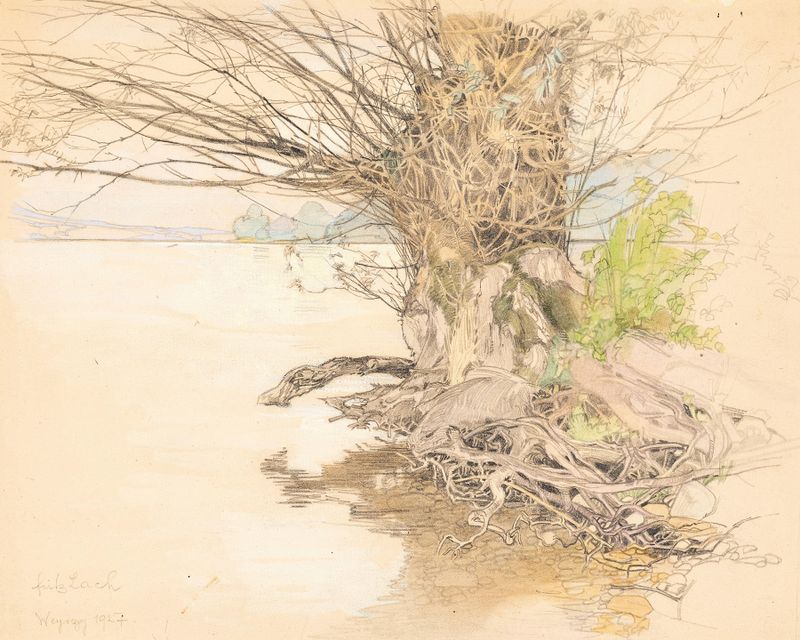
A willow tree at the lake shore
Fritz Lach
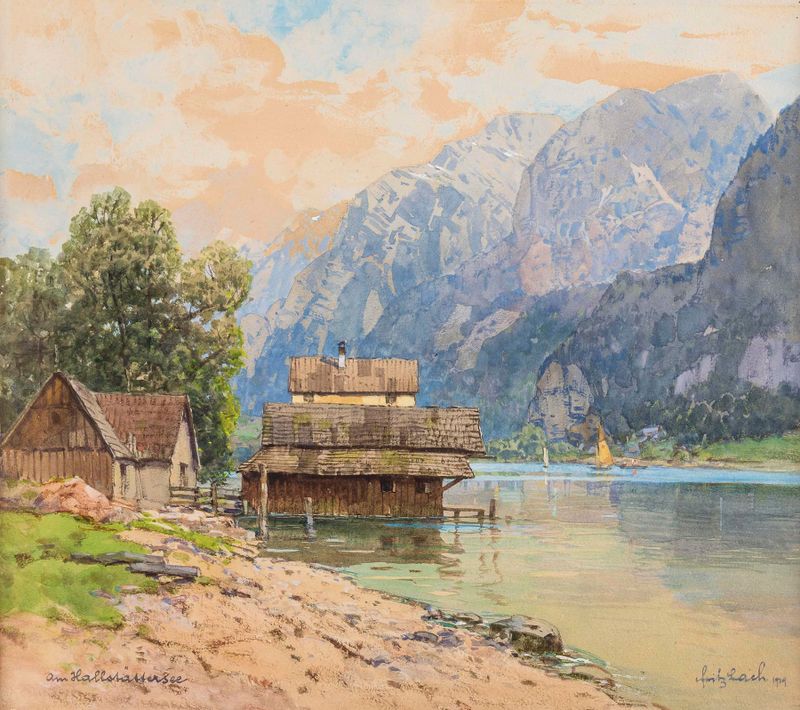
Bootshäuser am Hallstätter See
Fritz Lach
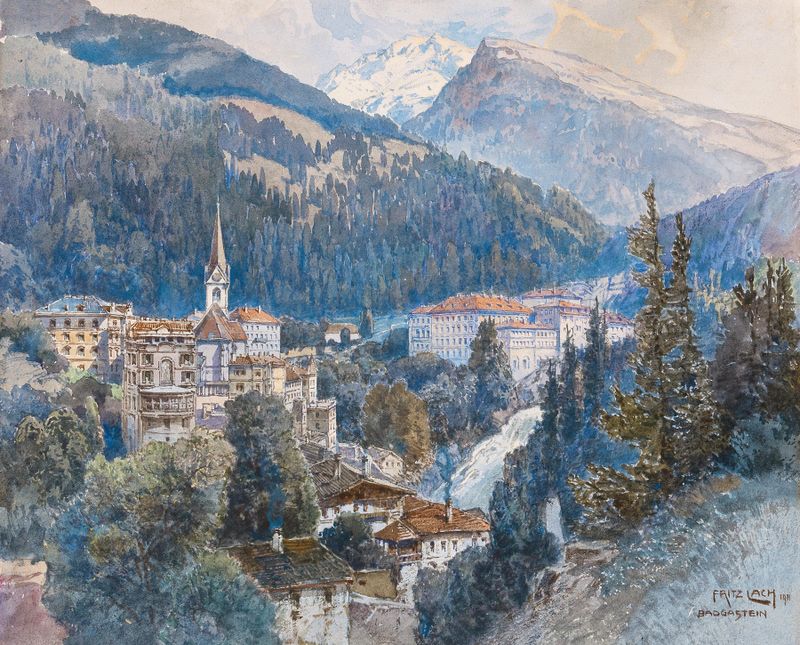
A view of Bad Gastein and the waterfall
Fritz Lach
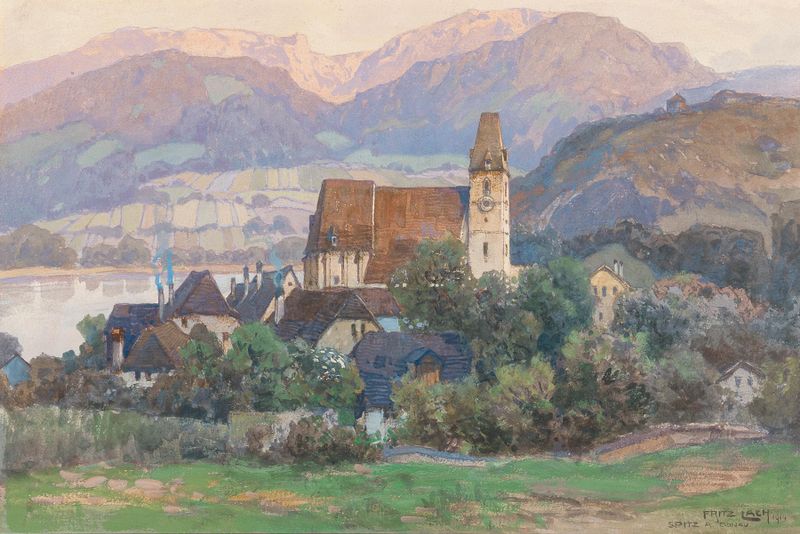
A view of Spitz in the Wachau valley
Fritz Lach
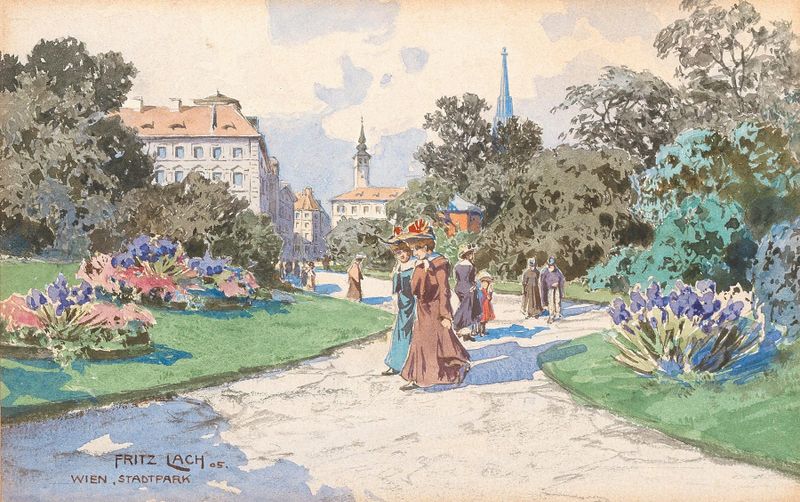
A walk in Vienna’s Stadtpark
Fritz Lach
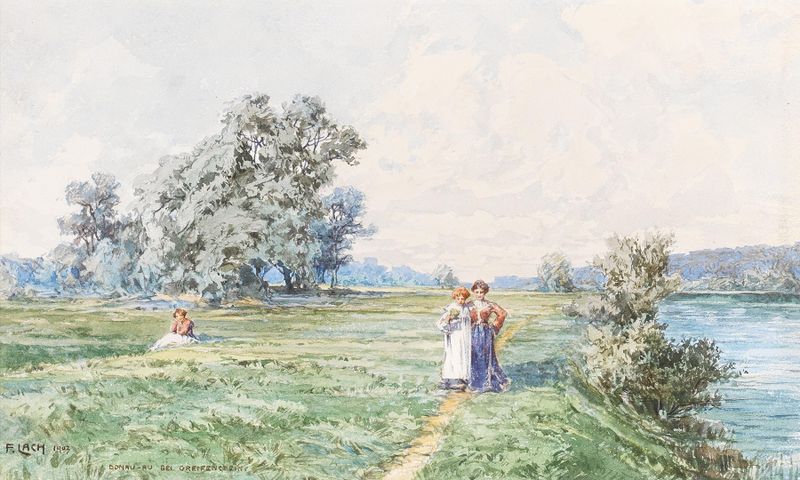
At the Danube near Greifenstein
Fritz Lach
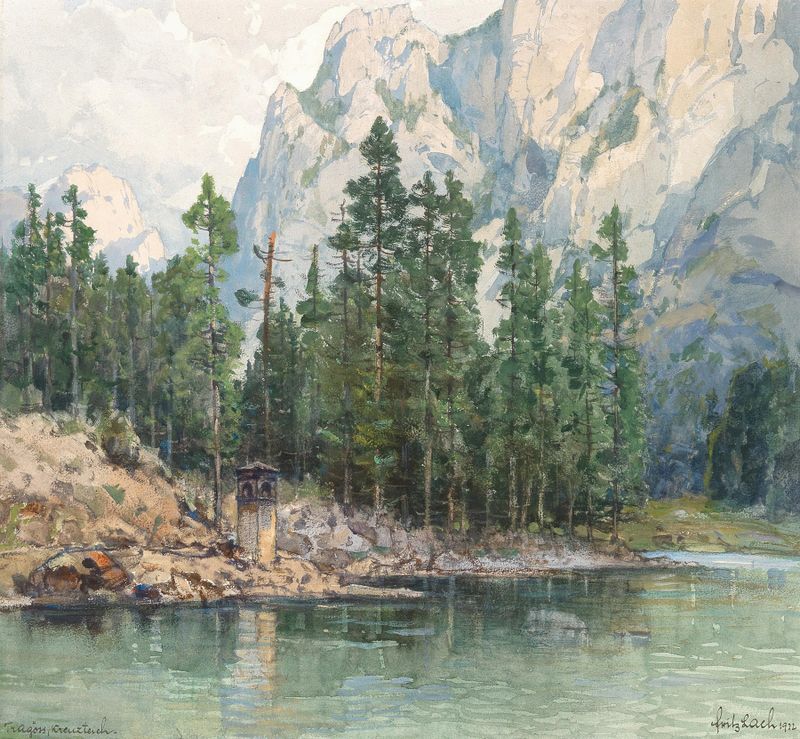
Kreuzteich near Tragöss
Fritz Lach
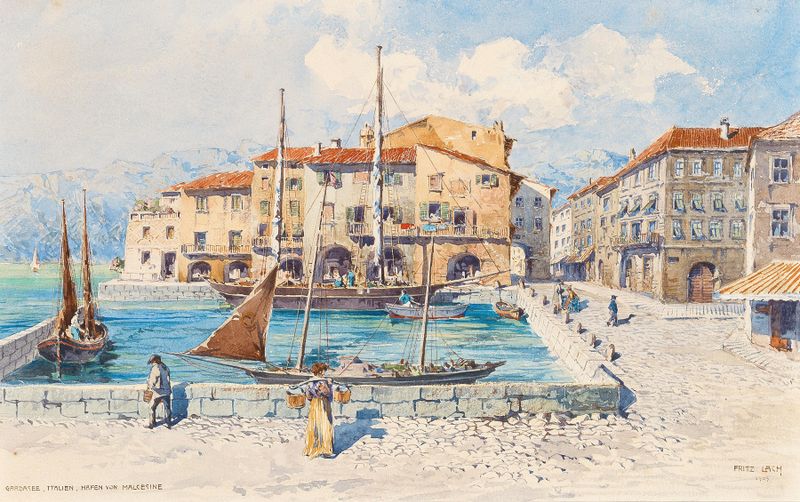
Malcesine near Gardasee
Fritz Lach
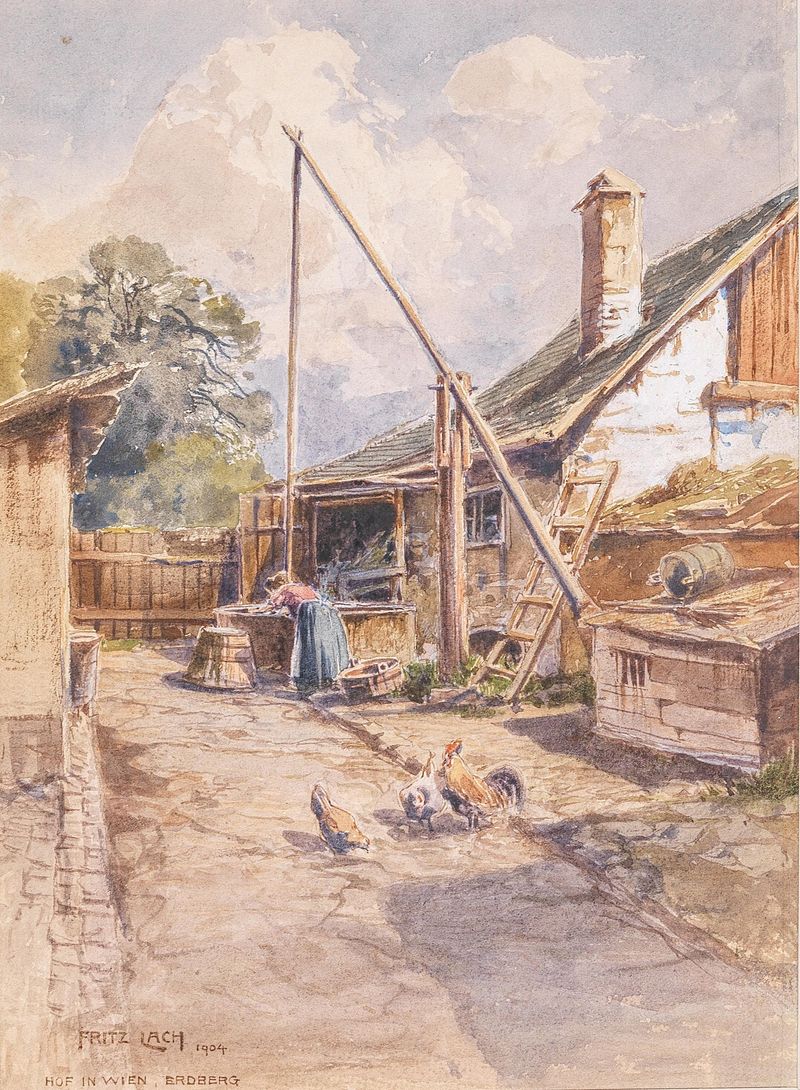
Hof in Wien Erdberg
Fritz Lach
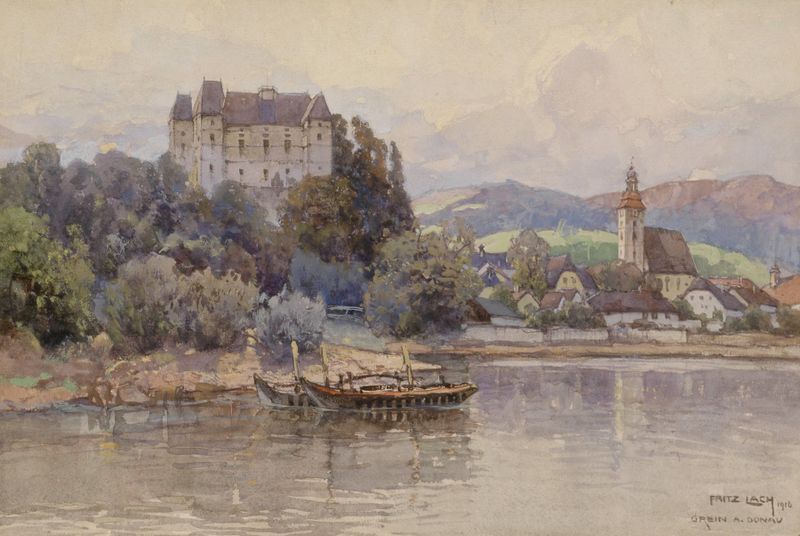
Blick auf Grein an der Donau
Fritz Lach





