
Les Coteaux de Thierceville, temps gris — History & Facts
Did the painter know this moment would outlive them? In Les Coteaux de Thierceville, temps gris, undulating hills rise like a gentle wave beneath a brooding sky, hinting at an emotional weight that mirrors the turbulent era in which it was created. Look to the center of the canvas where muted greens and grays meld seamlessly, evoking a landscape shrouded in contemplative silence. The delicate brushstrokes, layered with soft impressions of light, draw the eye to the horizon, where subtle variations in color suggest an impending storm. Pissarro’s mastery of the palette imbues the scene with an atmospheric tension, as if nature holds its breath, caught between tranquility and turmoil. Beneath the serene surface lies a complex interplay of contrasts.
The lushness of the hills is tempered by the oppressive, overcast sky, which casts a shadow on the land, evoking a sense of foreboding. These elements reflect the violence of the time—an era marked by social upheaval and the struggles of the rural class. The landscape becomes a metaphor, suggesting that beneath the calm exterior, the world is rife with conflict. Created in 1888 near a small village in Normandy, this painting emerged during a period when Pissarro was increasingly engaged with Impressionism's exploration of light and atmosphere.
As he sought to capture the essence of rural life amidst the changes brought by industrialization, this work encapsulates both the beauty and the latent strife of the natural world. At this juncture in art history, he stood at the forefront of a movement that challenged traditional representation, forging a connection between the landscape and the socio-political undercurrents of his time.
More Artworks by Camille Pissarro
Browse all →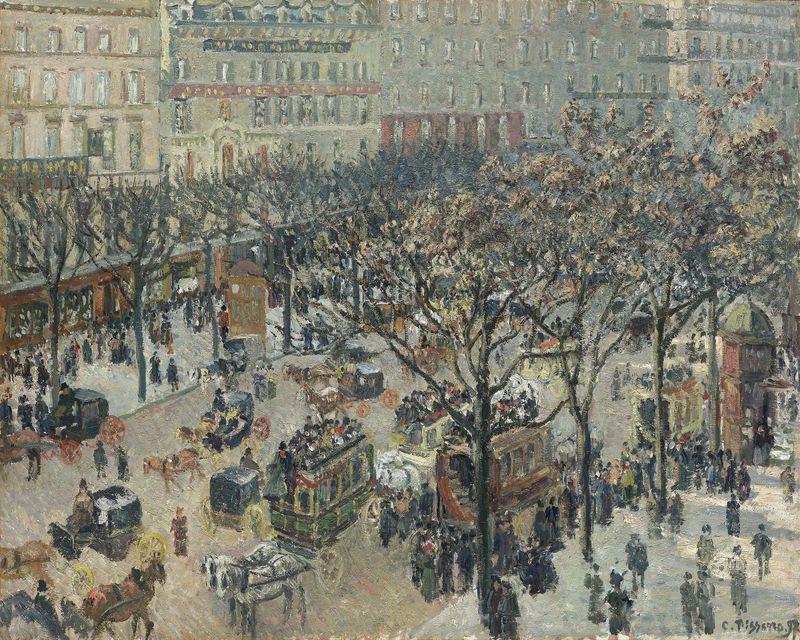
Boulevard des Italiens,Morning_Sunlight
Camille Pissarro
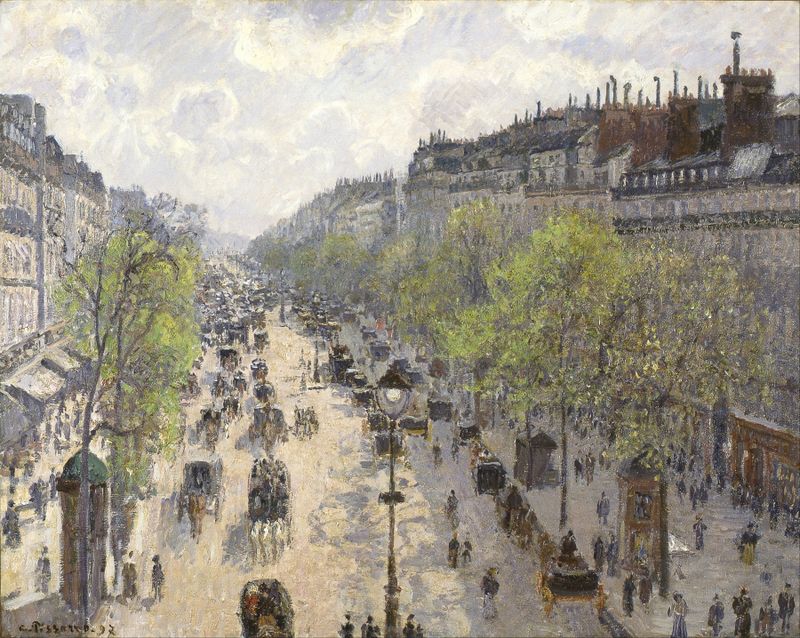
Boulevard Montmartre, Spring
Camille Pissarro
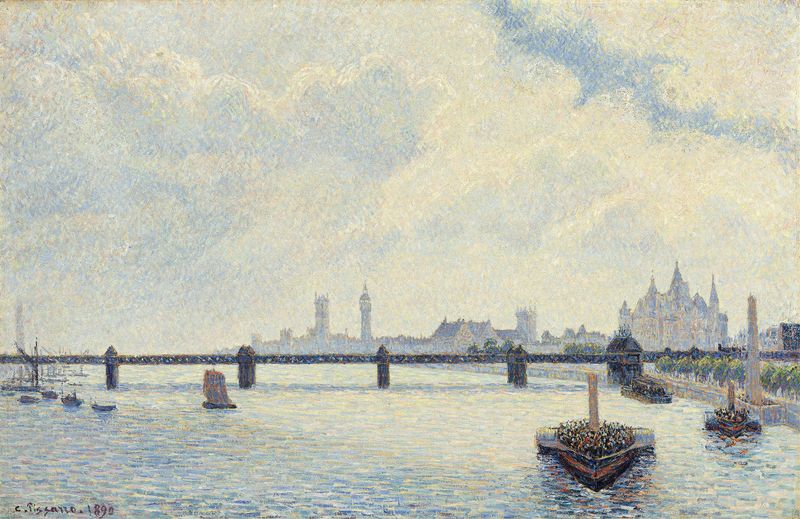
Charing Cross Bridge,London
Camille Pissarro
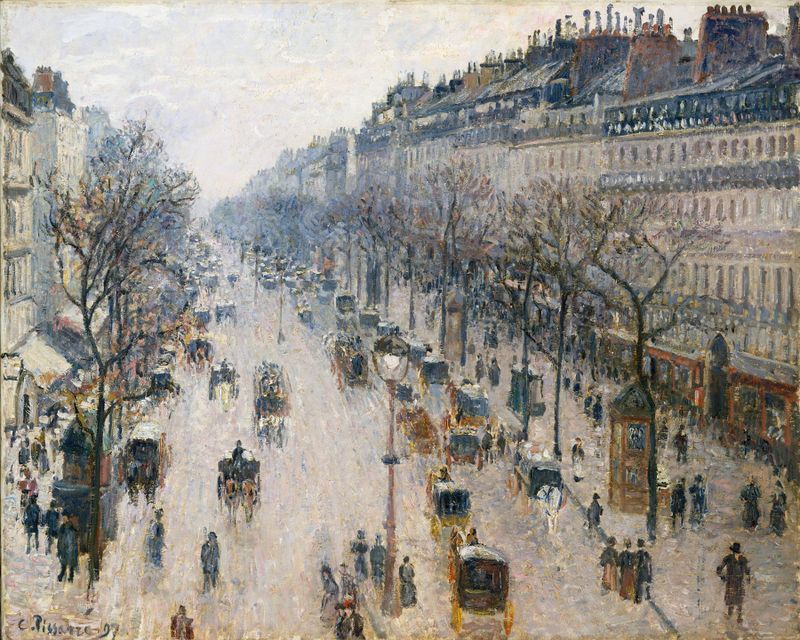
The Boulevard Montmartre on a Winter Morning
Camille Pissarro
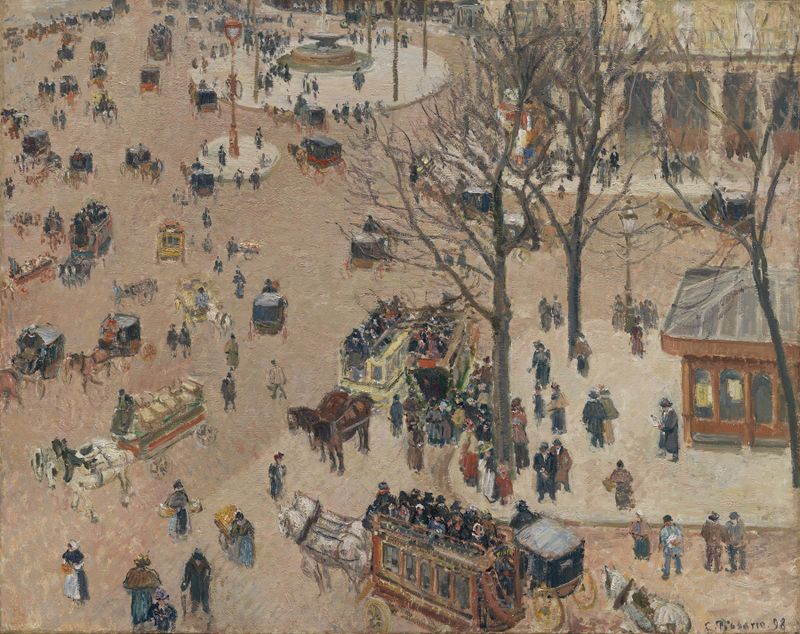
La Place du Théâtre Français
Camille Pissarro

Rue Saint-Lazare, Paris
Camille Pissarro
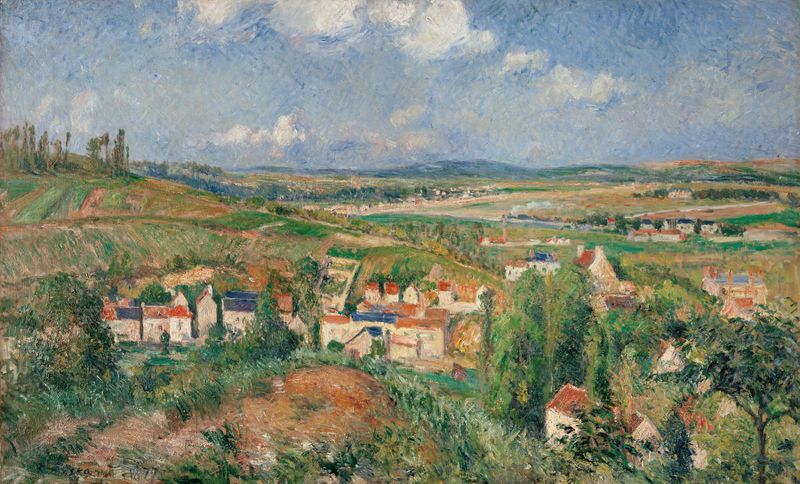
L’hermitage En Été, Pontoise
Camille Pissarro

Place du Theatre Francais,Fog Effect
Camille Pissarro
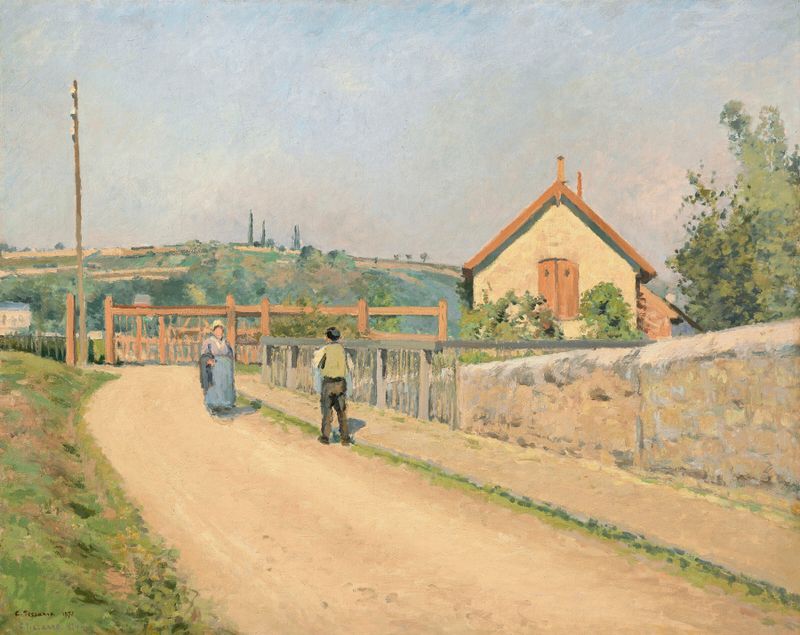
La barrière du chemin de fer, aux Pâtis près Pontoise
Camille Pissarro
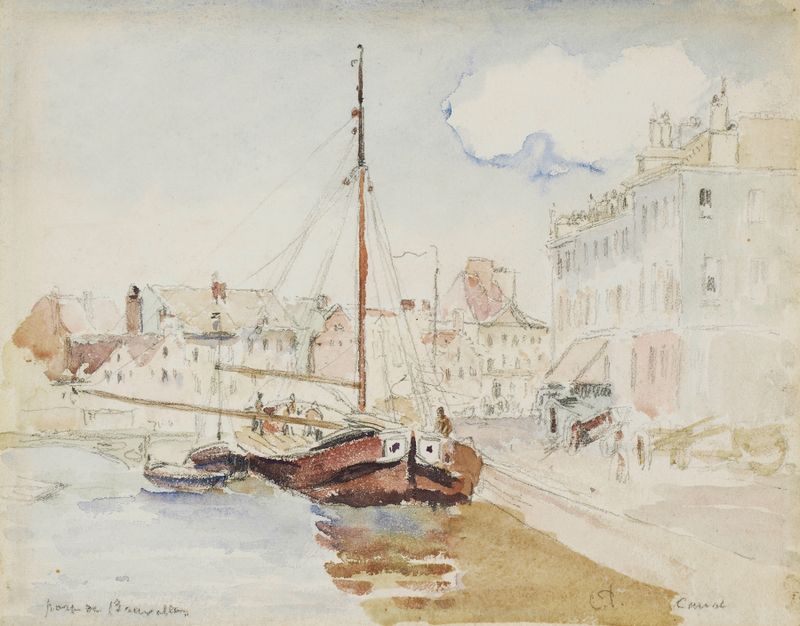
Port de Bruxelles
Camille Pissarro





