
Lighthouse by the Sea — History & Facts
Could a single brushstroke hold eternity? In Lighthouse by the Sea, the tumultuous churning of waves engaging in a violent dance against the steadfast lighthouse suggests an eternal struggle between nature’s fury and humanity's fragile efforts to stand firm against it. Look to the left where the lighthouse stands sentinel, its white facade stark against the moody blue depths of the ocean. The artist deftly employs a vibrant palette — stormy grays and foamy whites merge with deep indigos to create a sense of immediacy. Notice how light spills from the lighthouse, illuminating the tumult below, and consider the dynamic compositions formed by the crashing waves curling toward the shore.
The contrast between the solidity of the structure and the fluidity of the sea captures an intense dialogue of stability and chaos. The painting encapsulates more than just a moment; it embodies a paradox of human persistence amid nature's violence. The swirling currents appear alive, almost reaching out, while the lighthouse looms resolutely, suggesting not only a beacon of hope but also an acknowledgment of the inevitable trials that life presents. This tension sparks reflection on the balance we must strike between ambition and acceptance, as the light's glow hints at resilience amidst the overwhelming forces that threaten to consume it. Bricher, known for his seascapes, created this work during a period marked by a burgeoning interest in naturalism and the sublime in landscape art.
The precise date remains unknown, yet it reflects the artist’s career around the late 19th century, when he explored the interactions of light and water in New England. This period saw a simultaneous movement away from romantic idealism towards a more realistic and emotive exploration of nature's power and beauty.
More Artworks by Alfred Thompson Bricher
Browse all →
New England Coast
Alfred Thompson Bricher

Late Autumn in the White Mountains
Alfred Thompson Bricher
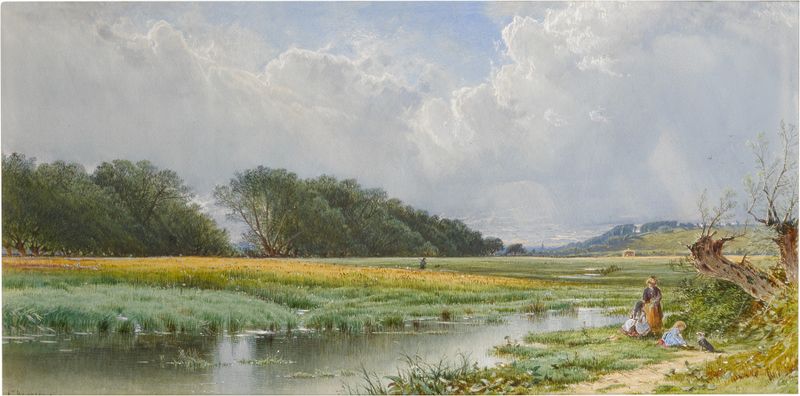
On the Meadows of Old Newburyport
Alfred Thompson Bricher

Along the Maine Coast
Alfred Thompson Bricher
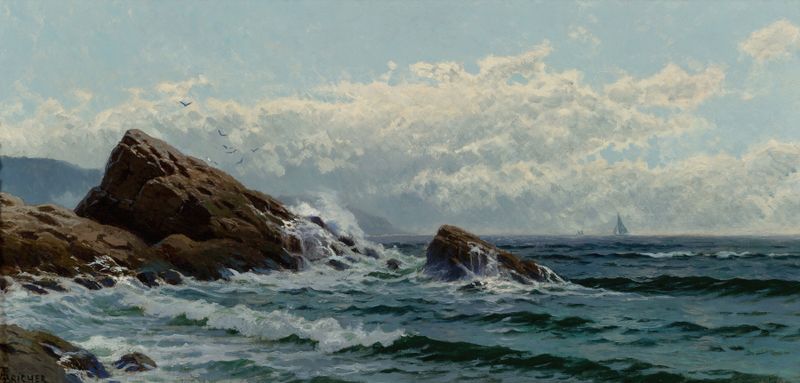
Crashing Waves
Alfred Thompson Bricher

At Water’s Edge
Alfred Thompson Bricher
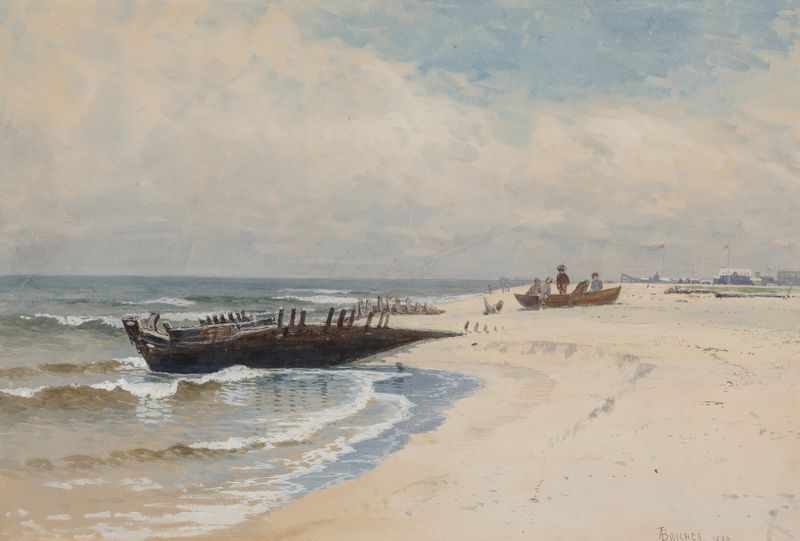
Low Tide
Alfred Thompson Bricher
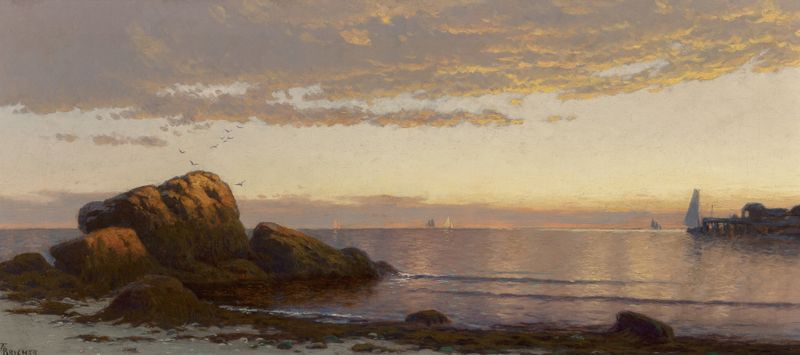
Sunset on the Coast
Alfred Thompson Bricher

Castle Rock, Nahant, Massachusetts
Alfred Thompson Bricher

On the Meadows of Old Newburyport
Alfred Thompson Bricher





