Lightning — History & Facts
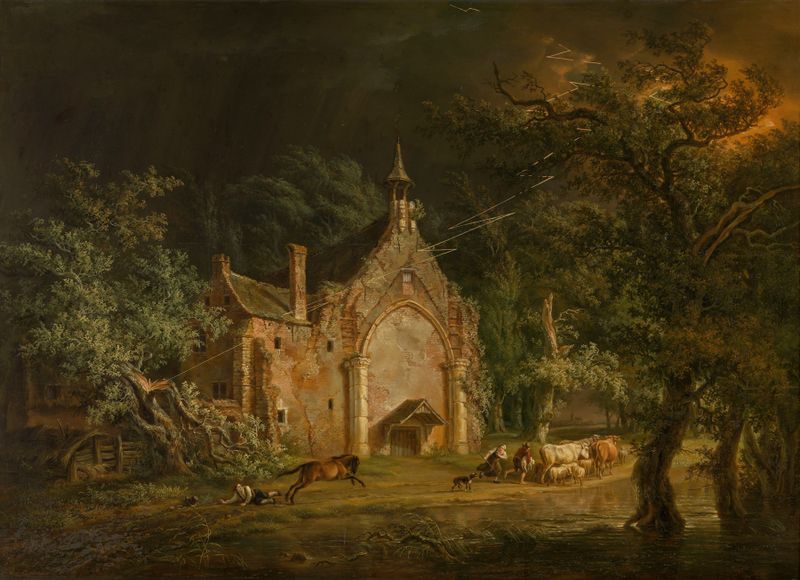
What if silence could speak through light? In Lightning, vibrant hues collide in a tempest of color, capturing the essence of nature’s raw power and its delicate beauty. This artwork invites introspection, compelling viewers to explore the juxtaposition of tranquility and chaos woven into its very fabric. Look to the center of the canvas, where a brilliant flash of yellow and white illuminates the swirling blue and gray clouds. The artist's mastery is evident in the dynamic brushstrokes that create a sense of movement, drawing your eye toward the electrifying light.
Notice how the colors blend seamlessly yet distinctively, evoking the atmosphere before a storm, as deep shadows dance around the illuminated core, suggesting the fleeting nature of a moment caught between calm and upheaval. Within this tempestuous scene, the vibrant contrast of light against dark speaks to the tension between serenity and turmoil. The jagged lines of the lightning bolt represent sudden inspiration or revelation, while the soft hues surrounding it convey a sense of impending calm that follows chaos. This interplay of elements invites viewers to contemplate their own emotional storms and moments of clarity amid life’s turbulence. Henri van Assche painted Lightning in 1806, during a time of artistic transition in Europe.
As the Romantic movement began to flourish, he was influenced by the desire to capture the sublime experiences of nature. This period in art history emphasized the emotional response to the natural world, reflecting both the artist's personal struggle and the societal shifts that marked the era, paving the way for future explorations of color and light in art.