River in the Ardennes at Sunset — History & Facts
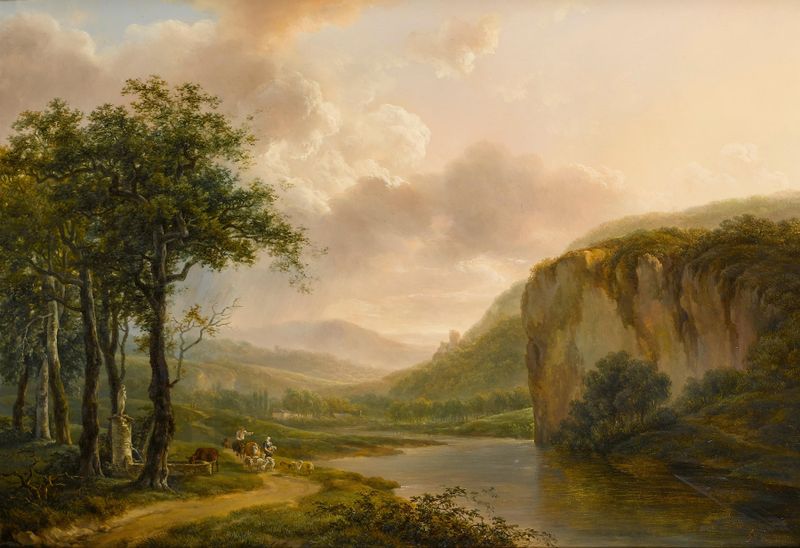
Did the painter know this moment would outlive them? In River in the Ardennes at Sunset, a fleeting scene captures the quiet yet profound revelation of nature's beauty, inviting us to reflect on the transience of life itself. Look to the left where the tranquil river flows gently, its surface mirroring the warm hues of the setting sun. The colors—deep oranges and soft purples—blend seamlessly, highlighting the atmospheric effects of twilight. Notice how the trees, painted in rich greens, frame the scene, guiding our gaze into the horizon where sky meets water.
The delicate brushwork creates a sense of movement, as if the light itself dances across the landscape, inviting viewers to linger and absorb the moment. Dive deeper into the contrasts within the painting: the stillness of the water against the vibrant sky evokes a sense of calm amidst the impending darkness of night. This interplay between light and shadow may symbolize the ephemeral nature of existence, as day gives way to night. The gentle ripples on the river’s surface suggest a life that continues, even as the sun sets—a reminder that every ending heralds a new beginning. In 1821, while creating this work, the artist was immersed in the Romantic movement, exploring the emotional connection between humanity and nature.
Living in Belgium, he was part of a burgeoning artistic landscape that celebrated the beauty of the environment amidst a rapidly industrializing world. This painting stands as a testament to his skill and vision, capturing a serene moment that resonates through time, revealing the artist's desire to immortalize the fleeting beauty of the world around him.