
Lightning Lake — History & Facts
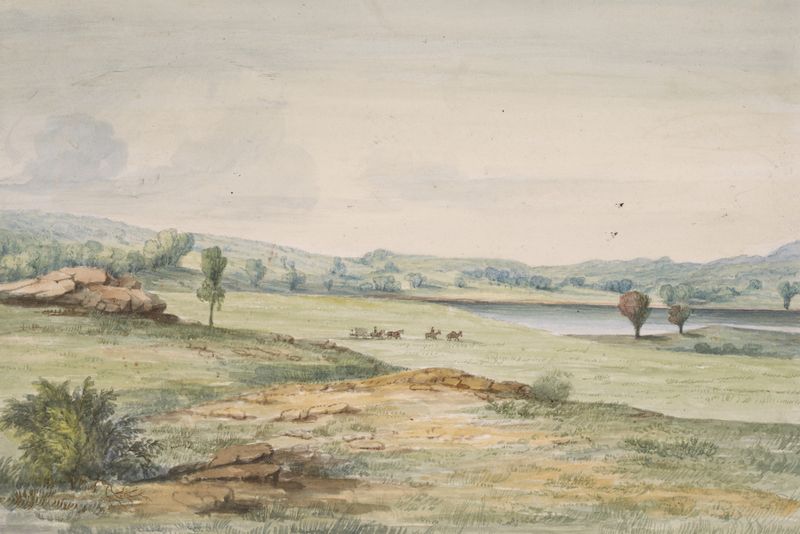
In the midst of chaos, a stillness can profoundly reflect our innermost struggles and triumphs. Focus on the majestic expanse of turbulent water, where the deep blues and greens seem to clash with the vibrant streaks of lightning illuminating the sky. Look to the center of the composition, where the chaotic whirl of nature is captured in exquisite detail, drawing your eye into the drama unfolding. Notice how the electric flashes of light carve through the thick cloud cover, creating stark contrasts that evoke both fear and awe, a brilliant ballet of chaos and beauty. Amid the tempest, subtle details emerge: the shadows of trees bending against the fierce winds, the delicate waves almost reaching outwards, yearning for calmness.
These elements highlight a psychological tension within the painting—an interplay of nature’s fury and the fragile human spirit. The lightning not only disrupts the landscape but also symbolizes sudden enlightenment or revelation, reminding us that beauty and chaos often coexist, intertwined in our existence. Created in 1854, the painting emerged during a time when the artist was deeply influenced by the Romantic movement and its fascination with nature's sublime force. Stanley painted Lightning Lake while exploring the American West, a period marked by expansion and exploration.
Amid the backdrop of a changing world, he sought to capture the stark beauty and raw power of nature, reflecting both the era’s adventurous spirit and the tumultuous human experience.
More Artworks by John Mix Stanley
Browse all →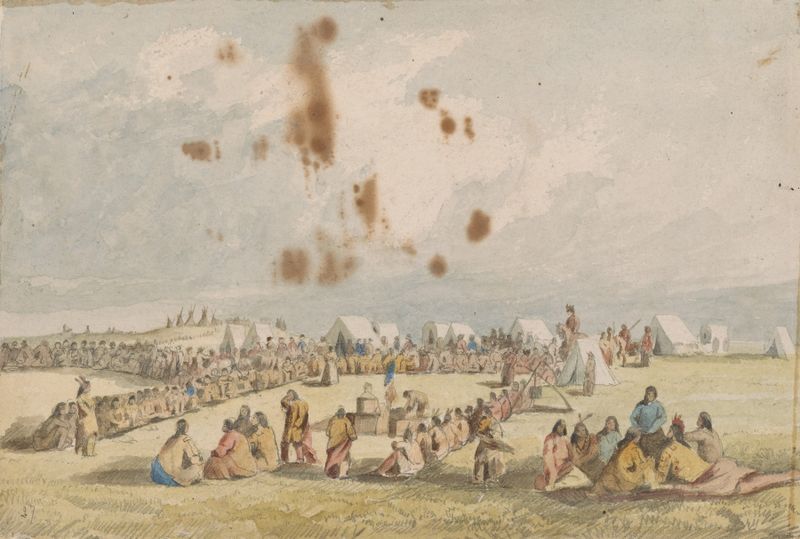
Distribution of Goods to the Assiniboins
John Mix Stanley
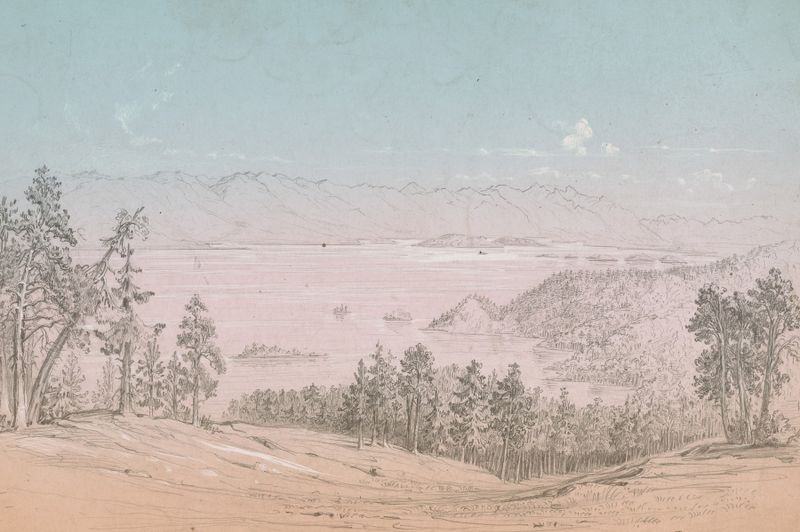
Flathead Lake, Looking toward the South
John Mix Stanley

A Morning in Milk River Valley
John Mix Stanley

Mount Rainier Viewed from Near Steilacoom
John Mix Stanley
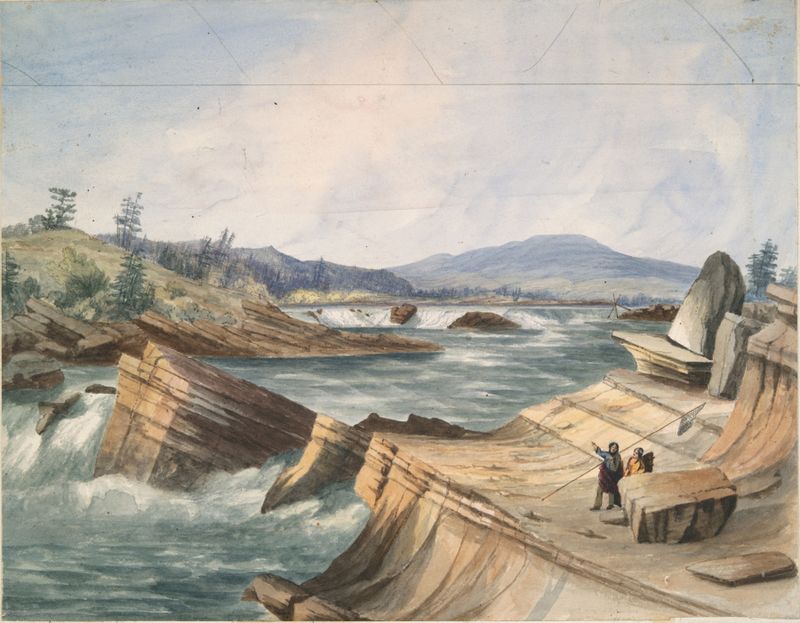
Kettle Falls, Columbia River
John Mix Stanley
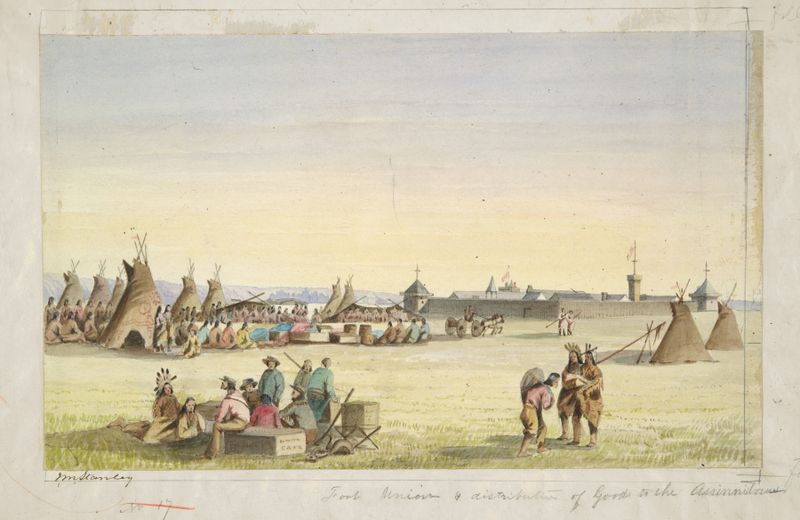
Fort Union and Distribution of Goods to the Assiniboins
John Mix Stanley

Pike Lake M.T.
John Mix Stanley
Sauk River
John Mix Stanley

Milk River – Bear’s Paw Mountain in Distance
John Mix Stanley

Fort Benton
John Mix Stanley





