Linmouth — History & Facts
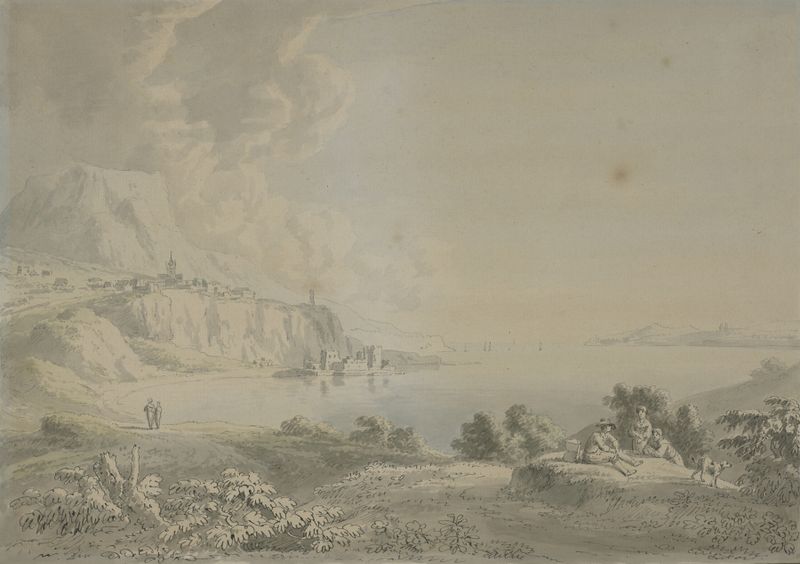
When did color learn to lie? The vibrant hues of blue and green in the landscape whisper of serenity, yet beneath their charm lies the fragility of nature’s promise. Focus on the tranquil waters of the estuary, where the gentle curve of the shore meets the sky. The artist deftly employs a palette of soft pastels, allowing the viewer's eye to wander between the shimmering reflections on the surface and the lush foliage that frames the scene. Notice how the delicate brush strokes create a sense of movement, almost as if the landscape is breathing—each stroke a heartbeat in this serene tableau.
The interplay of light and shadow adds depth, inviting contemplation of the transient beauty captured within the canvas. Beneath the surface, there is an emotional tension between tranquility and impermanence. The gentle rolling hills, though inviting, hint at the fragility of the environment, a reminder of nature's vulnerability. The ochre tones of the distant cliffs contrast with the lush greens of the foreground, embodying the struggle between stability and erosion, permanence and change—a duality that resonates deeply within the viewer.
Here, the landscape becomes a mirror for our own fleeting existence. Created in the 18th century, this piece reflects a period of transformation for Anthony Devis, who was known for his idyllic landscapes. Painted in Lynmouth, during an era when Romanticism was beginning to take root, the work captures a moment where natural beauty was celebrated even as the encroachment of industrialization loomed. Devis's art not only speaks of personal expression but also engages with a broader dialogue on humanity's relationship with nature at a time of great change.