Little Market, Vincenzia — History & Facts
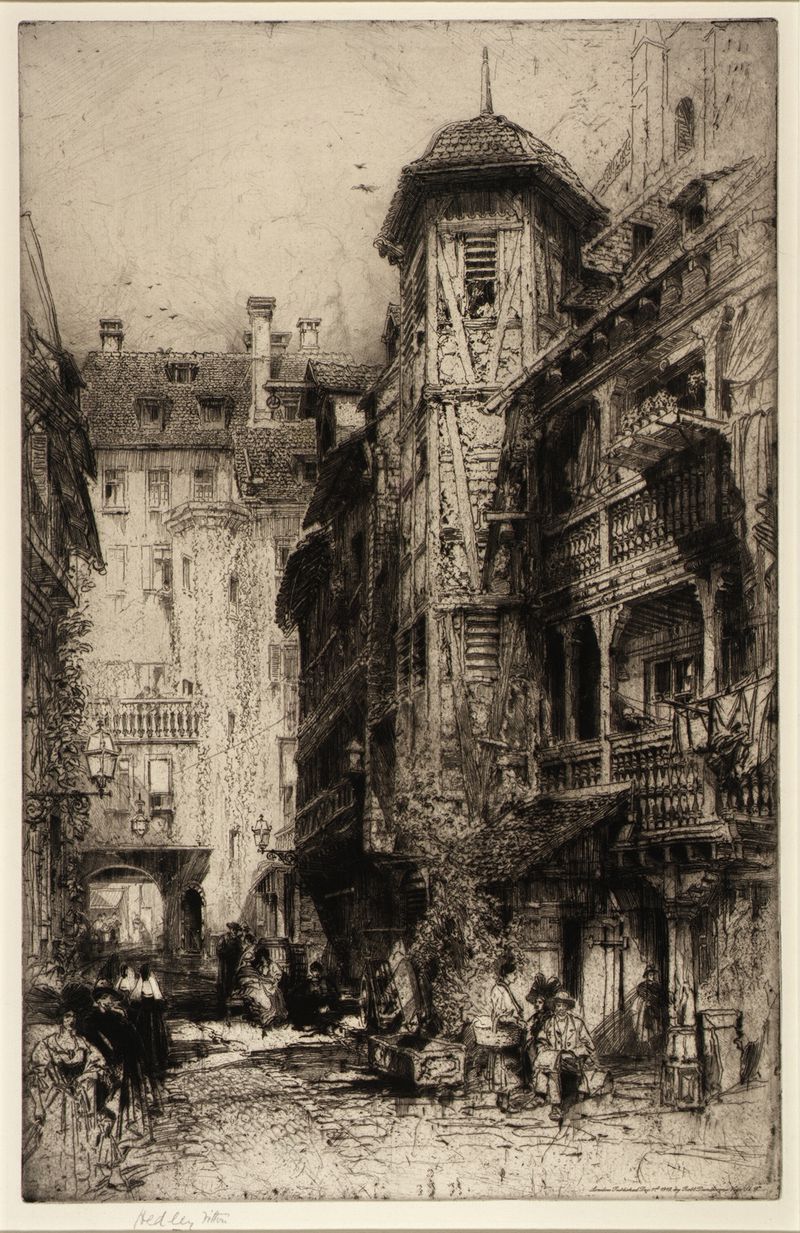
Who listens when art speaks of silence? In Little Market, Vincenzia, an unassuming marketplace whispers the stories of its inhabitants, marking the passage of time and the weight of mortality within its vibrant embrace. Look to the right at the stalls brimming with fresh produce, each shade of fruit bursting with life against the muted tones of the cobbled street. The artist’s mastery shines through in his delicate brushwork, where the play of light captures the morning sun filtering through the leaves, casting intricate shadows that dance across the ground. The palette, a blend of earthy hues and pops of color, creates a sense of warmth while inviting the viewer to savor the simplicity of daily life. Yet, beneath this lively surface lies a tension—a subtle reminder of the fragility of existence.
The aged figures at the market, with their weathered hands and contemplative expressions, evoke a sense of nostalgia, as if they are not merely engaging in commerce but also reflecting on their own narratives of survival. The juxtaposition of vibrant life against the decay of time urges a contemplation of what it means to live fully, even in the face of inevitable mortality. In 1918, when this piece was painted, Hedley Fitton found himself in a world forever altered by the Great War. Living in England, he was deeply influenced by the social changes and emotional scars left behind by conflict.
The art world was grappling with new forms of expression and a searching for meaning amidst loss. This piece, rooted in everyday life, emerges as a poignant reminder of enduring human spirit against the backdrop of historical upheaval.