Looking towards Ryde, Isle of Wight — History & Facts
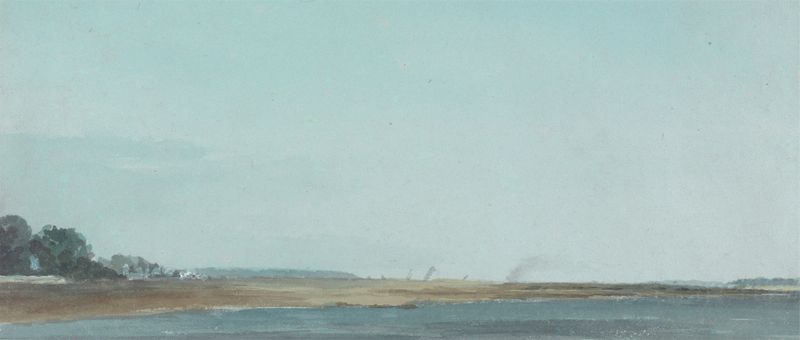
Did the painter know this moment would outlive them? In Looking towards Ryde, Isle of Wight, the passage of time crystallizes into a single, breathtaking tableau, inviting the viewer to contemplate the beauty of both nature and human endeavor. Focus on the soft hues that blend seamlessly in the sky, swirling from gentle pastels into deeper blues. To the left, gaze at the silvery light reflecting off the water, where the sea meets the horizon. Notice the delicate brushwork that captures the fluttering sails of distant boats, suggesting life and movement against the stillness of land.
The composition is balanced, directing the eye toward the quaint town of Ryde, nestled against the backdrop of undulating hills, as if it were a cherished secret waiting to be discovered. Beneath the tranquil surface lies an emotional tension between permanence and transience. The vibrant colors capture a fleeting moment, yet the scene portrays the enduring nature of the landscape—the hills, the sea, and the sky remain, while the boats, like life itself, drift inevitably onward. The clouds overhead, in their ethereal forms, echo a sense of awe and wonder, reminding us of the sublime beauty that exists even in the simplest of views. In 1832, Thomas Lindsay painted this work while living in England, grappling with the shifting tides of Romanticism in the art world.
As artists began to emphasize emotion and nature, he sought to encapsulate a moment of calm amidst a rapidly modernizing society. This painting reflects not only his personal journey as an artist but also a broader cultural embrace of the sublime in nature and its capacity to inspire awe.