Oast House at Dusk — History & Facts
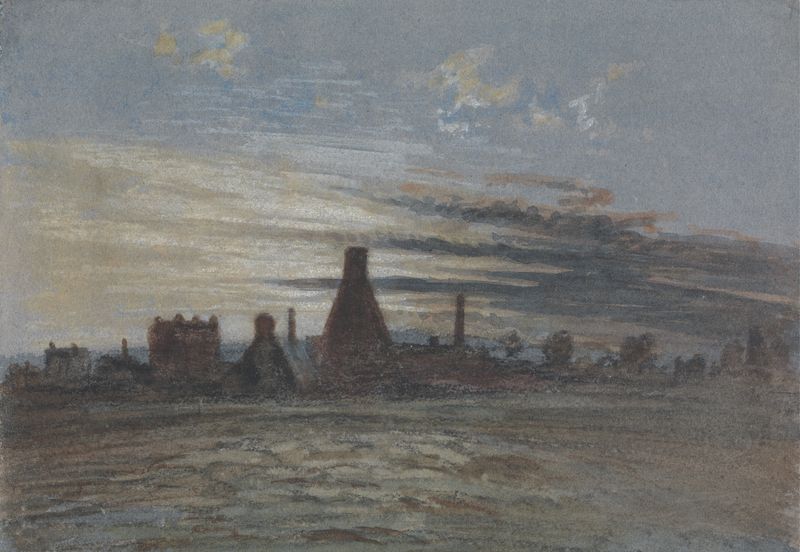
Can beauty exist without sorrow? In the stillness of twilight, the world holds its breath, caught between day and night, light and shadow. Look to the left at the sprawling silhouette of the oast house, its pointed roof rising against a fading sky. The soft gradient of dusk bathes the scene in hues of purple and gold, blending effortlessly to create a dreamlike atmosphere. The gentle strokes reveal a textured surface, inviting the viewer to trace the contours of the building, punctuated by the delicate interplay of light and shadow that emphasizes its solitude. Beneath the tranquil exterior lies an emotional tension: the isolation of the oast house speaks to the quiet remnants of human endeavor in an ever-shifting landscape.
The serenity of the scene is punctuated by a looming presence of darkness, hinting at the passage of time and the inevitable encroachment of night. Each carefully rendered detail whispers of stories past, containing echoes of laughter, toil, and the persistence of memory that both haunt and cradle the beauty of the moment. This piece emerges from an unknown period in the life of an artist often overshadowed by his contemporaries. Creating Oast House at Dusk, Thomas Lindsay likely experienced the transformative nature of landscapes that were simultaneously calming and haunting.
At a time when the art world grappled with rapid changes, Lindsay's work, though lesser-known, captures the quiet poetry of everyday scenes, reflecting both the nostalgia of the past and the uncertainty of the future.