Oast House at Dusk — History & Facts
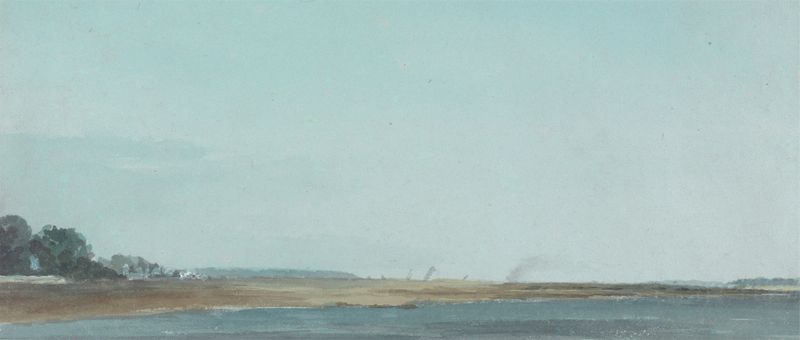
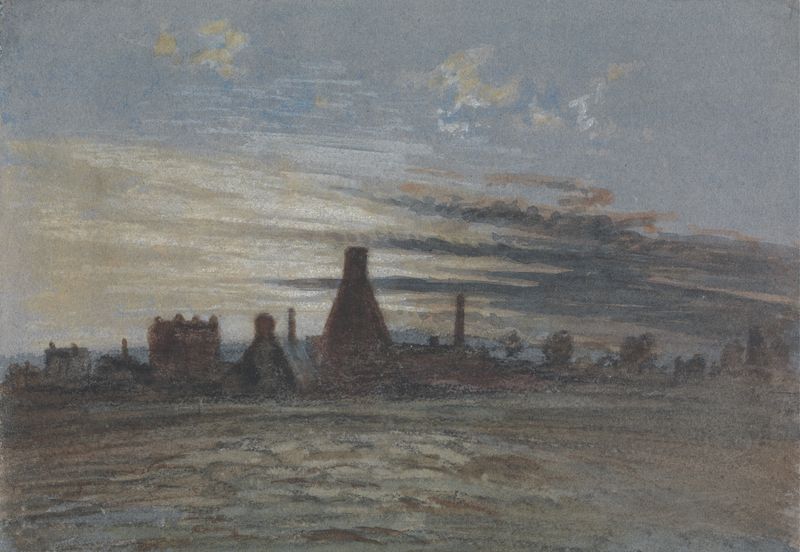
Can beauty exist without sorrow? In Oast House at Dusk, the answer lingers in the twilight, where desire intertwines with the soft glow of a fading day. Look to the center of the canvas where the oast house stands, its proud chimney rising against a backdrop of deepening blues and purples. The light, warm and golden, bathes the structure, creating a striking contrast with the encroaching darkness. A subtle interplay of shadows dances along its walls, hinting at the time of day when moments stretch and memories resurface.
The brushwork, both delicate and assertive, captures the essence of the moment, inviting the viewer to linger in its quiet embrace. As dusk envelops the landscape, the painting evokes a sense of longing, suggesting that the beauty of the scene is intertwined with an underlying melancholy. The rich hues echo the complexities of desire; the oast house, a symbol of tradition and labor, seems to hold untold stories from those who have toiled within its walls. In the delicate rendering of the surrounding fields, one can sense the breath of nature, a reminder of the passage of time and the inevitable shifts that accompany it. Created in an undisclosed period, this piece reflects Thomas Lindsay's commitment to capturing the subtleties of rural life.
During this time, art was evolving, with artists moving towards more intimate and evocative landscapes. The world was amidst social changes, as urbanization began to challenge the pastoral ideal, making Lindsay’s work a poignant nod to a fading era, where beauty and longing coexist in the quiet of dusk.