Louis Comfort Tiffany’s Garden — History & Facts
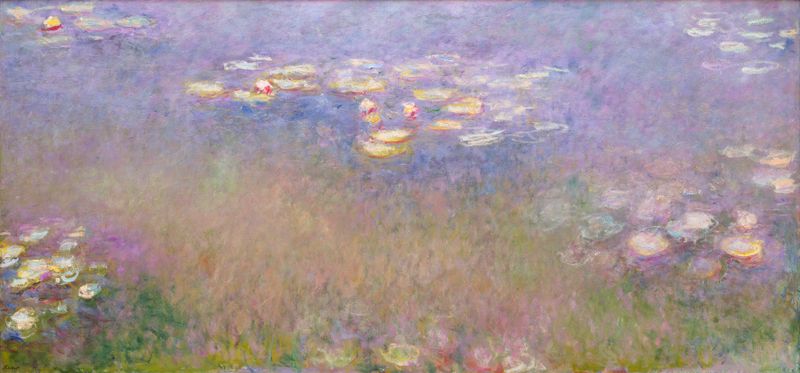
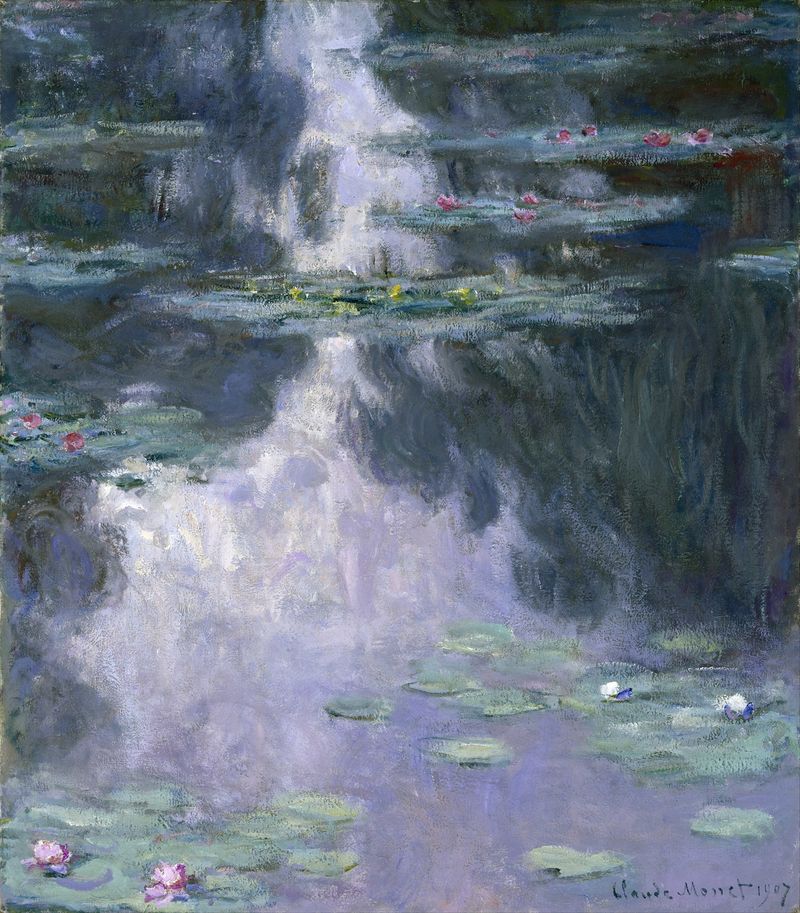
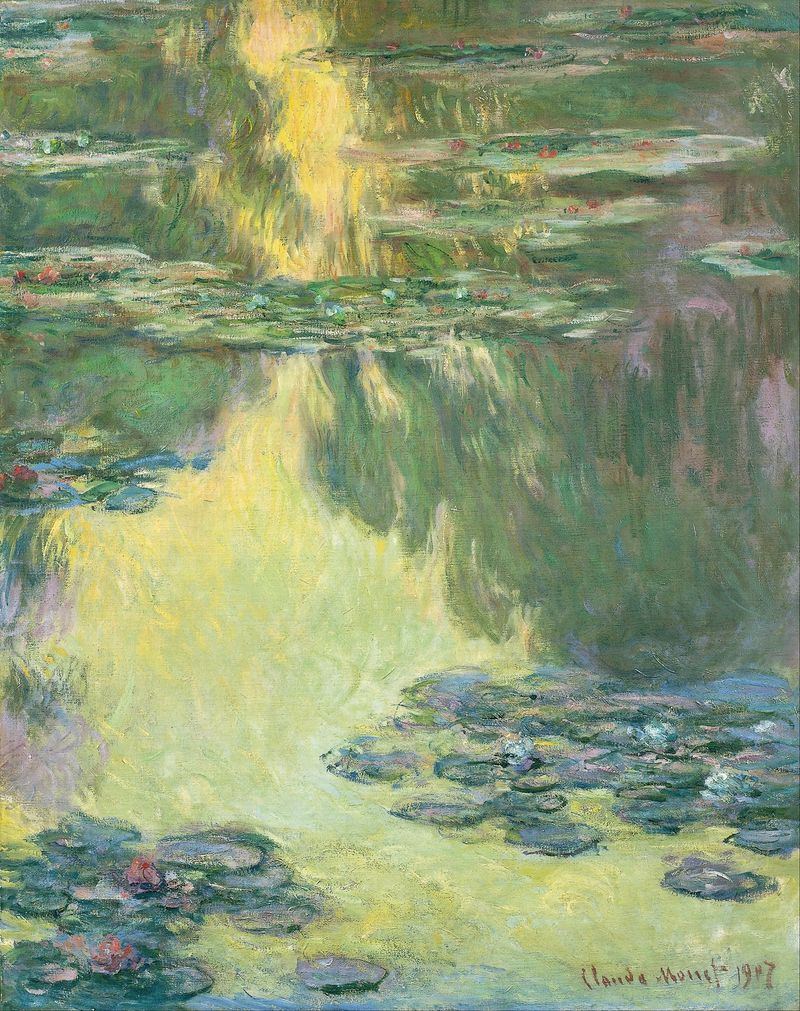
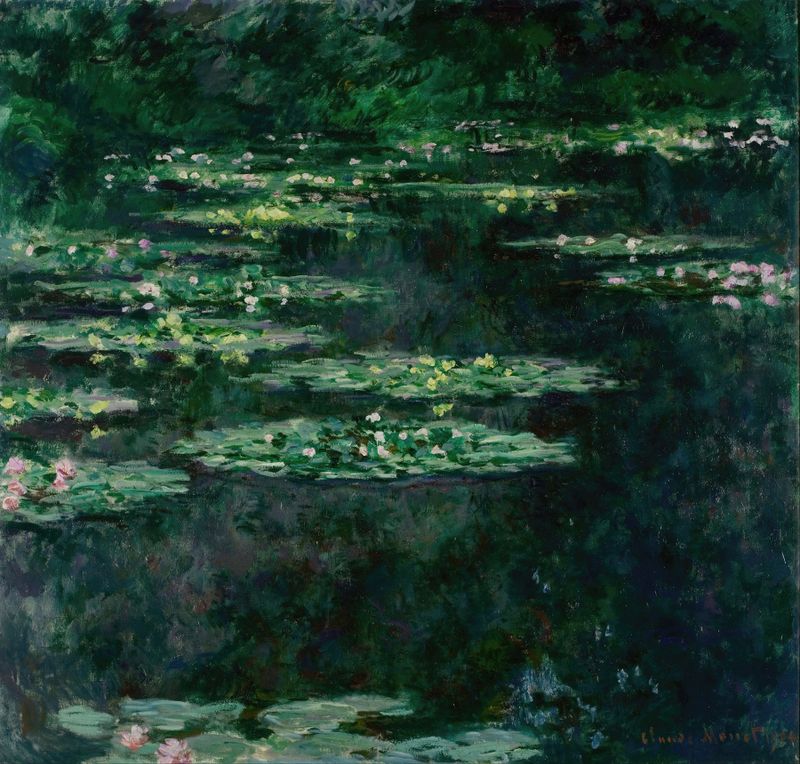
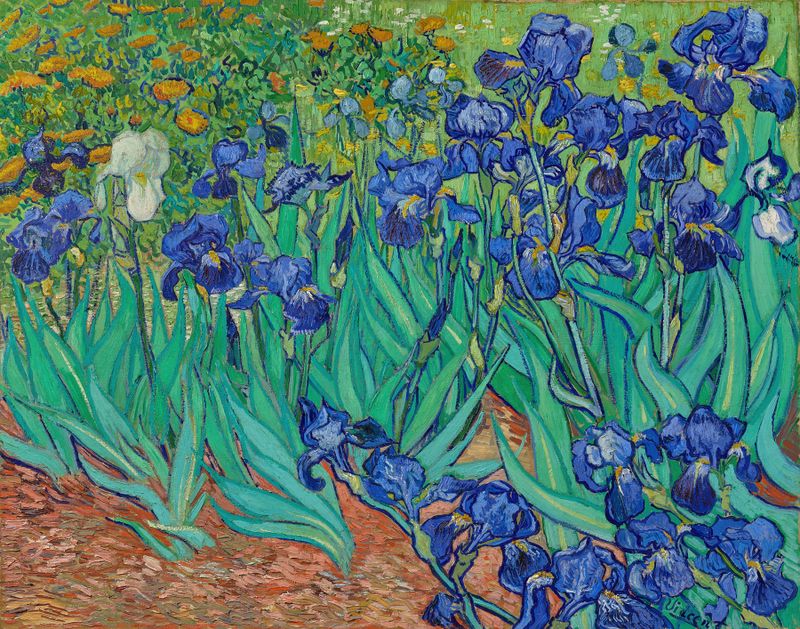
Amidst a kaleidoscope of colors, a garden bursts into life, where wildflowers dance under a sun-drenched sky. A woman, lost in thought, wanders through the vibrant chaos, her movements almost dreamlike. The air is thick with the scent of blossoms, and the wind whispers secrets of nature’s unrestrained beauty, evoking a sense of both joy and madness. Look to the bottom left, where a riot of flowers spills joyfully over the canvas, their vivid hues almost pulsating with energy.
The artist employs a loose brushstroke technique, allowing colors to blend and swirl, capturing the essence of fleeting moments. Notice how the light falls upon the petals, casting shimmering highlights that evoke a sense of warmth while hinting at an underlying tumult beneath the surface. Each element—the lush greenery, the woman’s flowing attire—contributes to a composition that feels both harmonious and chaotic. The garden reflects a juxtaposition of serenity and frenzy, symbolizing the tension between inner peace and the madness of the surrounding world.
As the viewer’s gaze drifts, subtle details emerge: the woman’s expression, a mixture of contemplation and yearning, suggests her connection to nature is both grounding and disorienting. The wildflowers, not merely ornamental, become metaphors for unrestrained passions and the chaos of emotions, as if they are alive, thriving in their delightful disorder. Created around 1911, the work emerged during a transformative period for the artist, who was embracing her identity within the art world while living in New York. Influenced by the vibrant movements of the time and her travels, she sought to capture the essence of her experiences through the lens of nature.
This painting reflects not only her personal journey but also the broader artistic conversations surrounding impressionism and the wild experimentation that defined early 20th-century art.