
Lumber Schooners at Evening on Penobscot Bay — History & Facts
Can beauty exist without sorrow? In Lumber Schooners at Evening on Penobscot Bay, the answer lingers in the gentle ripple of water and the silhouette of distant shores. Look to the left at the majestic schooners, their sails taut against the fading light, capturing the essence of maritime craftsmanship. The vibrant hues of orange and gold bleed into the deep blues and purples of the sky, creating a stark contrast that draws the eye across the canvas. The delicate brushwork reveals the texture of the waves, suggesting movement even in stillness, while the looming clouds add an air of suspense, hinting at the complexity of nature’s beauty. In this tranquil scene, undercurrents of obsession play out in the details—each vessel seems to harbor dreams and desires, while the quiet waters reflect an introspective mood.
The juxtaposition of the meticulously rendered boats against the expansive, almost melancholic sky evokes a tension between human enterprise and nature’s indifference. What stories might the schooners carry, entangled as they are with the urgencies of labor and the relentless passage of time? In 1863, while painting this work, the artist was firmly rooted in the American Romantic movement, reflecting a deepening appreciation for natural beauty alongside industrial progress. At this time, Lane was living in Gloucester, Massachusetts, where the whaling and fishing industries flourished, and he was increasingly acknowledged for his ability to capture the subtleties of light and atmosphere.
This period marked a pivotal point in his career, solidifying his reputation as a master of marine scenes and landscapes.
More Artworks by Fitz Henry Lane
Browse all →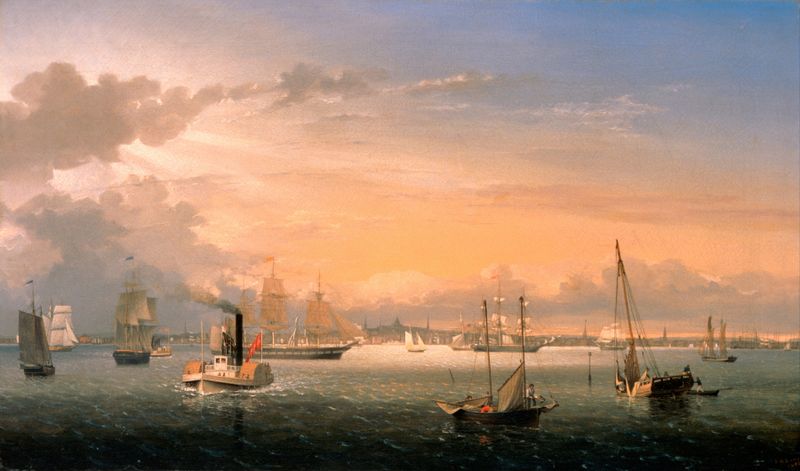
Boston Harbor
Fitz Henry Lane

Becalmed off Halfway Rock
Fitz Henry Lane

Owl’s Head, Penobscot Bay, Maine
Fitz Henry Lane

Stage Fort across Gloucester Harbor
Fitz Henry Lane
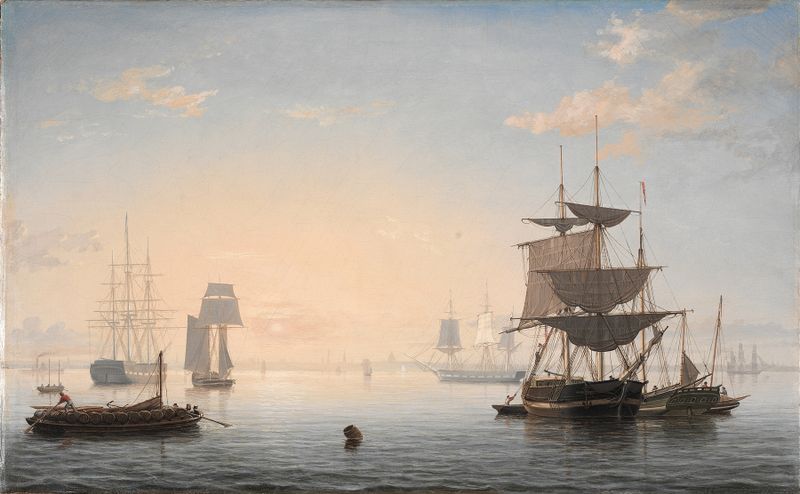
Harbor of Boston, with the City in the Distance
Fitz Henry Lane

The Ships ‘Winged Arrow’ and ‘Southern Cross’ in Boston Harbor
Fitz Henry Lane
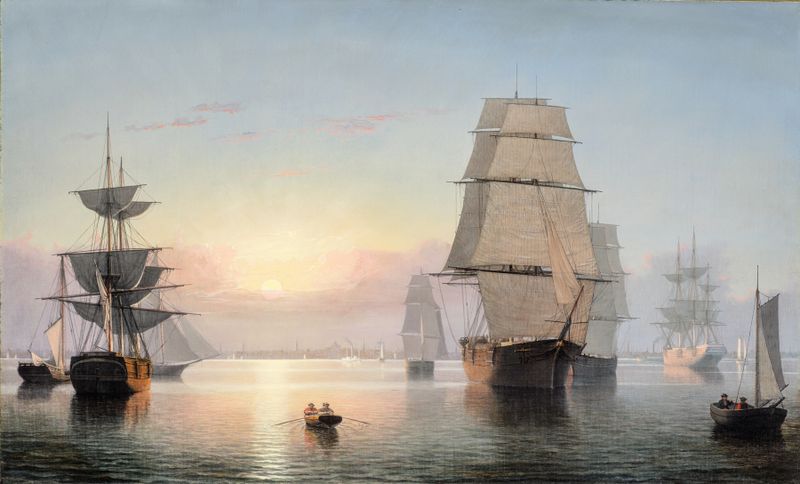
Boston Harbor, Sunset
Fitz Henry Lane

Brig Off the Maine Coast
Fitz Henry Lane
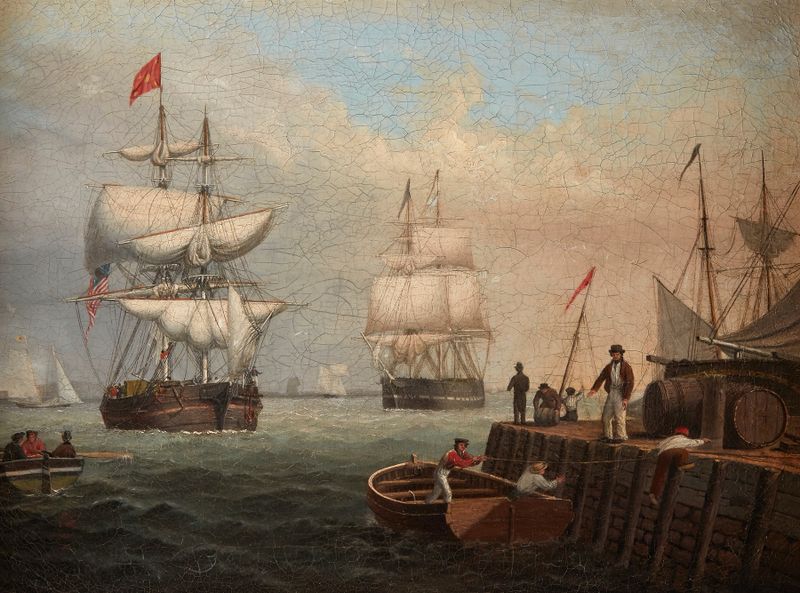
Boston Harbor
Fitz Henry Lane

Brace’s Rock, Brace’s Cove
Fitz Henry Lane





