Magic City — History & Facts
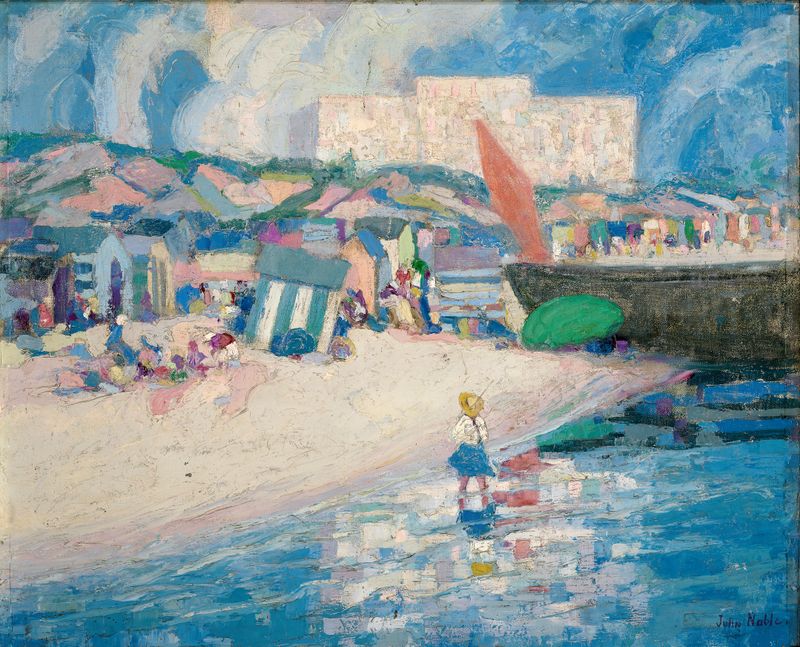
Who listens when art speaks of silence? In John Noble's Magic City, memory unfurls like delicate ribbons, inviting viewers into a realm suspended between dreams and reality. Focus on the vibrant bursts of color that dominate the canvas, particularly the lush greens and golden hues that intertwine, evoking a sense of wonder. Notice how the interplay of light and shadow creates a luminous quality, illuminating hidden corners of the composition. The swirling forms, reminiscent of cityscapes, pull the eye toward the central structure, which seems to pulse with life—a mirage on the edge of perception.
The brushwork is both fluid and intentional, combining to capture an ethereal essence that feels alive, yet elusive. Deeper meanings lie within the work's contrasts—a vibrant city juxtaposed with the stillness of memory. The lively colors suggest vitality, yet the absence of human figures invokes a haunting solitude, almost as if the city is a dreamscape that exists only in the artist's mind. This tension speaks to the complexities of nostalgia, where vibrant recollections can also stir a sense of loss.
The blending of abstraction and representation creates an emotional duality that invites viewers to ponder what is remembered and what fades. In 1925, John Noble painted Magic City during a period of significant artistic exploration in America. Emerging from the shadows of World War I, the artist found himself in a vibrant New York City, a place alive with cultural transformation. This was a time when many artists began to explore abstraction, breaking away from traditional forms; Noble, however, retained a connection to vivid memory and personal experience, bridging the gap between the modern and the inherent beauty of the past.