Low Tide — History & Facts
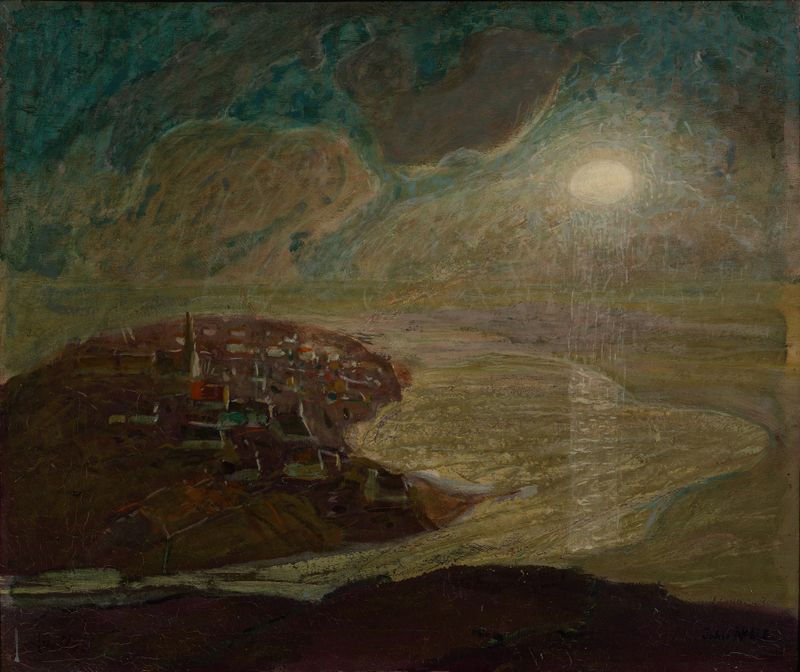
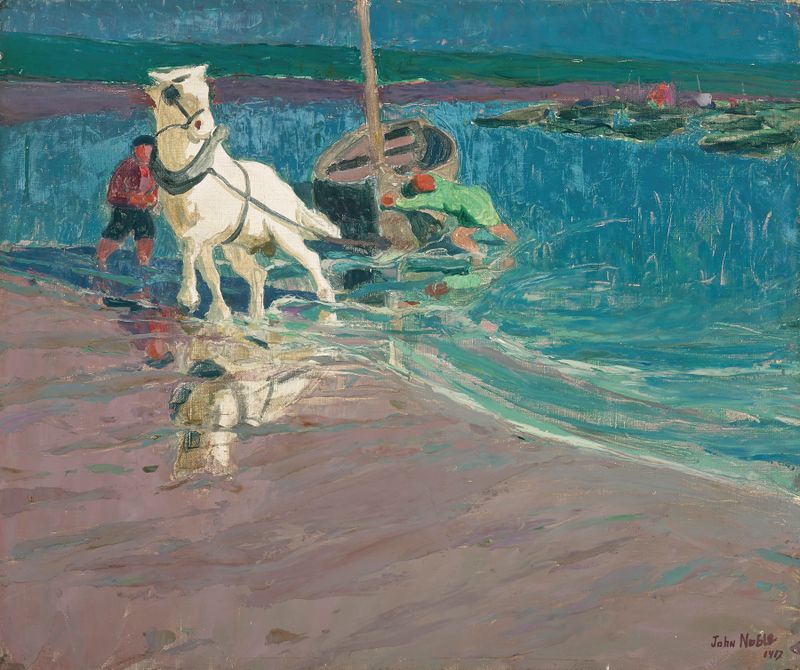
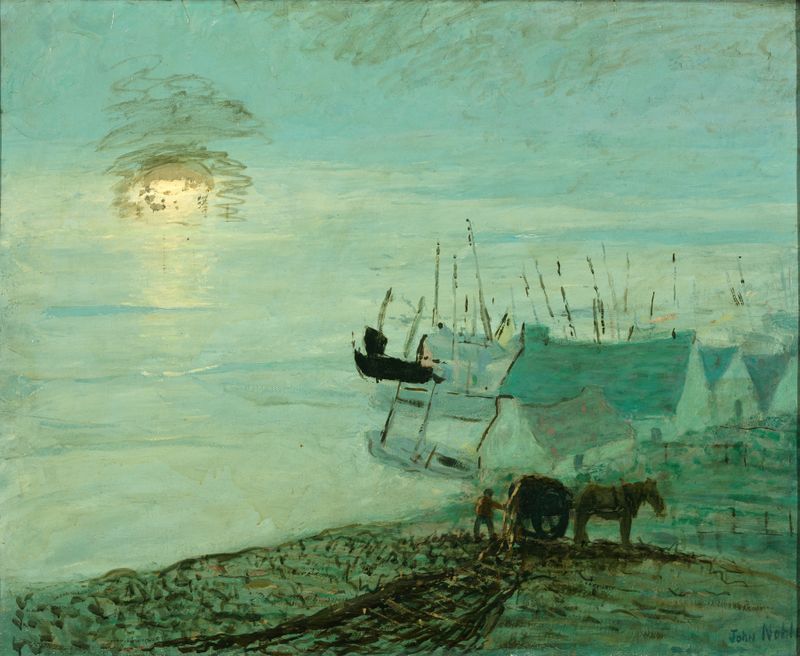
The innocence of childhood often hides in the corners of our memory, waiting to be evoked by quiet moments like those captured in this piece. Look to the sweeping expanse of the shoreline, where soft hues of blue and gold intertwine, inviting your gaze to explore the calmness of low tide. Notice how the gentle waves retreat, leaving behind glistening patches of wet sand, reflecting the soft light of the sun. The artist employs a delicate balance of warm and cool tones, creating an inviting yet serene atmosphere that wraps around the viewer, pulling them into this tranquil world. Hidden within this serenity lies the tension between the fleeting nature of childhood and the permanence of memory.
The footprints in the sand, transient yet significant, symbolize the ephemeral moments of joy that shape our identities. The quiet horizon hints at the unknown paths that lie ahead, while the crabs scuttling in the foreground suggest a playful innocence that persists even in the face of time's inevitable march. Created between 1925 and 1929, this work reflects John Noble's deep connection to his surroundings in the coastal landscapes of New Jersey. During this period, he was exploring the nuances of light and color, influenced by the broader movements of American Impressionism.
The world was changing rapidly, yet his focus on simple, serene scenes encapsulated a longing for connection and authenticity in an era increasingly defined by modernity.